
Maintained and holding steady
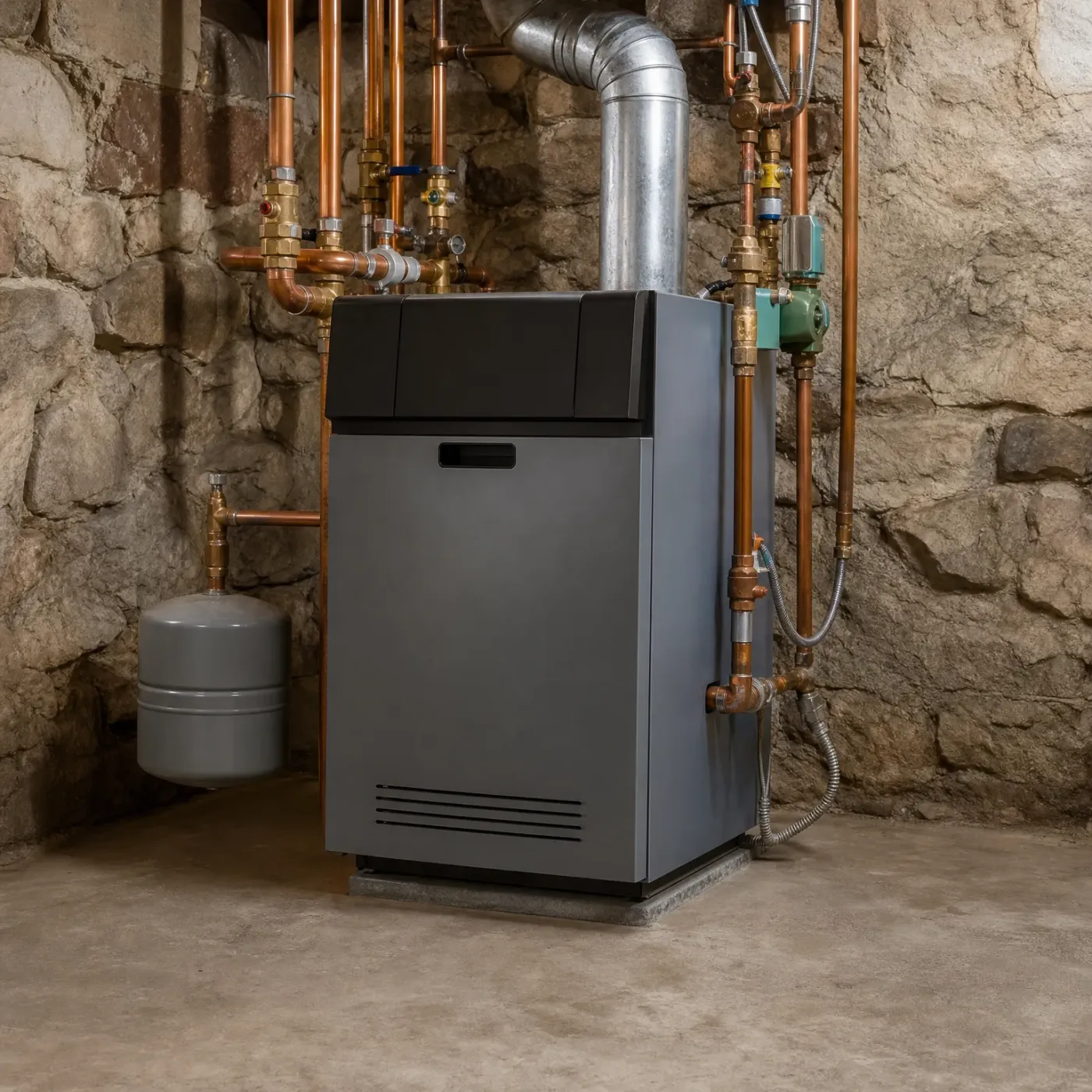
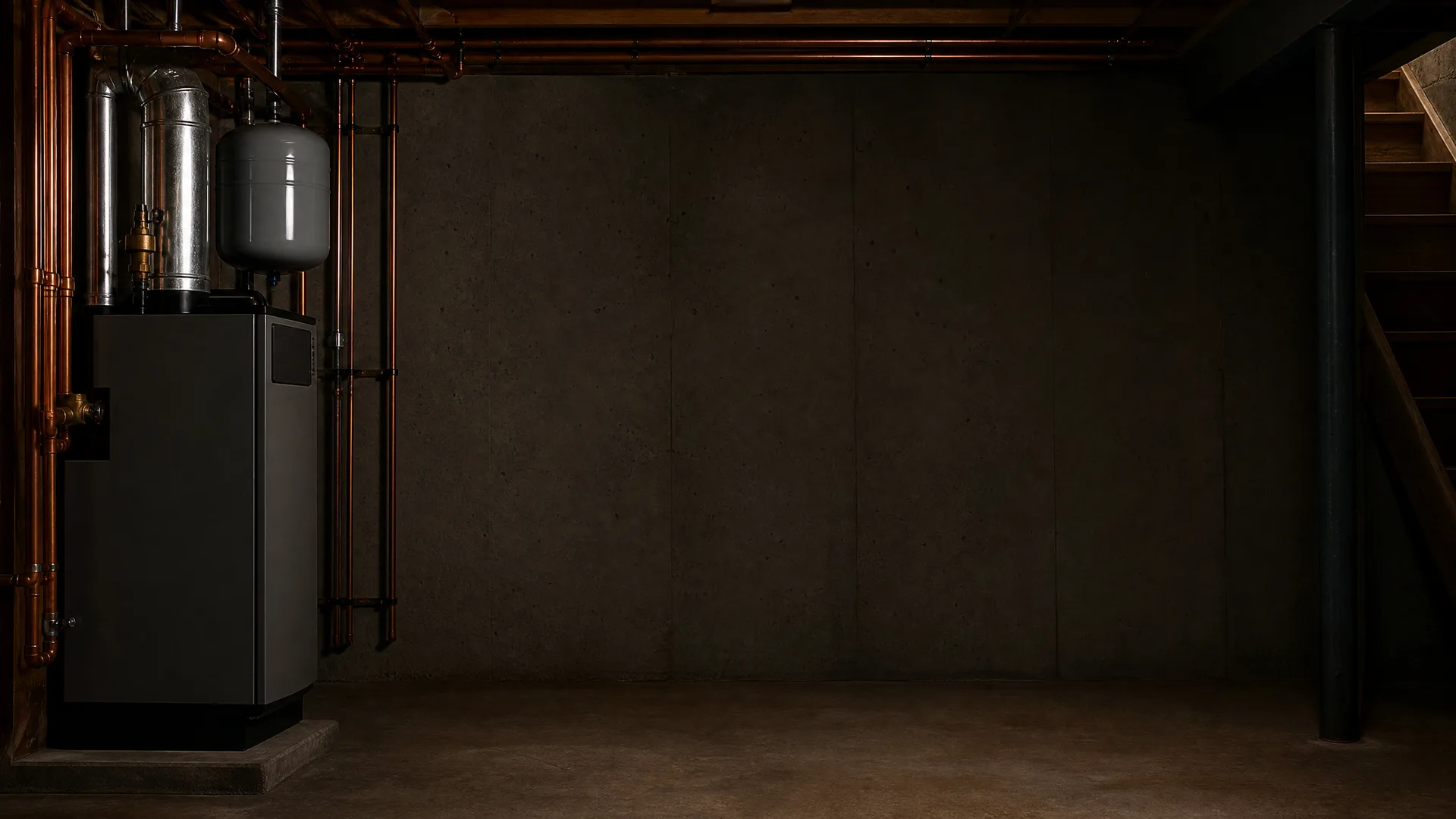
Clean copper lines, a working expansion tank, and a pump that circulates without strain. A boiler like this holds its set point without extra cycling, so the burner fires only as often as the house actually needs.
 Let a pro reach out
Send the form, and lining up the boiler tune-up stops being yours to chase.
Your thermostat setting and your boiler's water temperature are two different things. The thermostat is what you set for comfort. The water temperature, set at the boiler itself, is what decides how hard the system works to get there. On a cold Kansas morning, with wind cutting across the plains and the temperature outside sitting well below freezing, that water temperature matters more than most homeowners realize.
Set it too low and the boiler struggles to heat your home, running longer than it should and never quite catching up. Set it too high and you're paying for heat you don't need, while putting more wear on the heat exchanger and the rest of the system. The right setting depends on your home, your radiators or baseboard units, and how your system was designed to run.
This is where a lot of Kansas homeowners get stuck. The number that works for a neighbor's boiler might be wrong for yours. A system feeding cast iron radiators behaves differently than one feeding baseboard heat. Getting it right isn't guesswork, and it isn't something you want to leave to trial and error through January.
A local contractor who services boilers all winter knows how to read your specific setup and get the temperature dialed in for how your home actually holds heat. They've seen what fails on systems like yours when the cold sets in, and they know how to set things up so that doesn't happen to you.
Send your information through and you're done with the search part of this. No more comparing company websites or wondering who actually works on boilers in your area. One licensed, local contractor gets your request, so you're not stuck fielding calls from five companies trying to win your business. Just someone who knows this equipment, ready to help you get your boiler running the way it should for the rest of the winter.
A boiler has two settings that get confused. Most homeowners turn up the thermostat when a room feels cold, but that only tells the boiler what temperature to reach in the house. The boiler's own water temperature dial, usually on the unit itself, decides how hot the water gets before it's sent out to the radiators or baseboards. That's the number that matters most once Kansas temperatures drop and stay down.
Water that hot moves enough heat through the radiators or baseboards to keep up on the coldest days, when outside temperatures sit in the 20s or lower for weeks at a stretch. Setting it lower saves some gas, but on a January morning the house may never quite catch up. Setting it near 180 is normal for this kind of winter and won't shorten the boiler's life by itself. What does wear a boiler down is running at a high temperature with a system that isn't maintained, a clogged line or a stuck valve makes the boiler work harder than 160 or 180 alone ever would.




Inside the boiler, a control called the aquastat does the job most people think the thermostat does. It watches the water temperature and tells the burner when to fire and when to stop, while the thermostat on your wall only tells the system when the house has reached the comfort level you asked for. Water leaves the boiler hot, moves through the pipes to your radiators or baseboard units, gives up heat to the room, and comes back cooler through the return line. The aquastat reads that return temperature. If it's still too low, the burner fires again. If your boiler has an outdoor reset control, this happens automatically across the winter. On a mild day in Kansas, the reset lowers the water temperature because the house doesn't need much help. On a hard freeze, it raises it. Without reset, the water temperature stays fixed no matter what it's doing outside, which means the boiler sometimes works harder than the day requires. That extra cycling adds wear to the igniter and the burner over time. What counts as the right setting also depends on what's distributing the heat. Cast iron radiators hold and release heat slowly, so they can work with lower water temperatures than baseboard convectors, which rely on higher heat moving fast across thin fins to warm a room in the same amount of time. A setting that works well for one doesn't necessarily work for the other.
Thermostat calls for heat and signals the boiler.
Burner fires and heats water to the set point.
Hot water circulates out to radiators or baseboards.
Water returns cooler, and the boiler reads that temperature.


A boiler running at the right water temperature through a Kansas winter is one thing. A boiler someone hasn't looked at in a year or two is another, and that's usually where the trouble starts, not in the thermostat setting. Mineral buildup on the heat exchanger, a dirty burner, low pressure in the system, any of that changes how the boiler reaches its set point and how hard it has to work to get there. A contractor who services boilers all winter in your area knows what tends to go wrong on these systems locally, from well water buildup to pressure drops in older piping, and can check the set point against how your system is actually running. That's a different read than a number on a dial. If your boiler hasn't had that look this season, with the cold months still ahead, getting it checked now means one less thing sitting on your list while the temperature drops outside.
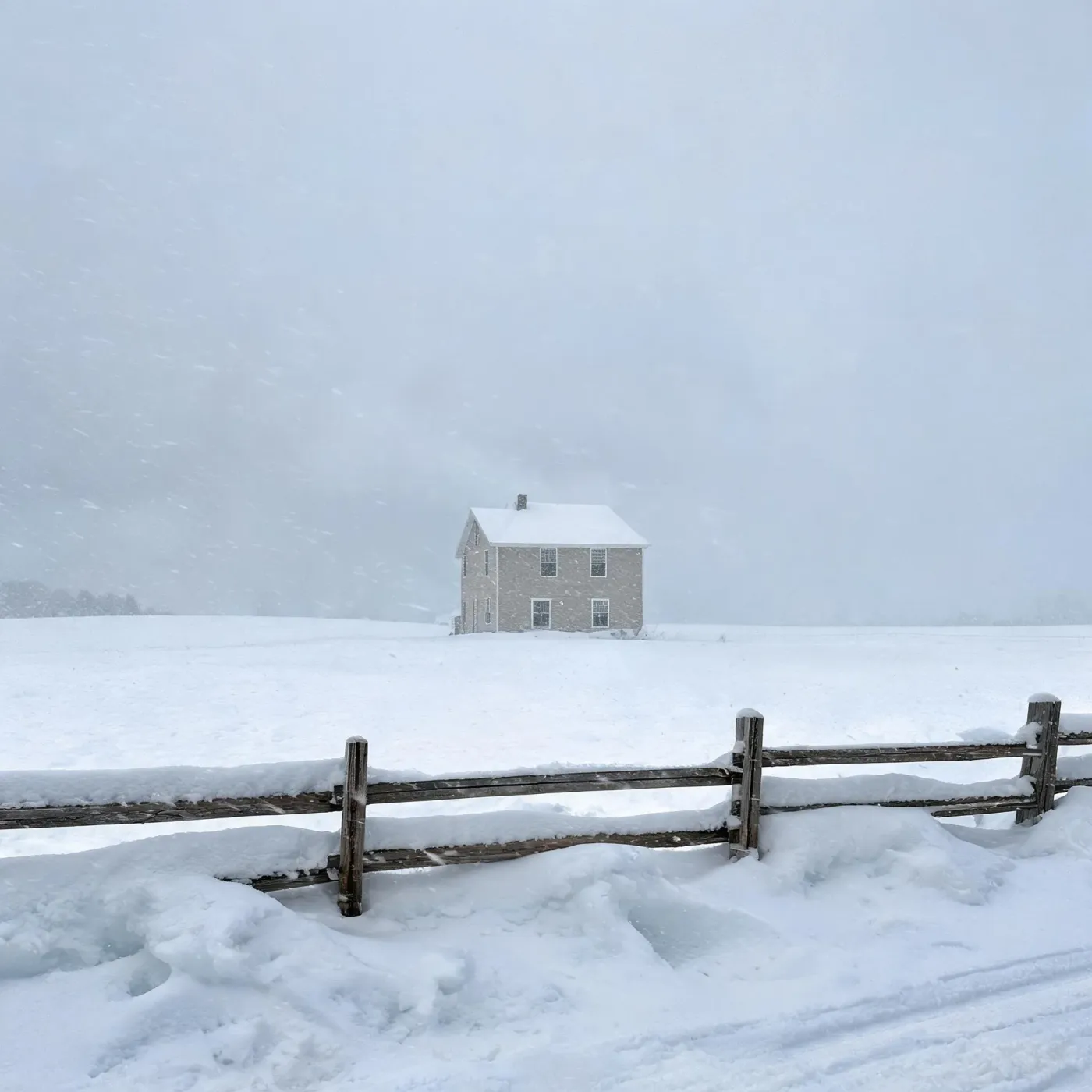
Winter nights average 23°F across Kansas, according to NOAA climate data. At that temperature, your house loses heat fast, and the boiler has to hold its water temperature steady for hours at a stretch rather than firing in short bursts. If the water temperature is set higher than the system needs, those long overnight runs are when you'll feel it on the gas bill and hear it in longer burner cycles. If it's set right, the radiators stay warm to the touch without the boiler running nonstop. A thermostat set back at night makes this worse, since the boiler has to recover from a colder house right when outdoor temperatures are at their lowest.
NOAA nClimDiv 1991-2020 county normals weighted by homes
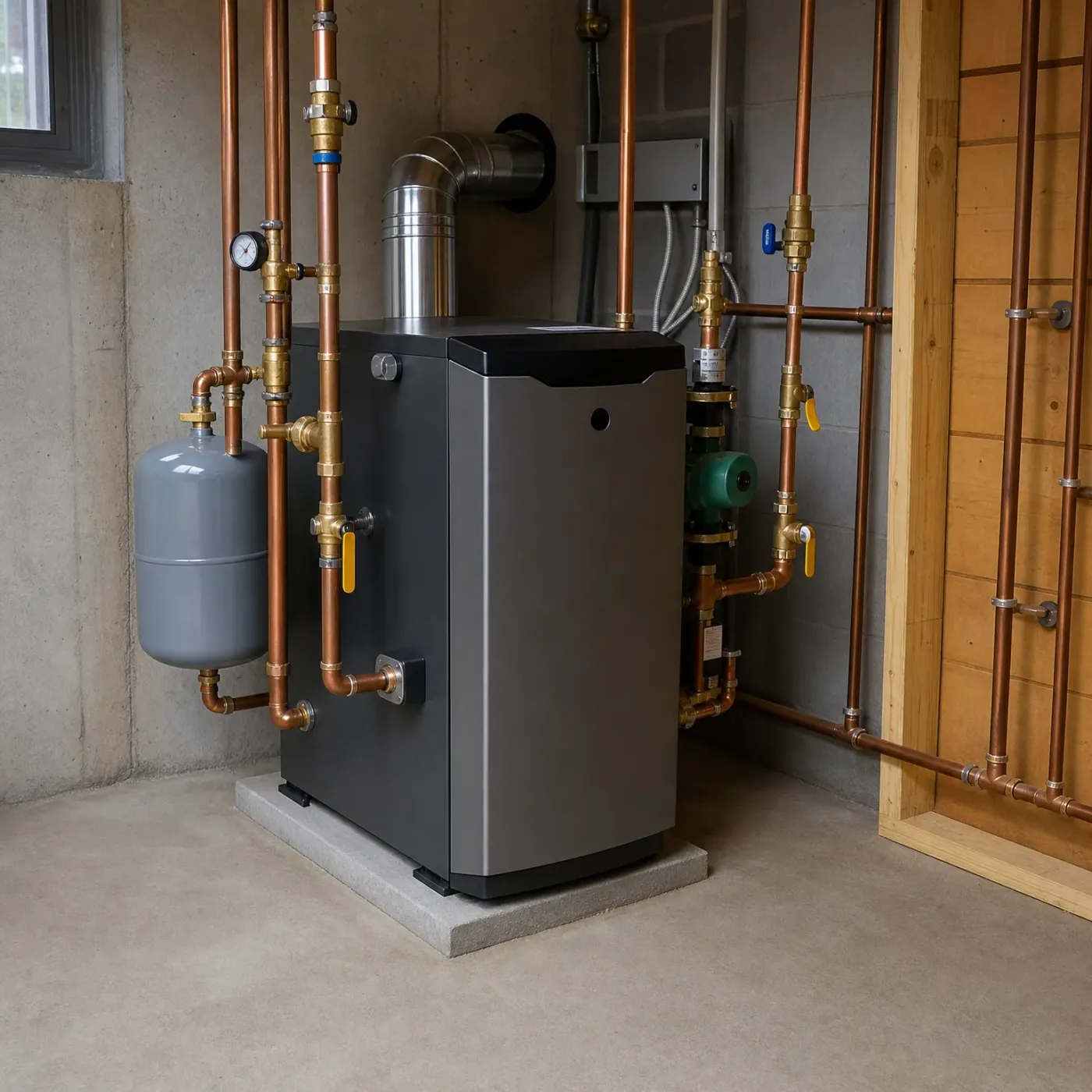
Clean copper lines, a working expansion tank, and a pump that circulates without strain. A boiler like this holds its set point without extra cycling, so the burner fires only as often as the house actually needs.
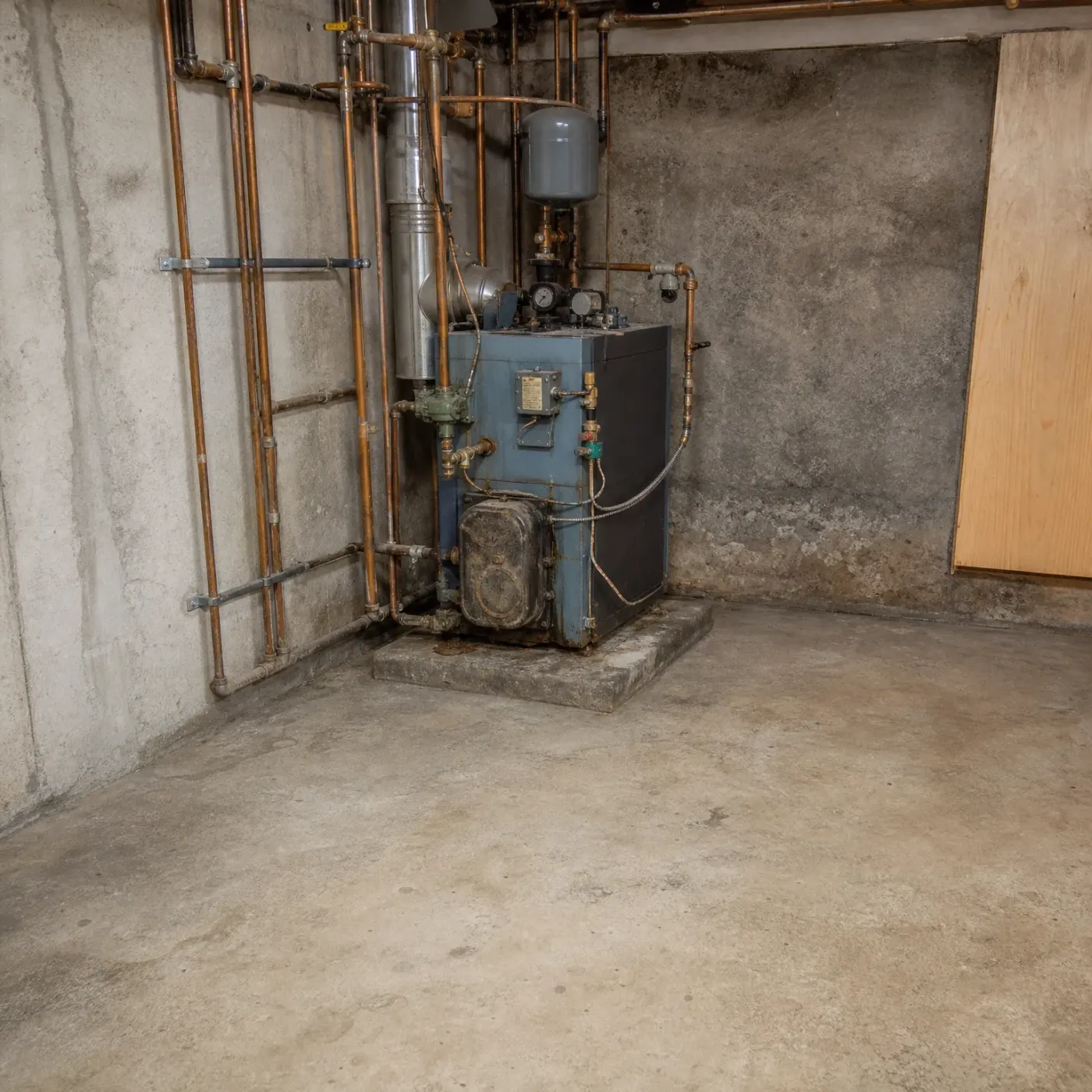
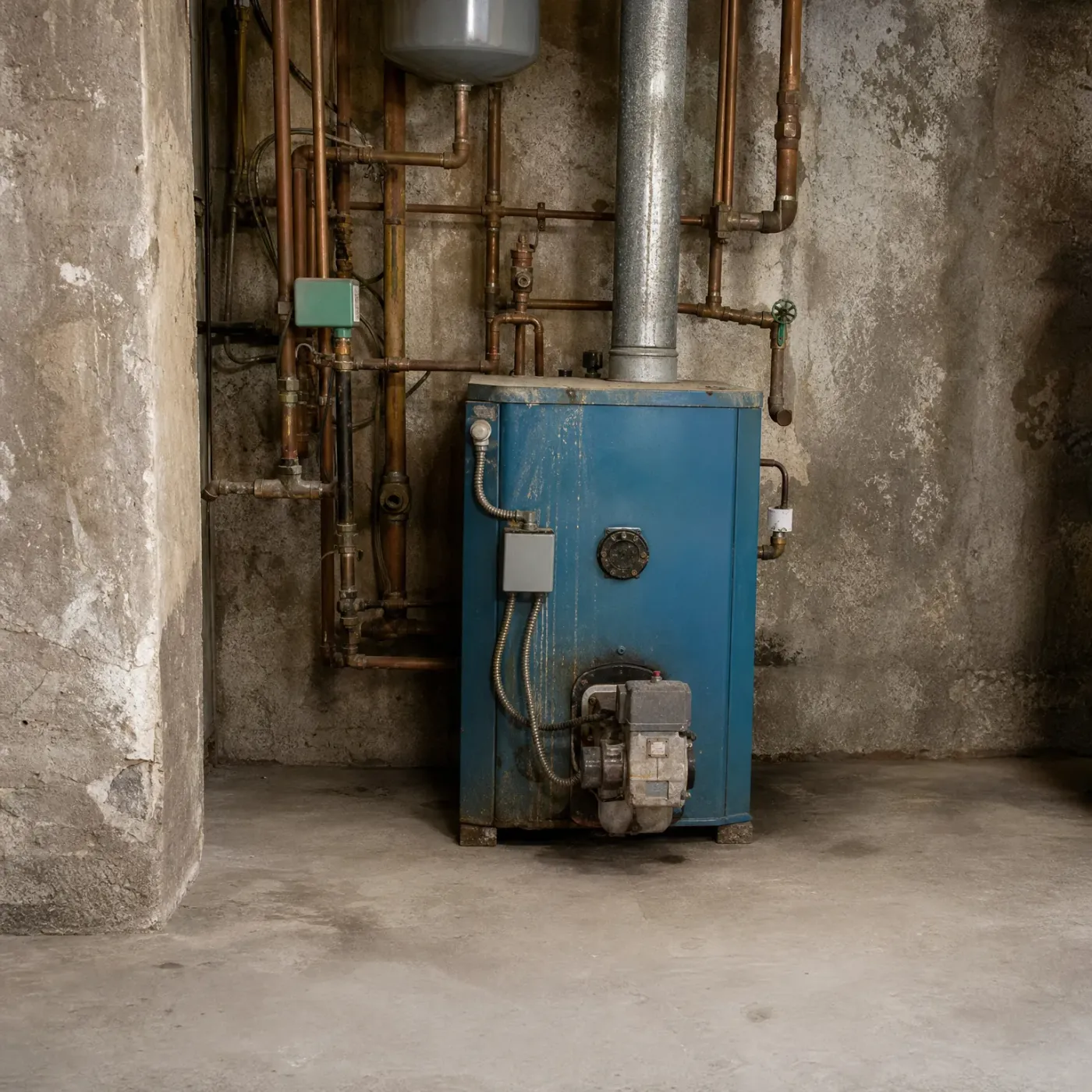
Bare concrete and an aging unit with no sign of recent attention. A boiler left alone this long often has scale building up inside, and that makes it run longer and hotter than its setting should ever require.
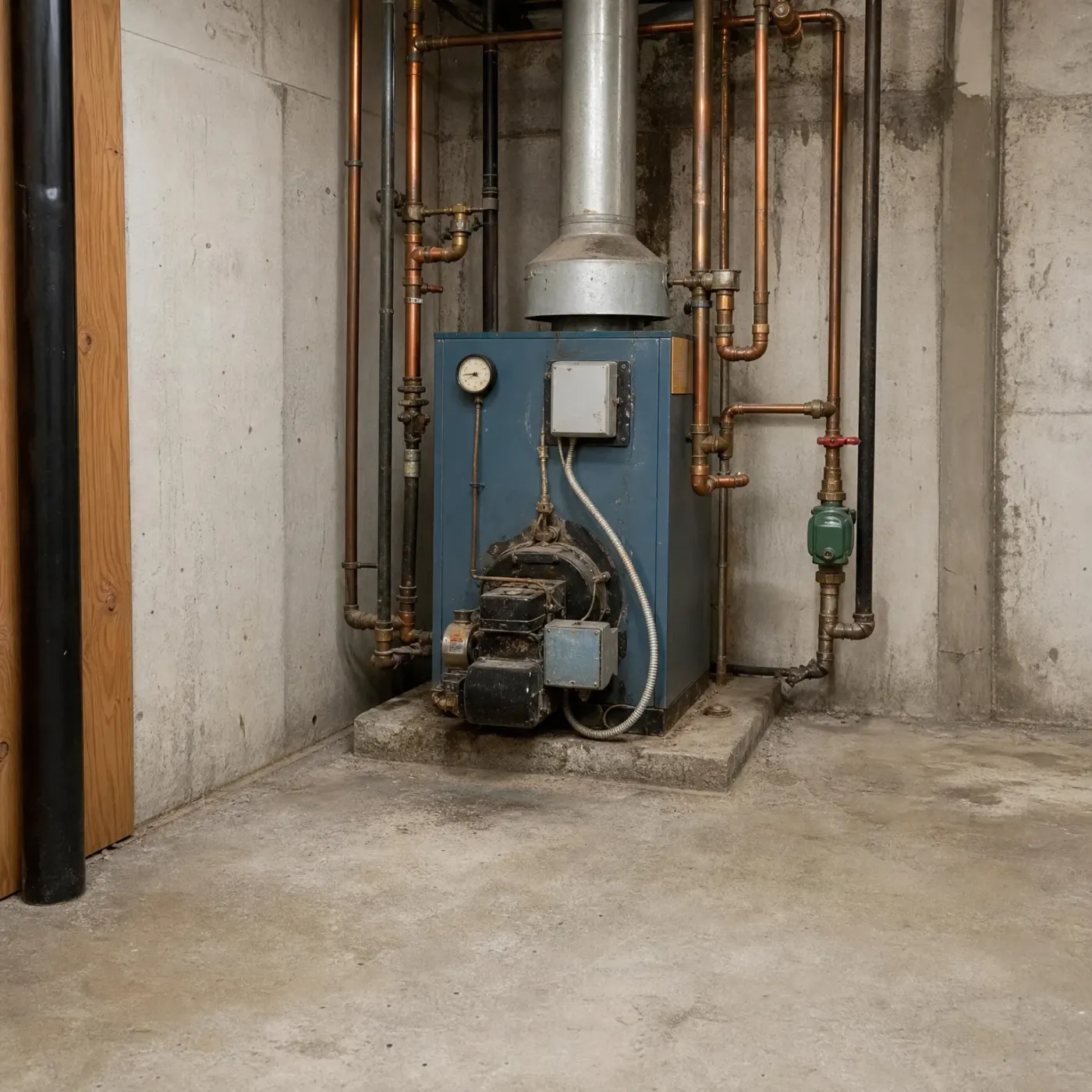
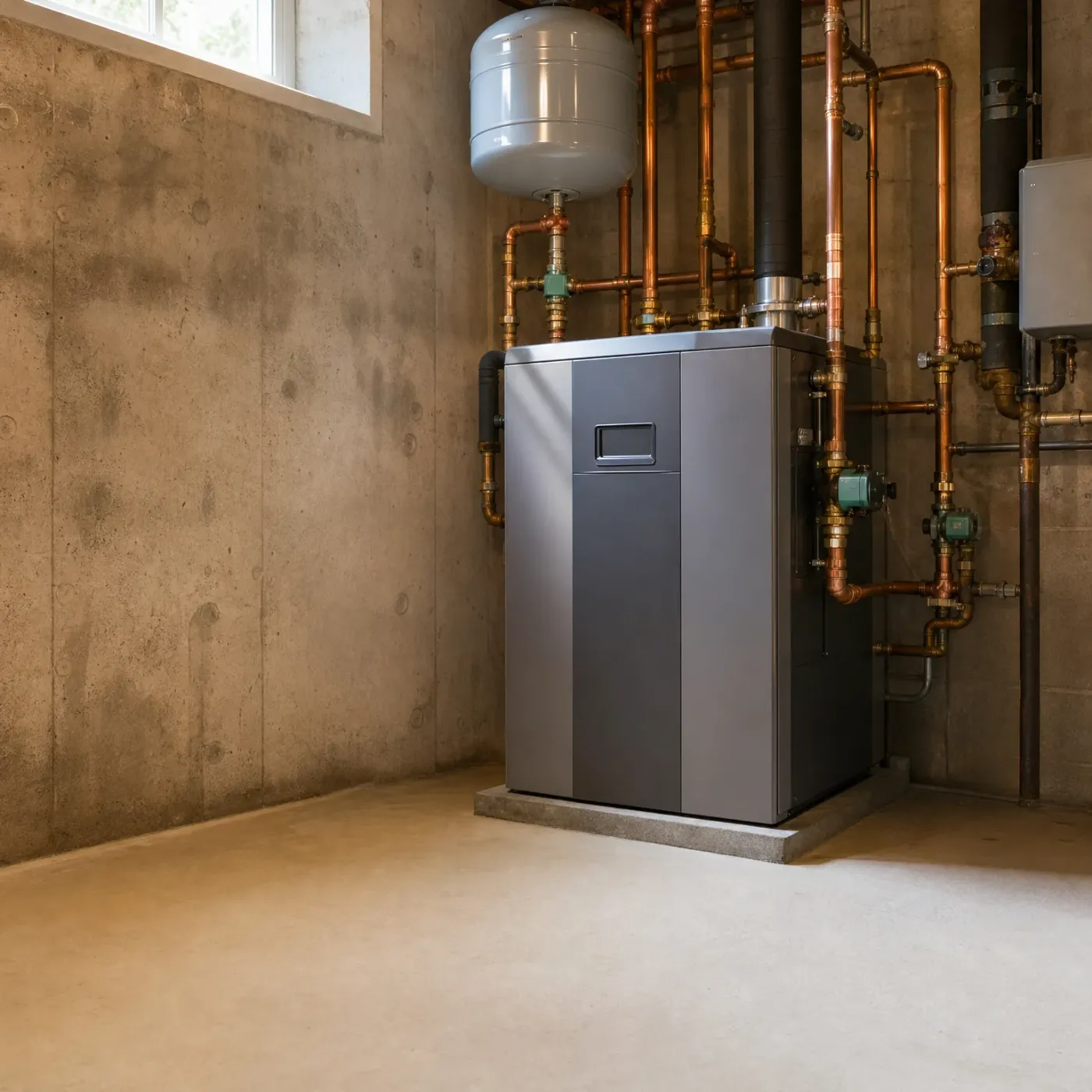
Most boilers hold between 12 and 15 psi when cold, and that number climbs a few pounds once the system heats up. If the needle sits low, water has leaked out somewhere along the line, and the boiler has to work through air pockets to push heat where it needs to go. A gauge reading high can push water out through the relief valve. Either way, the boiler is spending effort on something other than heating your house, and the water temperature setting cannot fix it.
A boiler that short cycles, firing up and shutting off again within a few minutes, often has nothing wrong with its temperature setting at all. The igniter or pilot assembly can be worn enough that the flame doesn't hold steady, so the burner fires, fails to satisfy the sensor, and tries again. This happens at any water temperature setting. Checking the igniter is routine work, and it rules out one more cause before you start adjusting the set point to chase a problem that lives somewhere else entirely.
At 23°F, your boiler isn't coasting between calls for heat, it's working most of the night to hold the house steady. That's the stretch where a set point that's off, even by ten degrees, shows up fastest, either in a house that won't warm or a burner that won't quit.
NOAA nClimDiv 1991-2020 county normals weighted by homes
The right water temperature for a boiler in a Kansas winter sits in that 140 to 180 degree range, set high enough to hold the house steady through a cold night and no higher than it needs to be. Getting it right isn't a one-time setting and forget it. Pressure drifts, lines pick up mineral scale, and a boiler nobody has looked at starts running longer than it should just to reach the same temperature it used to hit easily. A contractor who services boilers in this area through every one of these winters knows the handful of things that usually cause that drift, because they're checking for the same ones on call after call. That's the person who gets sent out, one licensed contractor local to you, not a list of names to sort through yourself. You'll know the right number for your system, and you'll know who to have come look at it.
Your request goes to one pro, not a list of companies.