Tell us about the job
Takes about a minute. No obligation.
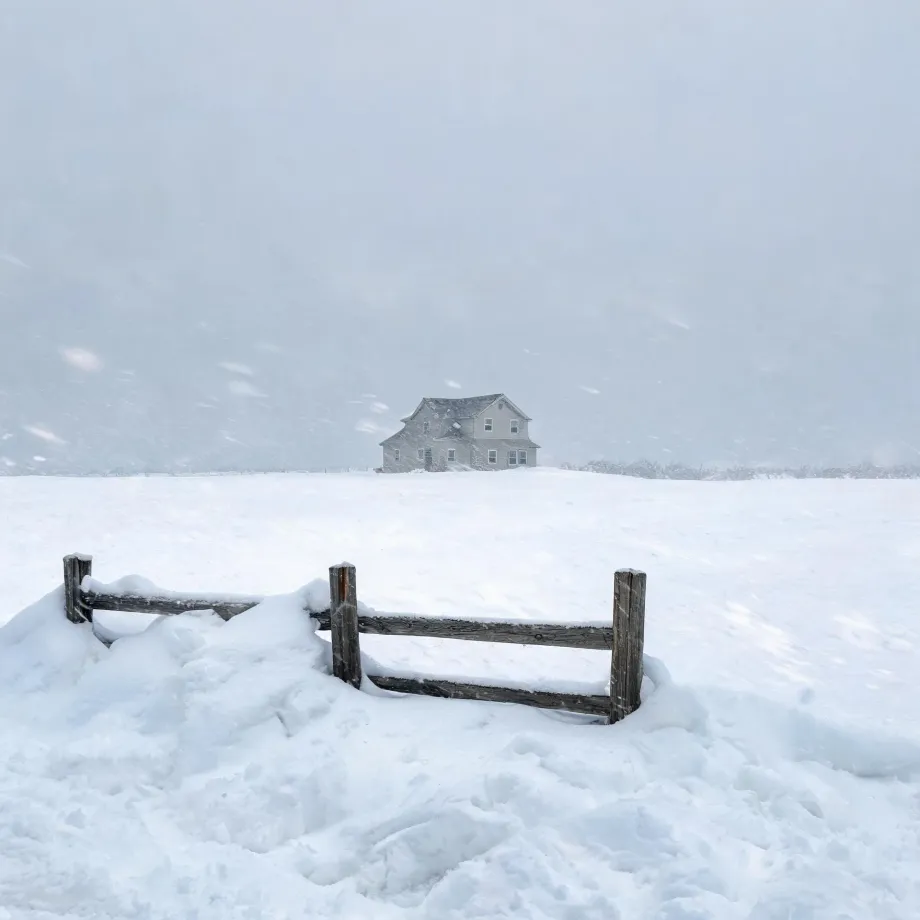
A boiler installed in Pawnee County is going to work. Homes in Pawnee County, KS run heat about seven months a year, from October through April. The burner cycles on and off through those months, the heat exchanger expands and contracts with each firing, and the ignition system earns its wear whether the equipment is new or aging. A contractor sizing a replacement or quoting a new install here cannot treat those components as interchangeable across brands and grades, because an undersized or poorly sealed system will show fatigue well before a correctly installed one does. Venting clearances, combustion air supply, and expansion tank sizing all carry more consequence when the equipment runs this hard each year.
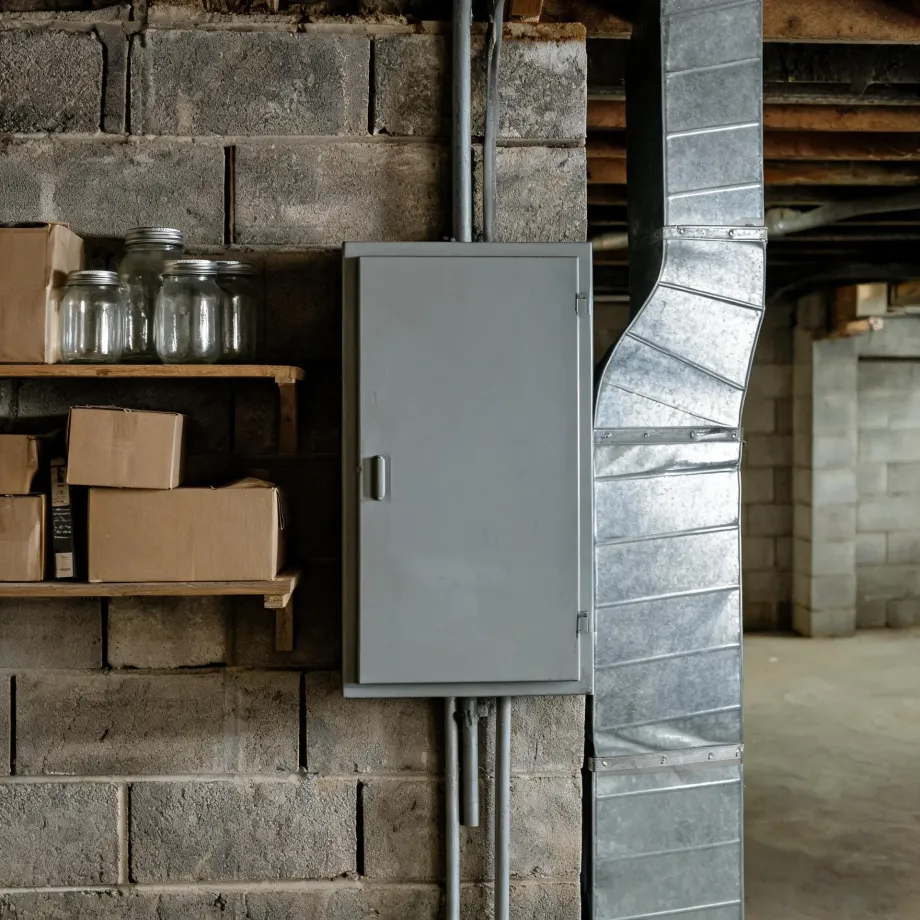
Ductwork and electrical service put in for one generation of heating equipment does not automatically carry the next. Half the homes in Pawnee County, Kansas were built in 1956 or earlier (2020-2024 ACS 5-year). A contractor installing a boiler in this county routinely finds that the distribution system was laid out for whatever ran here originally, and whether it suits a new unit is a separate question from which unit to buy. That assessment shapes the quote more than the boiler selection does.
What Gets Installed With a New Boiler
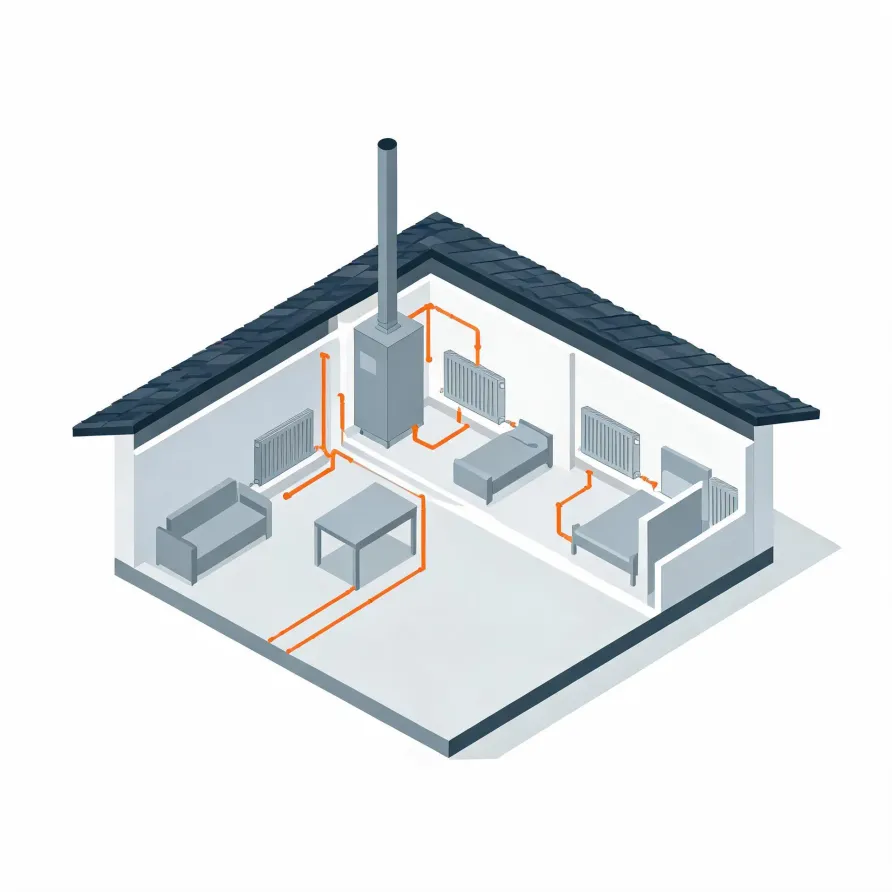
The boiler itself sits in a mechanical room, basement, or utility closet and is the unit that heats water and sends it out through the system. Alongside it, the expansion tank absorbs pressure changes in the water as it heats and cools, and the circulator pump moves that water through the pipes.
The pipes run from the boiler to radiators, baseboard convectors, or radiant floor loops positioned throughout the living spaces, each one a delivery point where heat transfers into the room. A thermostat mounts on an interior wall and tells the system when to fire.
The drawing shows the general layout of a boiler system, and a licensed contractor determines exactly what applies to this house.
Find a contractor in Pawnee CountyPawnee County, Kansas, by the numbers
160 severe weather events were recorded in Pawnee County, Kansas between 2015 and 2024.
NOAA National Centers for Environmental Information, Storm Events Database, bulk CSV export, events 2015-01-01 through 2024-12-31.Half the homes in Pawnee County, Kansas were built in 1956 or earlier (2020-2024 ACS 5-year).
U.S. Census Bureau, 2020-2024 American Community Survey 5-Year EstimatesPawnee County, Kansas holds 3,057 housing units (2020-2024 ACS 5-year).
U.S. Census Bureau, 2020-2024 American Community Survey 5-Year EstimatesOwners occupy 66.2% of the occupied homes in Pawnee County, Kansas (2020-2024 ACS 5-year).
U.S. Census Bureau, 2020-2024 American Community Survey 5-Year EstimatesSevere Weather Events in Pawnee County
Boiler systems in Pawnee County work against whatever the local climate puts on them, and that workload shapes how equipment is sized, installed, and maintained. A contractor who knows what this area sees picks and installs accordingly.
160 severe weather events, 2015–2024. Source: NOAA National Centers for Environmental Information, Storm Events Database.