Tell us about the job
Takes about a minute. No obligation.
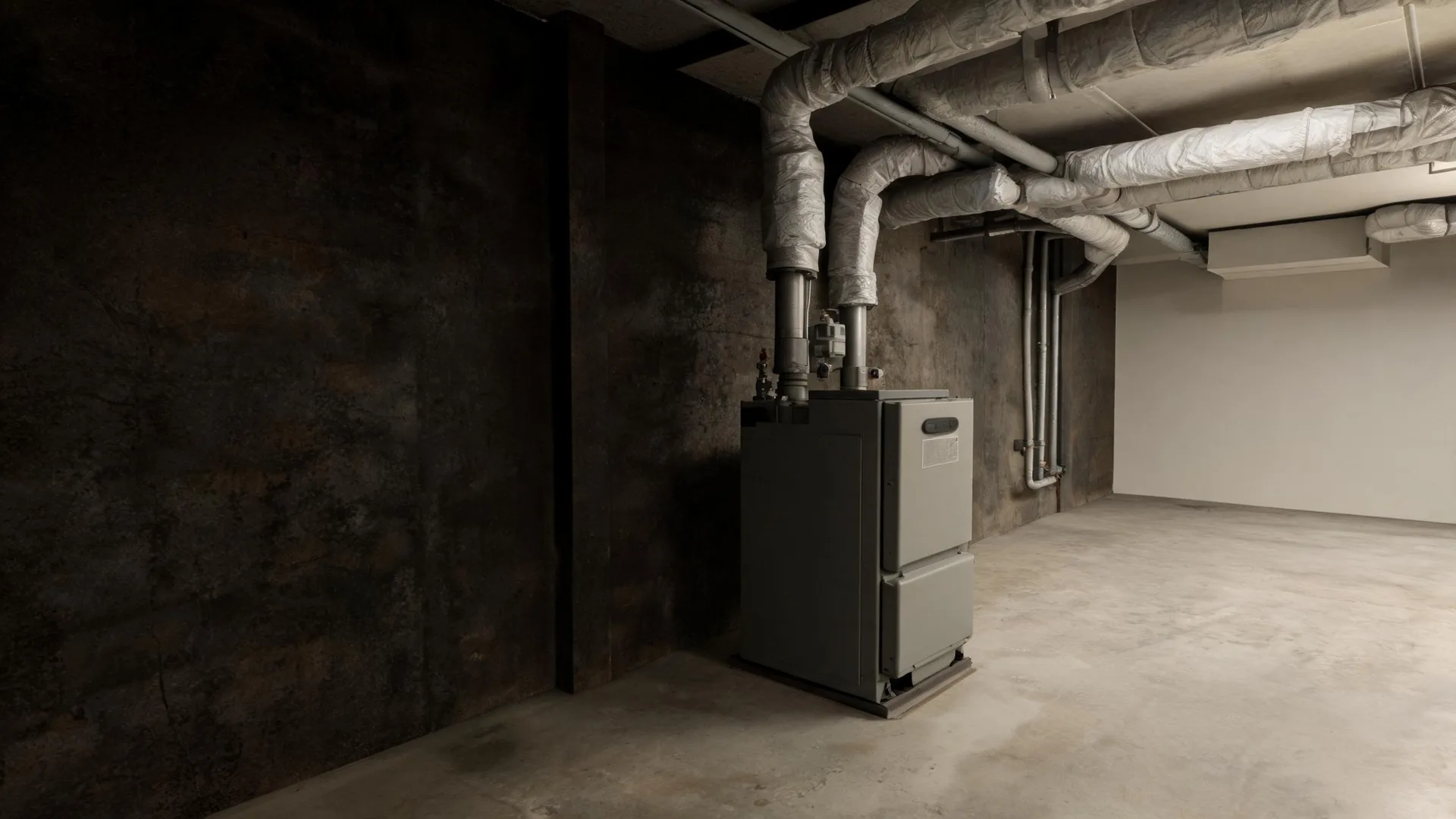
Sizing a boiler correctly for a Phillips County home means accounting for a heating demand that runs nearly the full calendar. Homes in Phillips County, KS run heat about eight months a year, from October through May. The burner and heat exchanger cycle through that load with little idle time, and a system that was undersized at installation works harder on every one of those days, accelerating wear on the ignition components and the heat exchanger itself. A contractor quoting a replacement or new installation here will run a proper load calculation first, because a box that is too small will not catch up, and a box that is too large will short-cycle and stress the same parts in a different way.
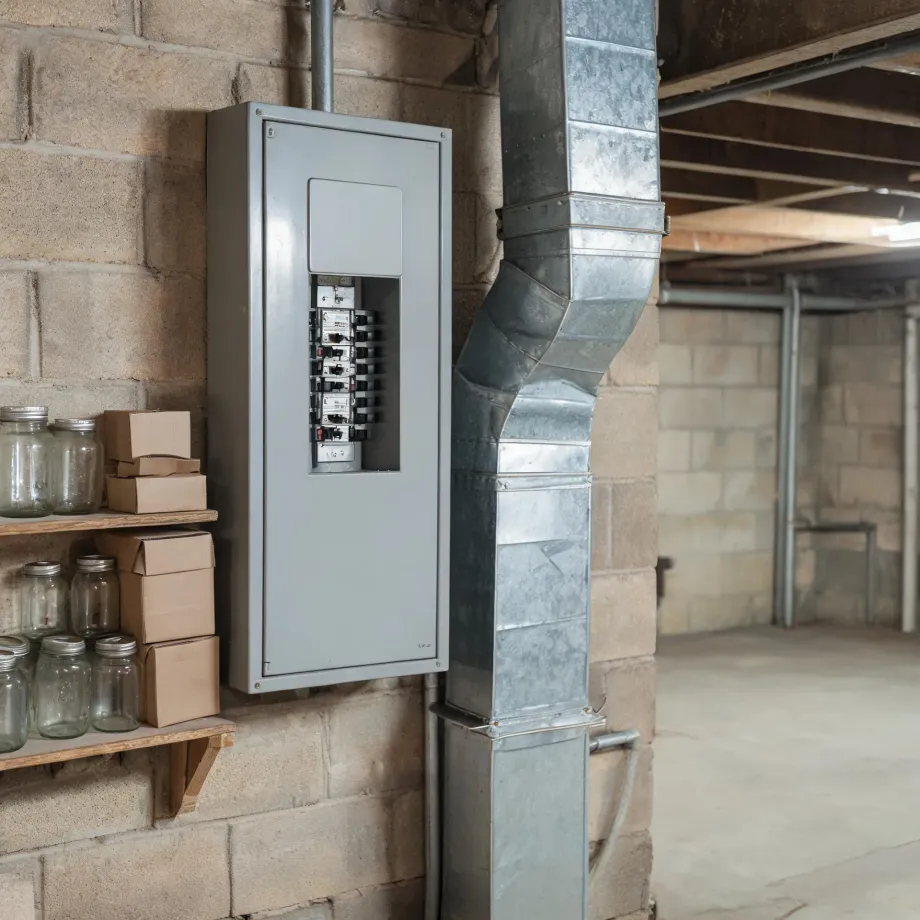
Existing pipework and distribution systems in Phillips County houses carry the real weight of a boiler installation. Half the homes in Phillips County, Kansas were built in 1961 or earlier (2020-2024 ACS 5-year). That age of stock was built around equipment with different output and distribution requirements than what a contractor installs now, which means the piping, the baseboards, and the heat distribution layout all get assessed before the new unit is ever quoted. What is already in the walls either fits the new load or it does not, and that answer shapes the whole job.
What Gets Installed With a New Boiler
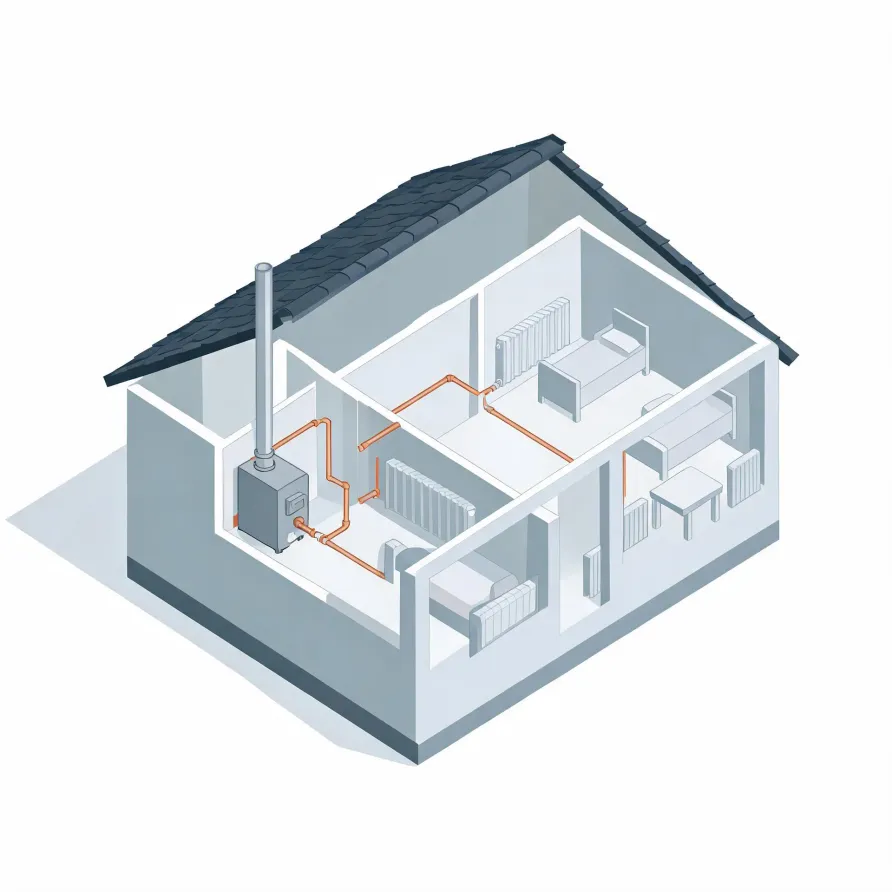
The boiler itself sits in a mechanical room, basement, or utility closet and is the unit that heats water for the whole system. Paired with it are the expansion tank and pressure relief valve, both mounted close by, which protect the system as water heats and contracts.
From the boiler, supply and return pipes run through the house to the heat emitters, whether those are radiators, baseboard units, or radiant floor loops mounted in each room. A circulator pump, fitted at the boiler, moves the heated water through those pipes and back again.
The drawing shows a typical layout, and a licensed contractor determines what applies to your specific home.
Find a contractor in Phillips CountyPhillips County, Kansas, by the numbers
189 severe weather events were recorded in Phillips County, Kansas between 2015 and 2024.
NOAA National Centers for Environmental Information, Storm Events Database, bulk CSV export, events 2015-01-01 through 2024-12-31.Half the homes in Phillips County, Kansas were built in 1961 or earlier (2020-2024 ACS 5-year).
U.S. Census Bureau, 2020-2024 American Community Survey 5-Year EstimatesPhillips County, Kansas holds 2,790 housing units (2020-2024 ACS 5-year).
U.S. Census Bureau, 2020-2024 American Community Survey 5-Year EstimatesOwners occupy 78.0% of the occupied homes in Phillips County, Kansas (2020-2024 ACS 5-year).
U.S. Census Bureau, 2020-2024 American Community Survey 5-Year EstimatesSevere Weather Events in Phillips County
Kansas weather puts real demands on heating equipment, and Phillips County gets its share of conditions that push boilers hard. How often that happens locally shapes what a system needs to handle and how it should be sized and installed.
189 severe weather events, 2015–2024. Source: NOAA National Centers for Environmental Information, Storm Events Database.