Tell us about the job
Takes about a minute. No obligation.
A boiler running through a long Kansas winter puts its hardest miles on the burner assembly and the ignition system, not the heat exchanger, because those are the parts that cycle on and off every time the thermostat calls. Homes in Clark County, KS run heat about seven months a year, from October through April. A contractor quoting a repair in Clark County starts with ignition components and the burner for that reason: repeated cycling through a full heating season degrades igniters, flame sensors, and gas valves at a pace that a short season never would. The heat exchanger gets inspected too, but the cycling parts are where faults concentrate.
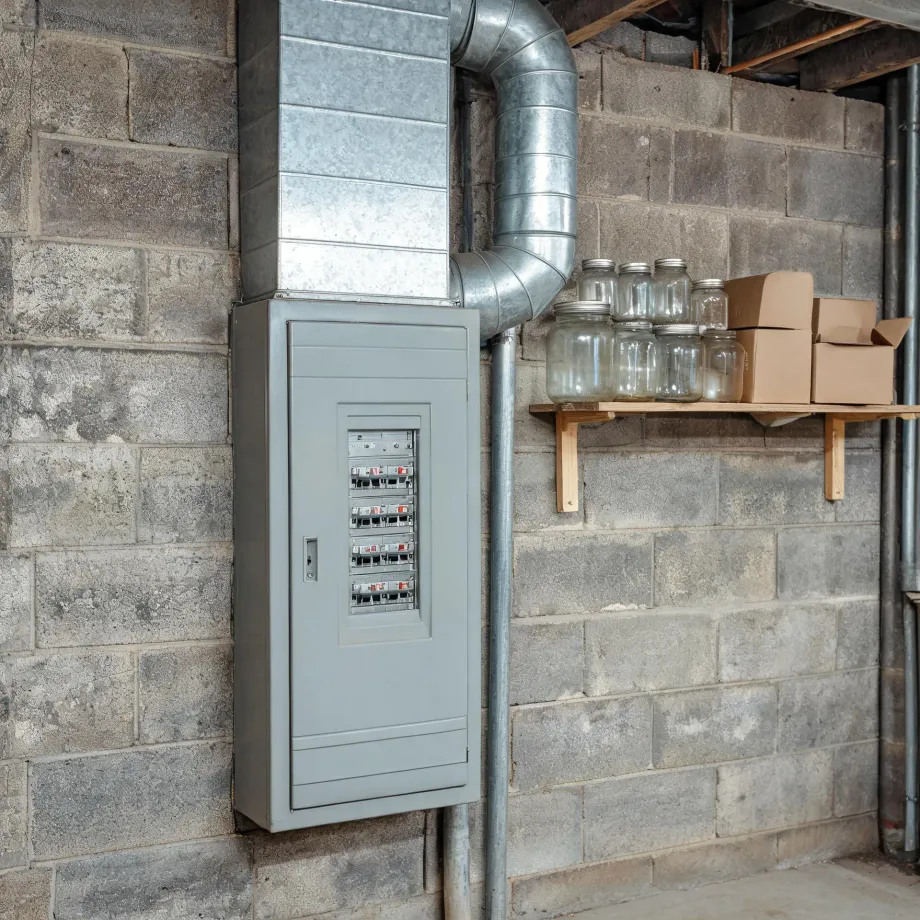
Piping in houses this old varies in ways that do not show up until a contractor opens the system. Half the homes in Clark County, Kansas were built in 1946 or earlier (2020-2024 ACS 5-year). That means a boiler repair here can turn on what kind of distribution loop is already in place, what fittings and valves it uses, and whether replacement parts for that configuration are still in production. A contractor who assumes a straightforward repair before seeing the loop can misquote the job by a significant margin.
The Parts of a Boiler a Contractor Checks First
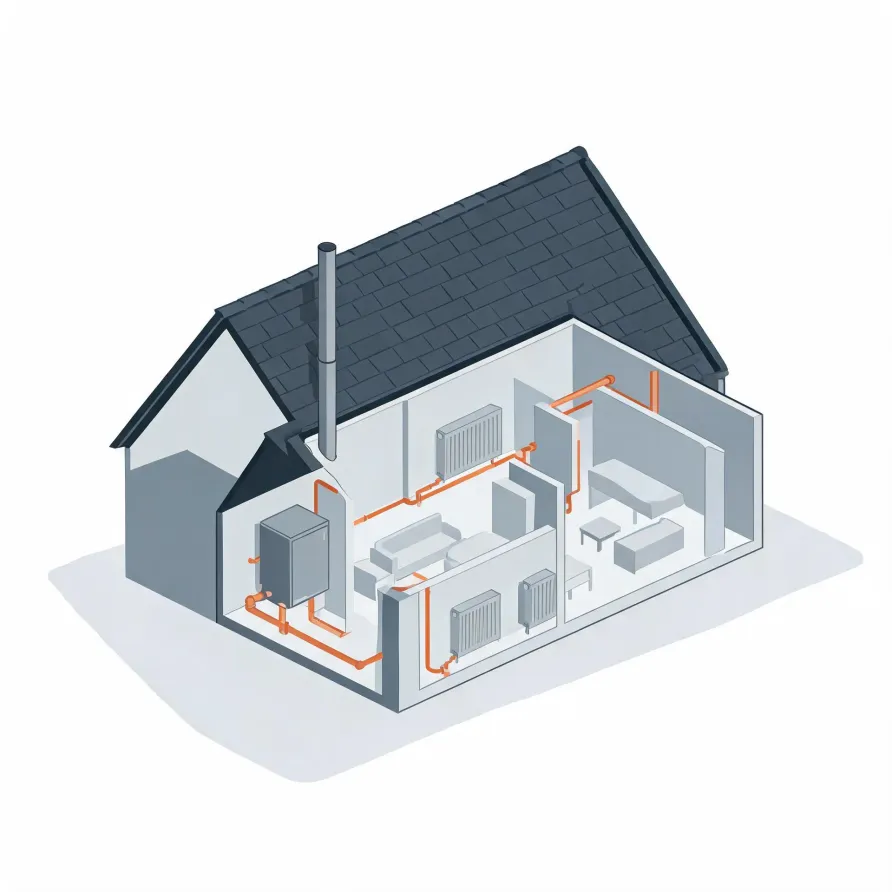
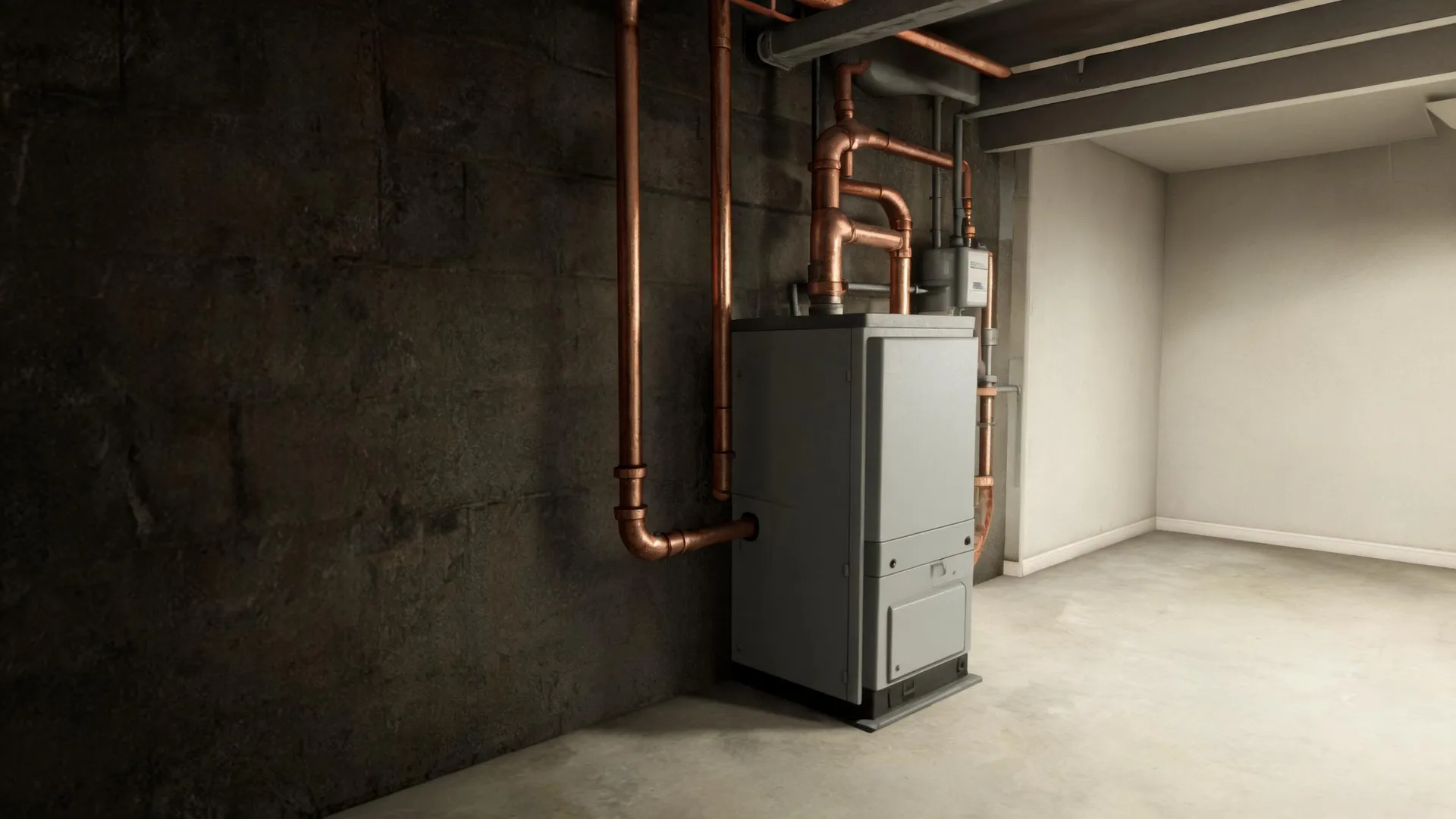
The boiler itself sits in the basement or a utility room and is the piece that heats water for the whole system. When heat stops reaching a room, or the unit cycles on and off without holding temperature, a contractor starts here, checking the burner, the heat exchanger, and the controls that tell the unit when to fire.
Radiators or baseboard units sit in each room and release that heat into the living space. The circulator pump, which moves water through the pipes between the boiler and those terminals, is another common point of failure, as are the expansion tank and the pressure relief valve, both of which keep the system at a safe operating pressure.
The drawing shows a typical layout, and a licensed contractor determines which components apply to your specific setup.
Find a contractor in Clark CountyClark County, Kansas, by the numbers
110 severe weather events were recorded in Clark County, Kansas between 2015 and 2024.
NOAA National Centers for Environmental Information, Storm Events Database, bulk CSV export, events 2015-01-01 through 2024-12-31.Half the homes in Clark County, Kansas were built in 1946 or earlier (2020-2024 ACS 5-year).
U.S. Census Bureau, 2020-2024 American Community Survey 5-Year EstimatesClark County, Kansas holds 1,039 housing units (2020-2024 ACS 5-year).
U.S. Census Bureau, 2020-2024 American Community Survey 5-Year EstimatesOwners occupy 73.6% of the occupied homes in Clark County, Kansas (2020-2024 ACS 5-year).
U.S. Census Bureau, 2020-2024 American Community Survey 5-Year EstimatesSevere Weather Events in Clark County
Extreme weather puts real load on boilers, and that load adds up over time. Repair demand in Clark County tracks with what the climate actually does here, which is why local service knowledge matters.
110 severe weather events, 2015–2024. Source: NOAA National Centers for Environmental Information, Storm Events Database.