Tell us about the job
Takes about a minute. No obligation.
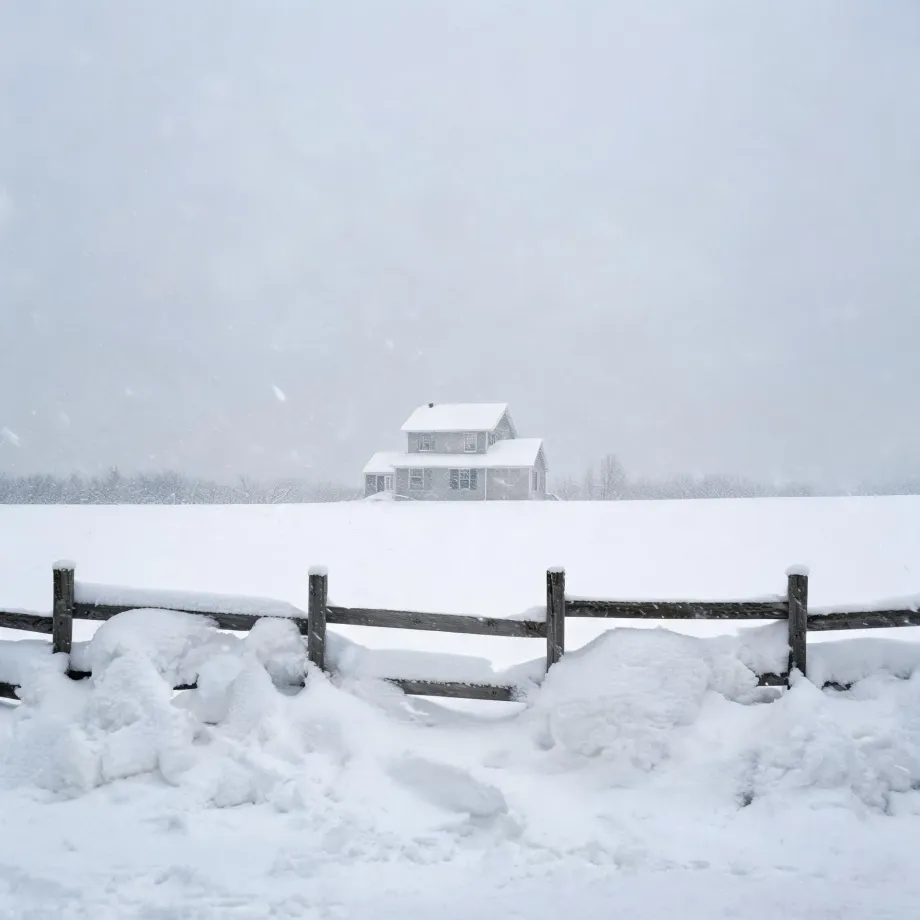
A boiler repair in Seward County starts with the burner assembly and ignition system, because those are the parts that cycle every time the thermostat calls for heat. Homes in Seward County, KS run heat about seven months a year, from October through April. That many months of regular firing leave marks a contractor can see: carbon buildup on the burner ports, worn igniter tips, and heat exchanger fatigue from repeated expansion and contraction. The idle stretch in summer does not erase that wear. A contractor quoting a repair here weighs what those components have already been through before pricing anything downstream.
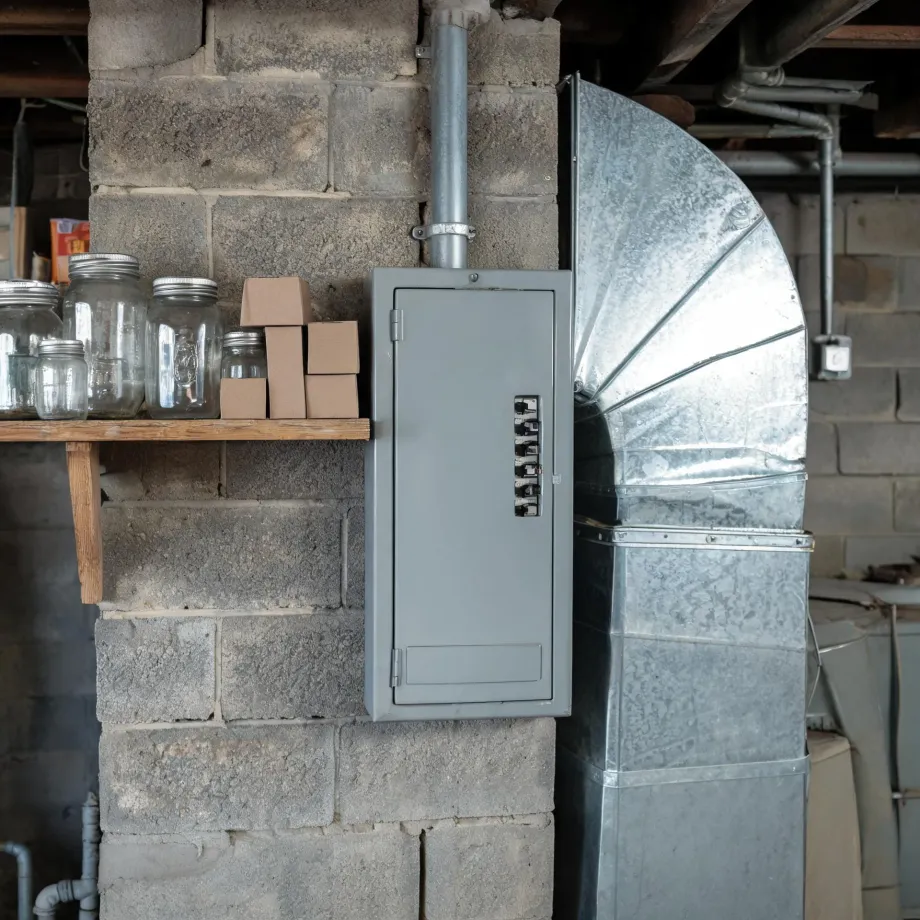
Boilers in a house get replaced; the cast iron radiators, the supply lines, and the original piping layout do not. Half the homes in Seward County, Kansas were built in 1973 or earlier (2020-2024 ACS 5-year). That means a contractor opening a boiler here is frequently working on a system that was fitted around infrastructure laid in for something earlier, and when a part fails, the question is whether it is still in production. Manufacturers stop making components for older appliance lines, and a repair that looks straightforward from the outside can stall on a part that has to be sourced or fabricated.
The Parts of a Boiler a Contractor Checks First
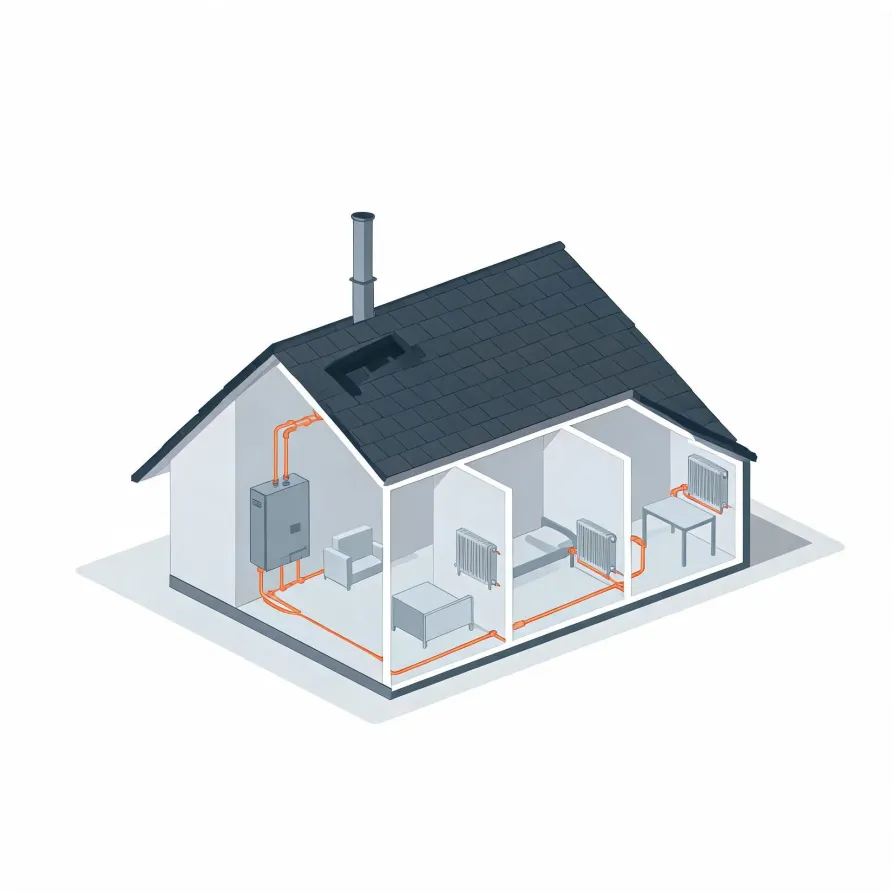
The boiler itself sits in a utility room, basement, or mechanical closet and is the unit that heats water and sends it out through the system. When it fails, the fault usually lives in the burner, the heat exchanger, or the controls that tell the burner when to fire. A contractor opens that cabinet first.
From the boiler, pipes carry hot water to radiators or baseboard units in each room, and a circulator pump keeps that water moving. The expansion tank, pressure relief valve, and thermostat all sit close to or on the boiler itself, and any one of them can be the piece that has brought the system down.
The drawing shows a typical boiler layout, and a licensed contractor determines which components apply to your specific system.
Find a contractor in Seward CountySeward County, Kansas, by the numbers
215 severe weather events were recorded in Seward County, Kansas between 2015 and 2024.
NOAA National Centers for Environmental Information, Storm Events Database, bulk CSV export, events 2015-01-01 through 2024-12-31.Half the homes in Seward County, Kansas were built in 1973 or earlier (2020-2024 ACS 5-year).
U.S. Census Bureau, 2020-2024 American Community Survey 5-Year EstimatesSeward County, Kansas holds 8,308 housing units (2020-2024 ACS 5-year).
U.S. Census Bureau, 2020-2024 American Community Survey 5-Year EstimatesOwners occupy 61.8% of the occupied homes in Seward County, Kansas (2020-2024 ACS 5-year).
U.S. Census Bureau, 2020-2024 American Community Survey 5-Year EstimatesSevere Weather Events in Seward County
Kansas weather puts real stress on boiler systems, and Seward County gets its share of conditions that push heating equipment hard. How often that happens here shapes how much service local boilers need.
215 severe weather events, 2015–2024. Source: NOAA National Centers for Environmental Information, Storm Events Database.