
How to bleed radiators before a Kansas winter

Fill out one form instead of calling around for a boiler tune-up.

Start one form

Bleeding a radiator means opening the small valve at its end to let trapped air escape, so water can fill the whole radiator again. Air gets in over time and collects at the top, and a radiator with an air pocket heats at the bottom but stays cold up top, or barely heats at all. You'll want to do this before the first hard cold snap, not after, since a boiler working against air-locked radiators runs longer to heat the same rooms and costs more to do it. Check each radiator in the house, not just the one that feels coolest, because air can sit in more than one without showing it as clearly. Once the heat's been running steady through the cold months, you'll feel which rooms warm up slower, and that's usually where the air was.

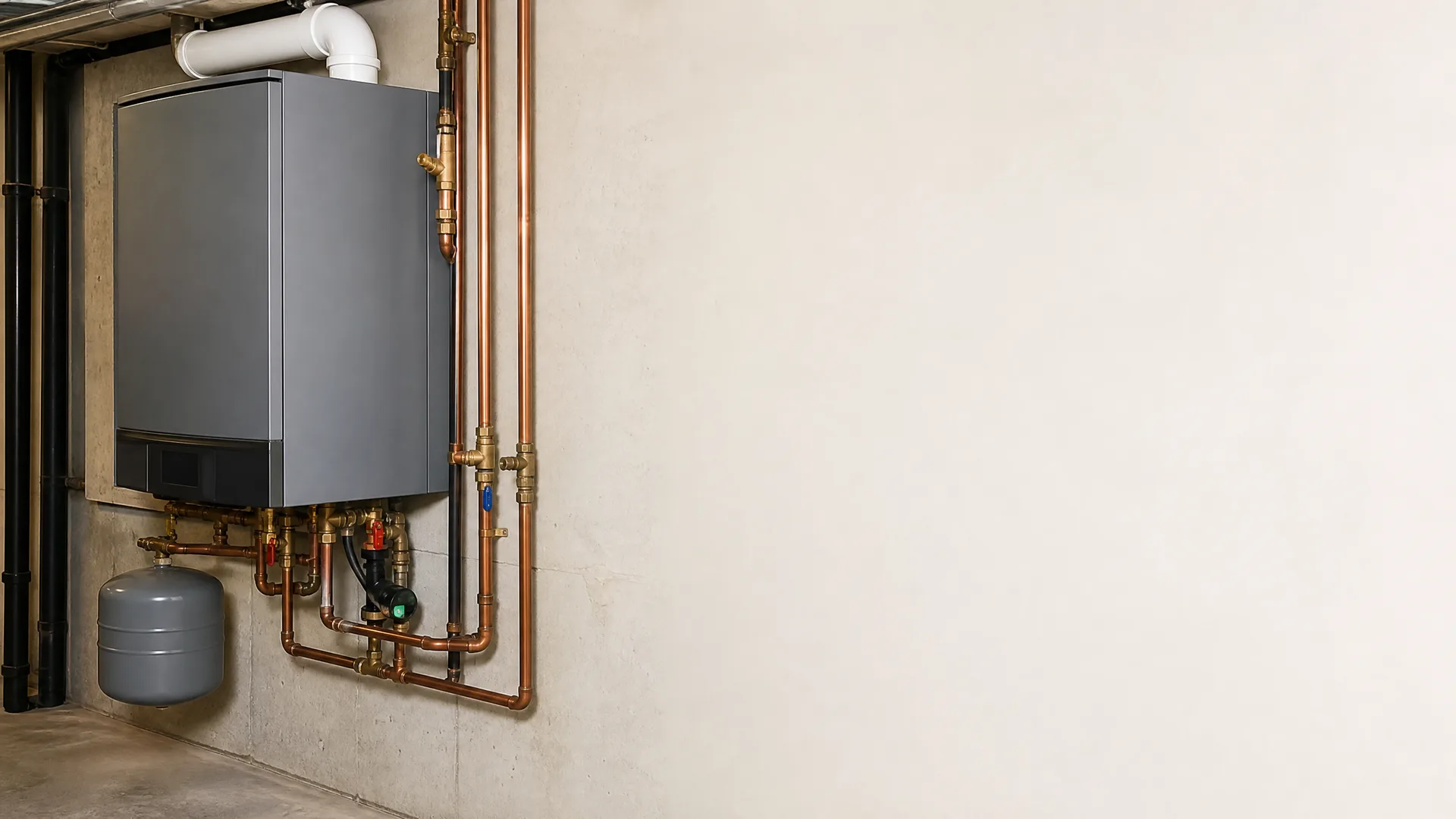
A gray wall-mounted boiler with copper piping, valves and a gray expansion tank installed on a plain concrete basement wall.

Why air gets in every year

A boiler system loses a little water over a year, through the expansion tank and through small amounts that escape at joints and valves. As water leaves, air takes its place. That air works its way to the highest point it can reach, which is usually the top of each radiator. By the time cold weather sets in and the boiler runs hard, the air has had all summer to collect.

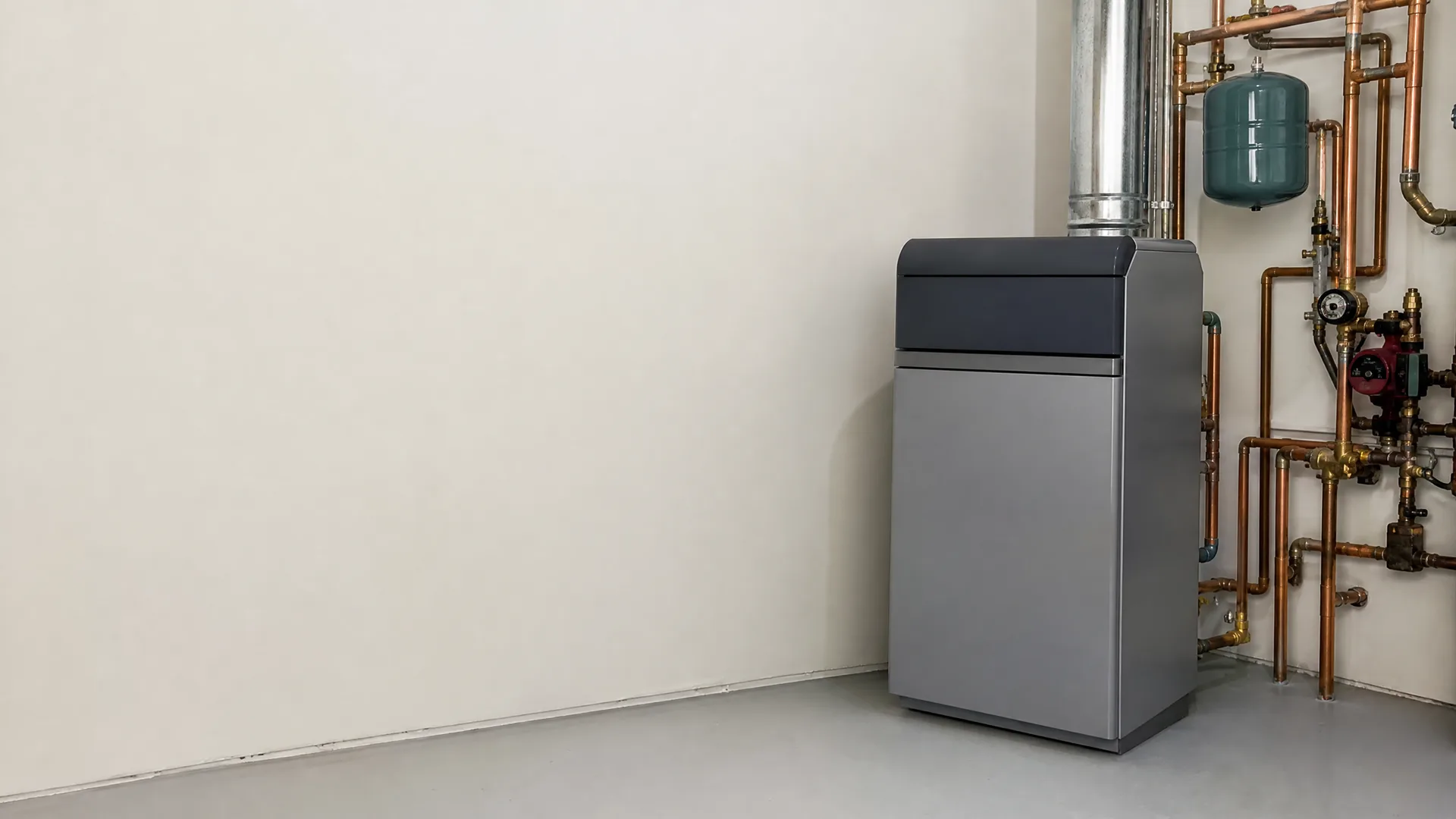
A grey floor-standing boiler with a metal flue pipe stands in a corner of a bare room next to copper pipework, valves and a green expansion tank mounted on the wall.

What a bled radiator feels like

Run your hand across the face of the radiator while the heat is on. If the bottom is hot and the top stays cool, air is sitting in that space and keeping hot water from reaching it. After bleeding, the whole face should feel the same temperature top to bottom. You will also hear the hiss change to a steady stream of water, which is how you know the air is out and the valve is ready to close.

Bleed It Yourself or Call a Pro

Bleed it yourself

  • You need a radiator key, a cloth, and a shallow dish to catch the water that comes out.
  • The boiler should be off and the radiators cold, so plan to do this before you turn the heat on for the season.
  • Start with the radiator closest to the boiler and work outward, or start upstairs if your system is set up that way.
  • You will hear a hiss as the air escapes, then a steady trickle of water, which means it is time to close the valve.
  • If the pressure gauge on the boiler drops below where it should sit afterward, you will need to top it back up.
  • A radiator that still has a cold patch after bleeding may have a bigger problem, like sludge or a failing valve.

Have a contractor do it

  • A local contractor who services boilers every winter knows which valves on older Kansas homes tend to seize or strip.
  • They can check the boiler pressure and the expansion tank at the same time, instead of just the radiators.
  • You skip calling around and explaining the same thing to several companies, since this connects you with one contractor already set up to help.
  • If a radiator stays cold after bleeding, they can tell on the spot whether it is sludge, a bad valve, or something else.
  • They carry the right key and fittings for whatever valve style your radiators have, so a stripped or old valve is not a surprise.
  • Having someone look at the whole system once a year catches a slow leak or a pressure problem before it costs you heat on a cold night.
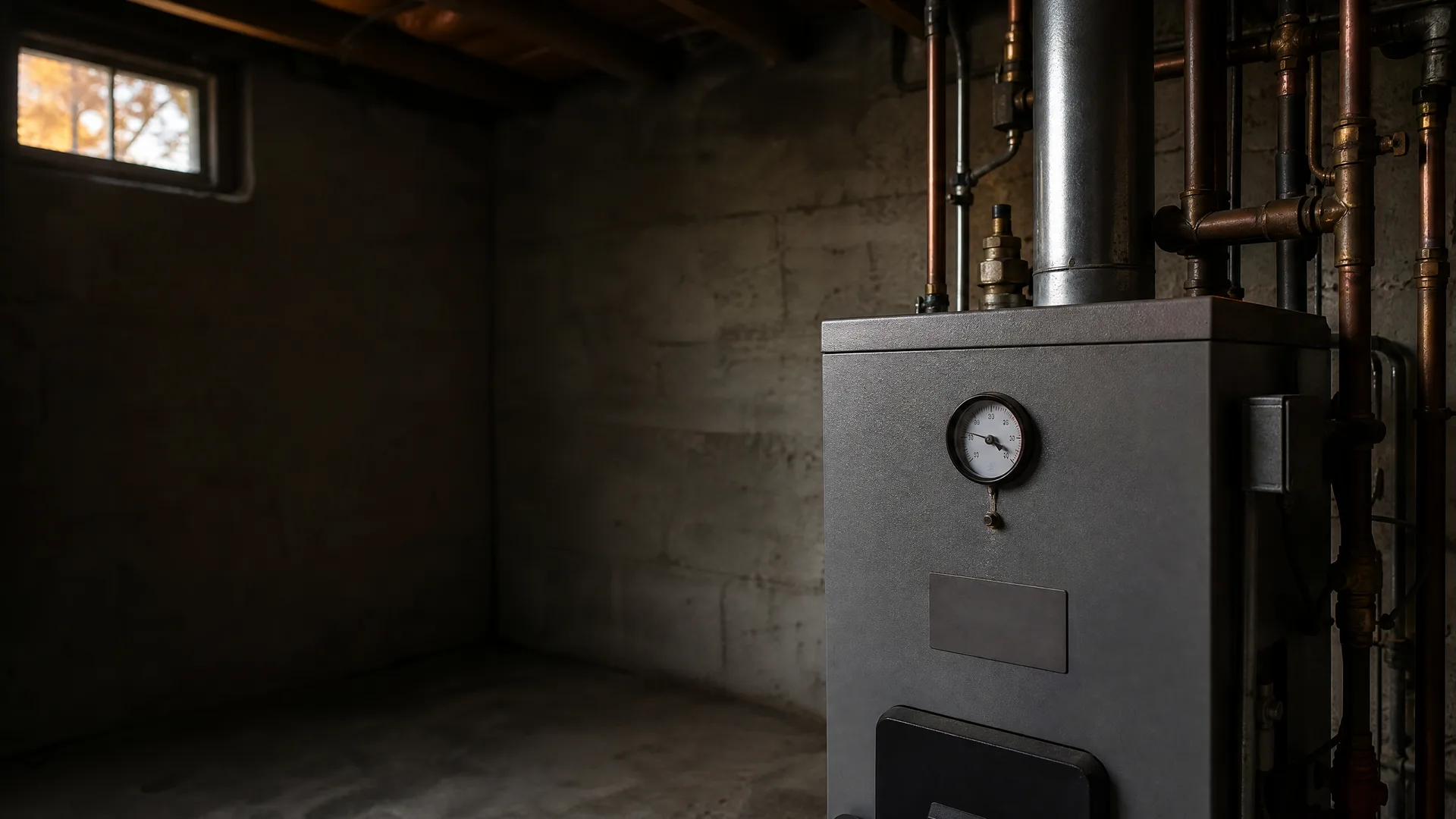
A gray boiler with a round pressure gauge and copper piping stands in a dim concrete basement lit by a small window showing yellow foliage.

You go down before dinner to check the boiler before the cold sets in for good. The gauge sits low on the dial, needle well under where it should rest. You'd noticed the radiator in the back bedroom wasn't getting hot except near the floor, and now you know why. The basement is cool and a little damp, the way it gets once the furnace hasn't kicked on much yet. You crouch by the boiler with a flashlight, looking at the pressure, thinking about which radiators to bleed first and whether you still have the key from last year. Outside, the afternoon is turning over to evening, the kind of gray that means Kansas won't give you many more warm days before the heat has to run every night.

Describe it once

A boiler guzzling water or a radiator that stays cold at the top is usually a quick fix, but finding out whether it's just trapped air or something worse, a failing valve, a leak at a joint, a pressure problem that keeps coming back, takes someone who's been inside a few hundred Kansas basements and knows which one it tends to be. That's the part worth handing off before the cold sets in for good. Instead of searching around, calling a few places, and walking someone through the same story about the gauge and the back bedroom radiator more than once, you send it once and a local contractor who works on boilers like yours all winter gets it directly. No one else is calling you about it. With the heat about to come on for the season, that's one less thing to chase down yourself while the gauge sits low and the back bedroom stays cold.

Doing it on your own schedule

You've already got the key and the dish out, so you can work through every radiator in the house in one evening, room by room, before the first hard freeze hits. Nobody's waiting on you and nobody's billing you by the hour. If a valve turns easy and the water runs clear fast, that room's done. The only cost is your time and whatever you learn by doing it, which is useful the next year too. It works fine as long as every valve cooperates and the pressure holds once you're through with the last radiator.


When it's worth a call

If a valve won't budge, or one radiator keeps needing air let out every few weeks no matter how carefully you bleed it, that's not something a key and a dish fix. A local contractor who services boilers all winter has likely seen that exact valve fail before and knows what it looks like compared to a pressure problem or a slow leak at a joint. You'd deal with one person who already knows boilers, instead of explaining the gauge reading and the cold spot in the back bedroom to three different companies before you get a straight answer.

A woman in a cream sweater with her hair in a bun laughs while seated at a stone counter holding a glass of red wine, in a dimly lit interior with a sofa, houseplants and a large window at night.
A woman with long dark hair in a cream knit sweater laughs while looking off to the side, seated in front of a dimly lit kitchen with an island, stools, open shelving and a potted plant, with a glass of red wine in the foreground.
A smiling woman with long dark wavy hair in a light knit sweater sits at a marble counter with a glass of red wine, with a dimly lit living room and kitchen in the background.
A smiling woman with long wavy brown hair in a beige sweater sits at a white marble counter with a glass of red wine, with a living room, dining table and kitchen cabinets behind her.
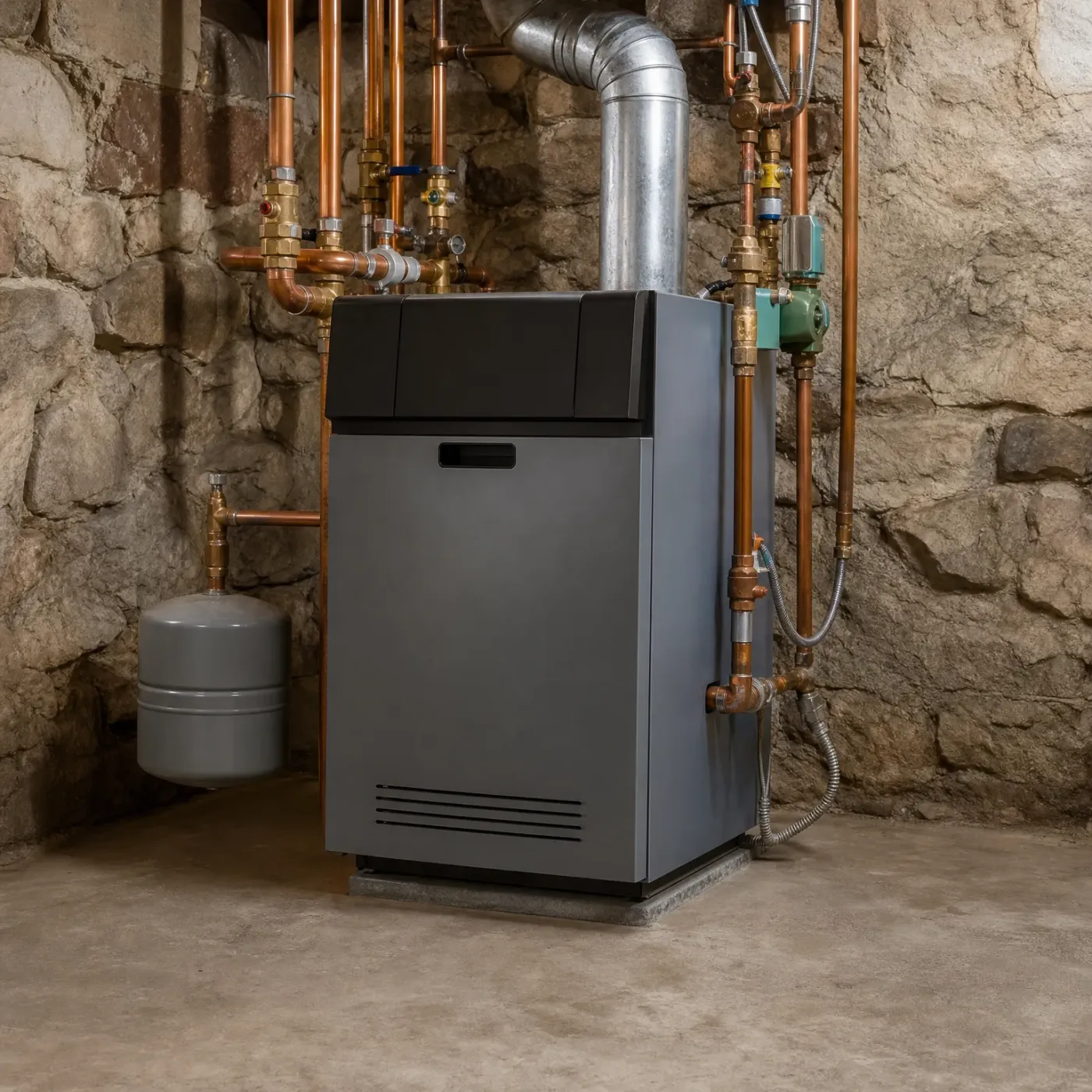
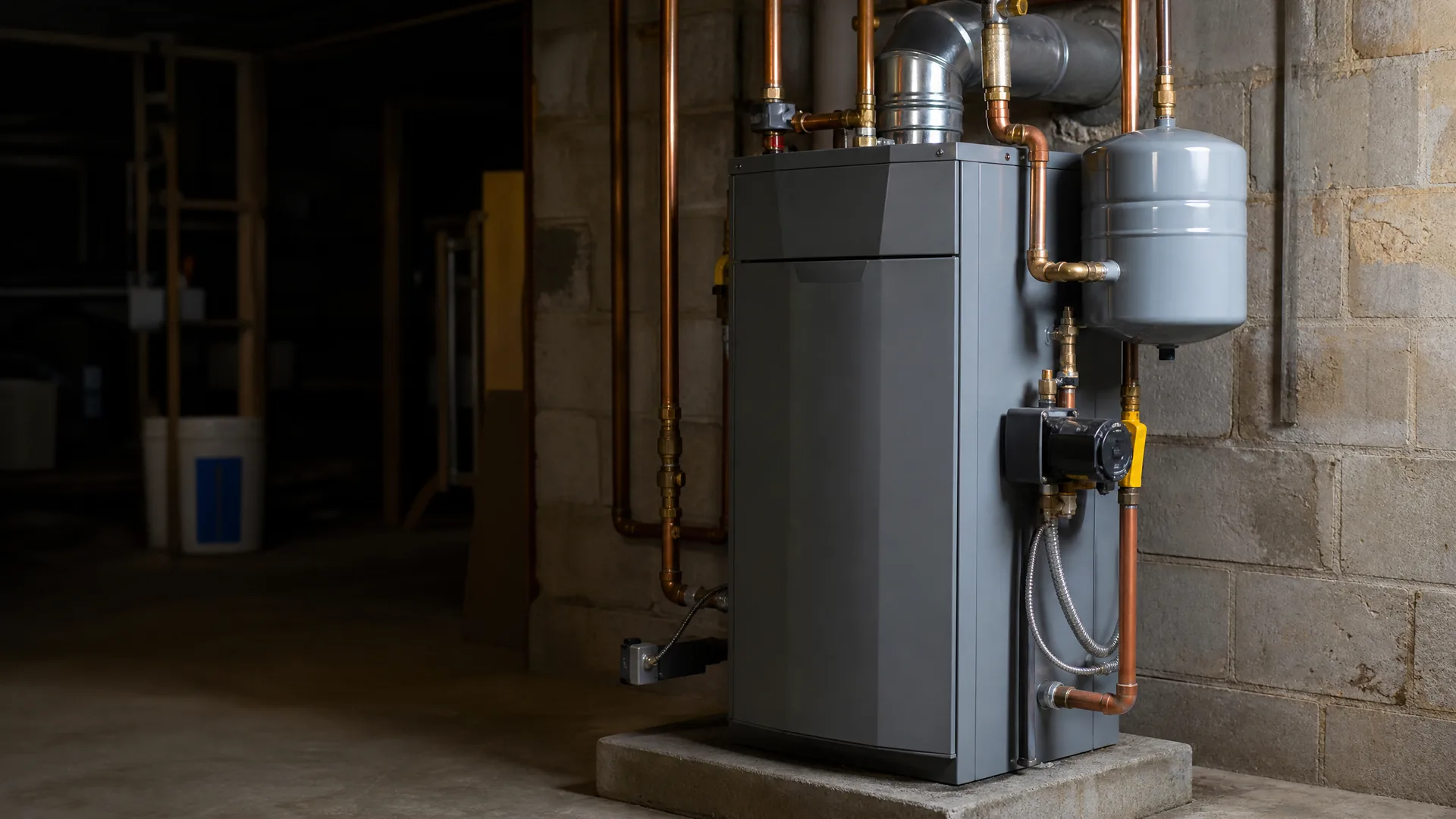
A gray residential boiler on a concrete pad in a basement with stone walls, connected to copper piping, brass valves, a circulator pump, an expansion tank, and a metal flue duct.

Running right

Pipes tight, pump turning, gauge holding steady where it should. Radiators heat evenly top to bottom because the system is full of water, not air. This is what a boiler looks like after it's been bled and nobody has to think about it again until next fall.

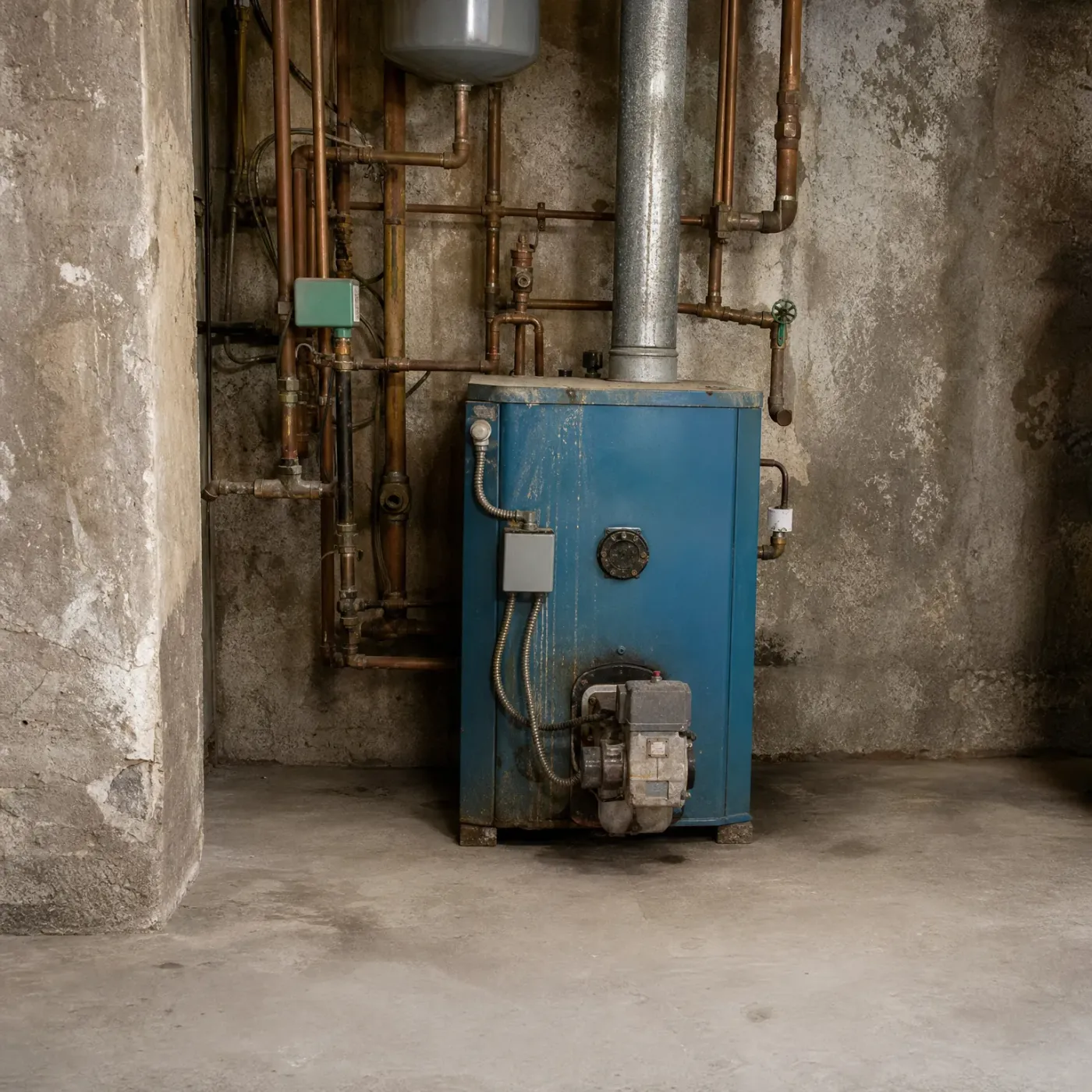
A blue cabinet boiler with a metal flue pipe and copper piping stands against a bare concrete wall in a basement with a concrete floor.

Losing pressure

That flue pipe and those fittings have been doing the same job a long time, and an old boiler like this one tells on itself. A cold spot on a radiator, a gauge drifting low, a pocket of air nobody bled out. Left alone, it just gets worse.

A smiling middle-aged man in a dark green sweater sits at a candlelit table with wine glasses and a plate of greens in a dimly lit interior.
A woman in a dark knit turtleneck sweater reclines on a couch under a cream knit blanket, looking down at an open book, with a lit table lamp and framed pictures behind her.

You bleed the radiators, the gauge comes back up, and the house holds heat evenly through a January night when the wind's working on the windows and the furnace next door is running nonstop.

You skip it, and the boiler keeps calling for water it shouldn't need, topping off a system that should hold steady for months at a time. That's wear nobody sees until the pump or the valve goes.

Winter nights average 23°F statewide

23°F is the average overnight low here in December, January and February. That's the kind of cold where a boiler runs most of the night, not just a few hours, and an air pocket in one radiator means part of your house doesn't catch up before morning.

NOAA nClimDiv 1991-2020 county normals weighted by homes

  1. Turn off the boiler and let every radiator cool fully.

  2. Fit the radiator key onto the square valve at one end.

  3. Hold a cloth and dish beneath the valve before turning it.

  4. Turn the key a quarter turn until air hisses out.

A dark gray floor-standing boiler on a concrete pad in a basement, surrounded by copper piping, brass valves, a gray expansion tank, a circulator pump, and a metal flue pipe against concrete block walls.
Copper lines tight, pump turning, gauge steady on a system that moved water through every radiator last heating season.
A blue boiler on a raised concrete pad in a basement corner, with copper and steel pipes, a gauge cluster, an expansion tank, and a metal flue running up the bare concrete walls.
This one's been losing pressure for years, and whoever opens that panel door next should know what they're looking at.
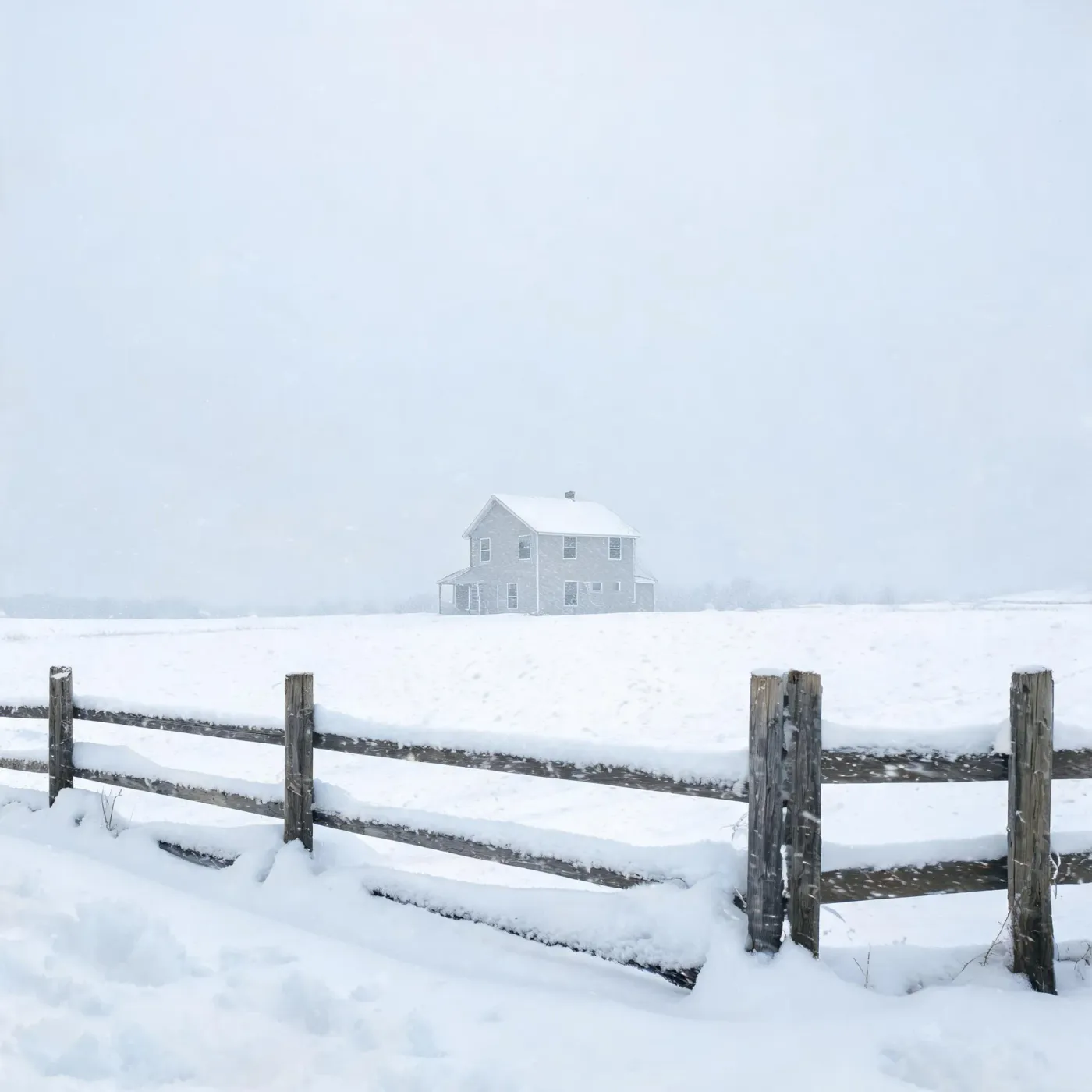
A two-story light-colored house stands alone in a snow-covered field under a pale sky, with a weathered wooden rail fence in the foreground.

Statewide, winter nights average 23°F, and a boiler here spends most of those hours actually running, not cycling on and off a few times before dawn. That's the National Weather Service average for Kansas. On a night that cold, a radiator with air trapped at the top can't make up the difference by morning. You'll feel it as a room that never quite warms, usually the one farthest from the boiler, while the gauge on the unit itself keeps dropping as it works to cover the gap.

NOAA nClimDiv 1991-2020 county normals weighted by homes

A closed silver laptop and a white cup of coffee on a saucer sit on a wooden table in front of a wooden chair, a plain beige wall, a potted leafy plant and a window with greenery outside.

Bleed the radiators before the cold settles in for good

A radiator cold at the top and hot at the bottom has air in it. Opening the valve a quarter turn and letting that air hiss out until water runs is what fixes it, on every radiator in the house, before you turn the boiler on for the season. The gauge should hold steady afterward, and every room should heat evenly on a night when it's 23 degrees outside and the boiler is running most of the night to keep up.

If the pressure keeps dropping after you've bled every radiator, or one valve won't close right, or you're just not sure what you're looking at, that's past what a key and a dish can tell you. A local contractor who works on boilers all winter can look at yours and tell you straight whether it's air, a leak, or a valve going bad, without you spending an evening calling around and telling three different companies the same thing about your gauge and your back bedroom.

A light-colored ceramic vase holding green leafy branches sits on a round wooden table, with a wooden-framed armchair draped in a cream throw, a tripod floor lamp, and sheer curtains blurred in the background.
A gray residential boiler on a concrete pad in a basement, with copper piping, a gas valve, a flue vent, and a gray expansion tank against a concrete block wall.

No phone calls to make

Step 1 of 3: Equipment