Profile view of a bearded man wearing a dark baseball cap and a dark gray T-shirt against a plain off-white background.

Is a high-efficiency boiler worth it in Kansas

Step 1 of 3: Equipment

A high-efficiency boiler is worth it for most Kansas homes that heat with gas, because winters here put real hours on the system, and a condensing boiler pulls more heat out of the same fuel than an older model does. The old units vent a lot of that heat straight out the flue. A high-efficiency boiler recovers more of it, so it burns less gas to hold the same temperature through a Kansas winter. That difference adds up over a full heating season, not a mild week. It also matters if your current boiler is old enough that parts are getting harder to source, since a failing unit tends to lose efficiency before it fails outright. For a house you plan to keep up for years, replacing an aging boiler with a high-efficiency one is a reasonable call. Whether it makes sense for your specific setup, including venting and gas line requirements, is worth having a contractor look at directly.

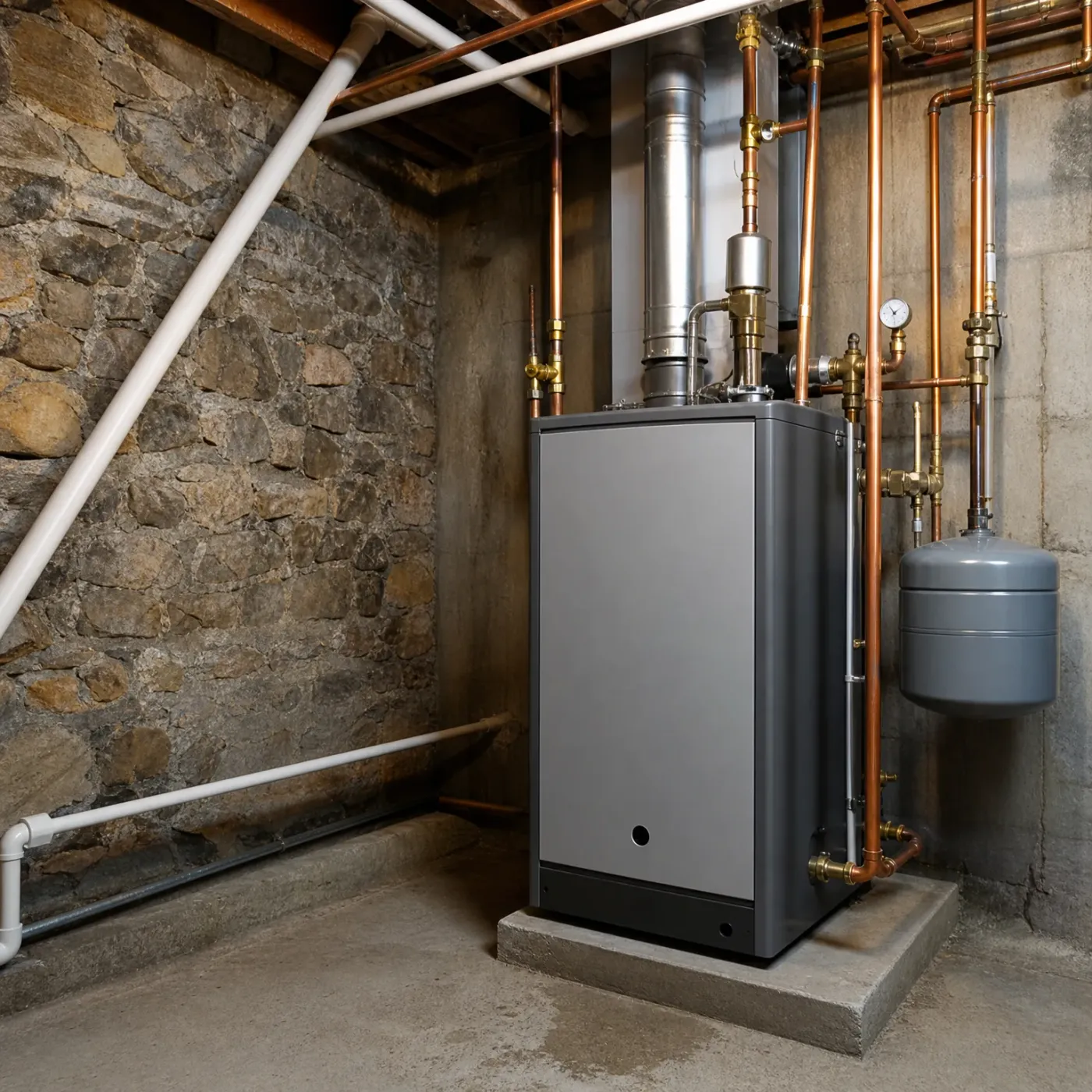
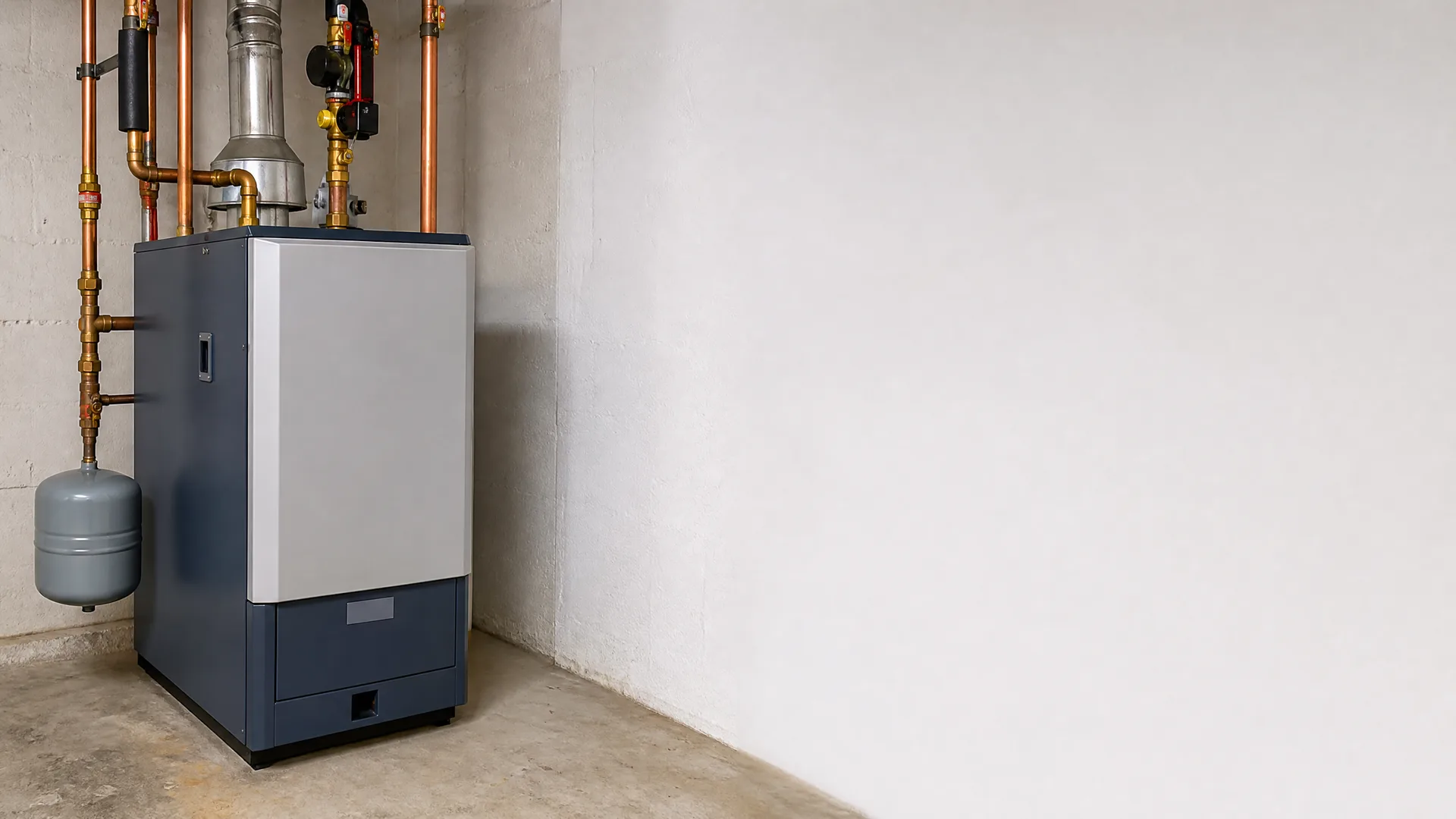
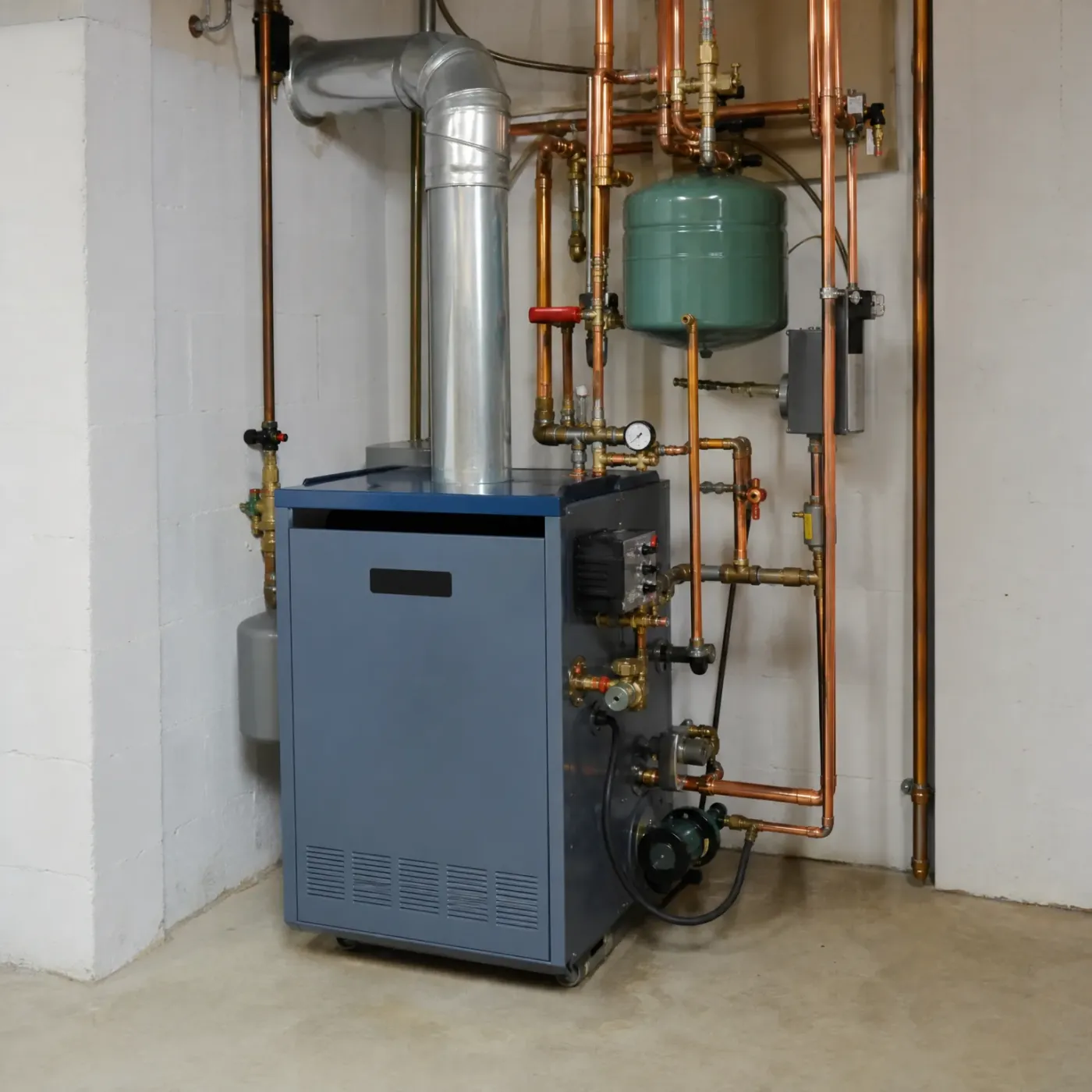
A gray and blue floor-standing boiler in a basement corner, with a metal flue pipe and copper and black piping, valves, and a gray expansion tank mounted on an unfinished wood-framed wall beside a concrete wall.
A newer condensing boiler like this one runs tight with sealed copper and brass fittings, wasting less heat up the flue.
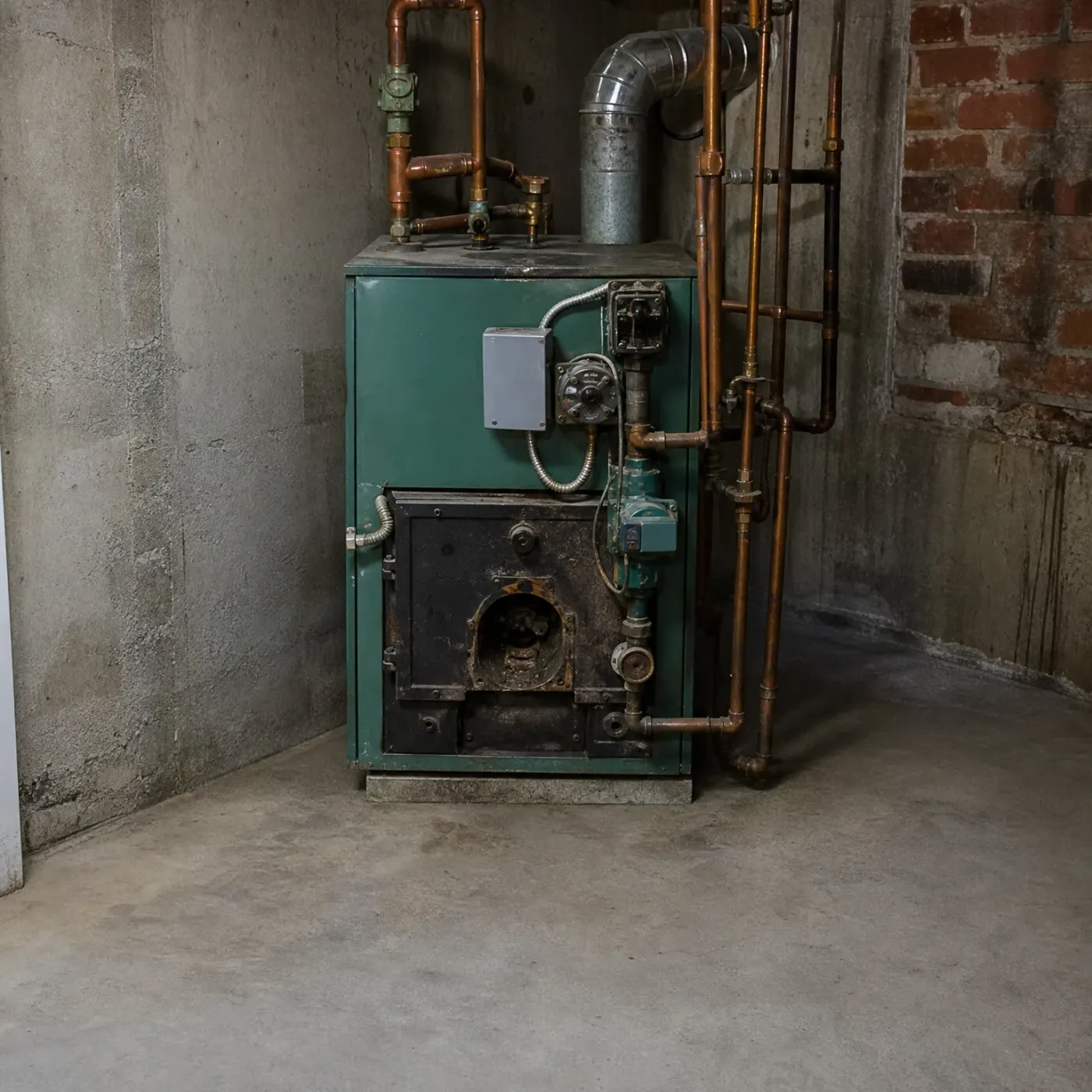
A green oil-fired boiler with a flue pipe, burner and circulator pumps sits on a concrete pad in a basement corner, surrounded by copper piping and an expansion tank against concrete walls.
An older cast iron or oil-fired boiler like this one works harder each winter and costs more to keep running as parts wear.

Standard Boiler vs High-Efficiency Boiler

Standard boiler

  • Vents a good share of its heat straight out the flue, so more of your gas bill is paying for heat you never get.
  • Cast iron sections and older seals wear and start to leak or crack after enough winters of hard use.
  • Keeps working on a wider swing between on and off, which means more cycling and more wear on the same parts.
  • Replacement parts for an older unit can get harder to source, especially on oil-fired models.
  • Runs less efficiently on the coldest days, right when your furnace or boiler is working hardest.

High-efficiency boiler

  • Condenses the exhaust gas instead of venting it hot, so more of the fuel you pay for ends up as heat in the house.
  • Sealed combustion with PVC venting means it is not pulling heated air from the house to feed the burner.
  • Modulating burners run at a lower, steadier output instead of cycling fully on and off all winter.
  • Costs more to install than a standard boiler, which is the tradeoff against the lower fuel use over time.
  • Needs a condensate line for the acidic water it produces, which is part of what a proper installation sets up correctly.
A gray-haired, bearded man in a dark coat dusted with snow stands smiling in a dimly lit room with a lamp, mirror, framed art, and a sofa in the background.
An older man with white hair and a beard, wearing a dark snow-dusted coat and scarf, stands in a warmly lit interior hallway with a framed landscape picture, a table lamp and a potted plant behind him, and a snowy view through a window at left.
An older man in a dark snow-flecked overcoat and scarf stands smiling in a warmly lit home entryway, with a glass-paned door showing darkness outside and a lamp-lit room visible through a doorway behind him.
An older man with gray hair and a beard, wearing a dark snow-dusted jacket and scarf, stands smiling in a warmly lit interior hallway with a lit table lamp, a vase of dried branches, and a framed picture in the background.

Why does your gas bill climb every winter

You've probably noticed the boiler runs long stretches on the cold days, and the flue pipe feels warm to the touch even when the burner's been off a while. That warmth is heat you paid for leaving the house. An older boiler also makes more noise as it cycles, a kind of banging or gurgling in the pipes that wasn't there a few years back. If yours has sat unattended through enough winters, watch for water around the base or rust on the fittings. Left alone, a leak like that can turn into a bigger repair, or a flood in the room where the boiler sits.

A gray and dark blue floor-standing boiler with copper pipes, a flue, and a small expansion tank stands in a basement corner with painted walls and a concrete floor.

How a condensing boiler holds onto heat

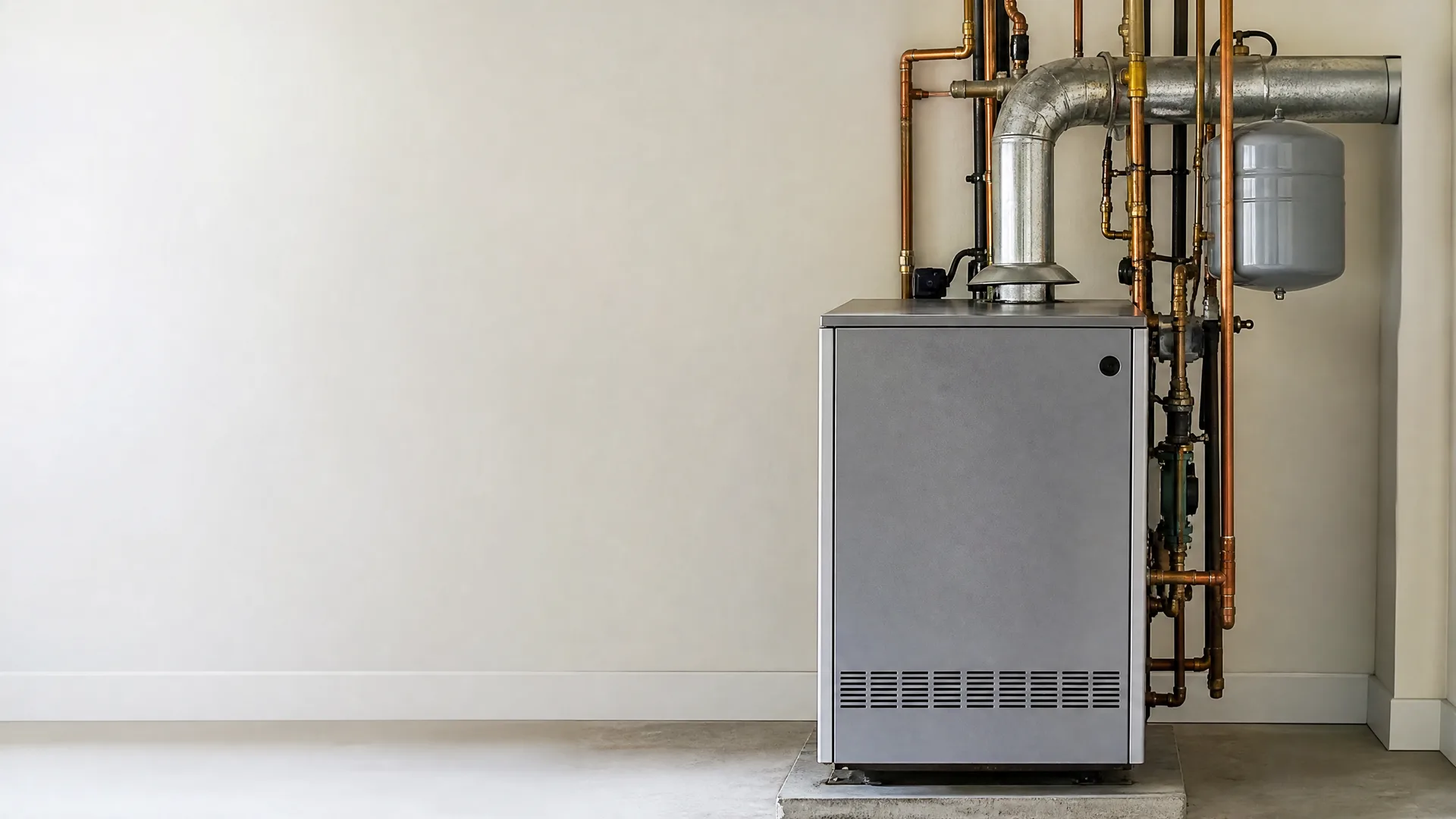
A condensing boiler cools the exhaust gas enough that water vapor in it turns back to liquid, and that change gives up extra heat into the system instead of out the flue. That's why the exhaust pipe on one of these runs cool enough to touch, and why it's plastic instead of metal. An older boiler can't do this, so that same heat just leaves the house.

A grey floor-standing boiler with a vented front panel stands against a plain light wall, connected to copper and galvanised pipework, a metal flue, and a cylindrical expansion vessel above.

What that means for a Kansas winter

Kansas winters run long enough that a boiler is firing for months at a stretch, not just a few cold snaps. Every degree of extra heat pulled from the gas instead of vented adds up over that many hours of runtime. A furnace or boiler running from November into March has a lot more chances to waste fuel than one that only kicks on now and then.

Winter nights average 23°F statewide

Those 23-degree nights are a statewide average, so plenty of them run colder where you are. Your boiler has to hit a higher water temperature to keep the house warm, and it holds that temperature for hours at a stretch. A condensing model keeps more of the heat it makes instead of sending it up the flue.

NOAA nClimDiv 1991-2020 county normals weighted by homes

Running what you already have

If your boiler is keeping the house warm and hasn't given you trouble, there's an argument for leaving it alone and putting money toward it only when it actually fails. Replacing a working system before it's worn out means paying for the install now instead of spreading that cost out over the years you'd still get from it. Some homeowners would rather wait until a cast iron section cracks or a seal gives out, then decide, instead of swapping out equipment that's still doing its job through a Kansas winter.
Switching before it fails

Waiting for a crack or a leak means you're choosing the coldest week of the year to deal with a breakdown, and you lose the chance to compare contractors and plan the work on your schedule. A condensing boiler installed now starts saving on gas right away instead of after a failure forces the issue. It also means you're not stuck calling around in a hurry for someone to replace it, comparing quotes under pressure, while the old unit still has heat to give and the house stays warm through the switch.

A green cast-iron boiler with a soot-stained front door, copper piping and a metal flue, standing on a concrete floor in a basement corner with concrete and brick walls.
Before you get your boiler installation
A blue-gray residential boiler in a basement corner, connected to copper piping, a green expansion tank, a circulator pump, gauges, and a metal flue pipe against painted block walls.
After you get your boiler installation
A gray floor-standing boiler on a concrete pad in a basement, connected to copper piping, a metal flue, a gauge, and a gray expansion tank, beside a stone wall and white insulated pipes.

Get the right pro for your boiler

Describe the project once instead of to every installer.

A local installer who puts in boilers gets your project.

Start one form

You only hire the pro if you want to.

A woman stands in the open black front door of a white-sided house with a dark shingled roof while a man in a navy jacket approaches along the walkway, with lantern wall lights, a potted shrub, and flowering garden beds nearby.

What actually happens inside the boiler when it fires

A standard boiler sends exhaust straight up the flue at high temperature, because if that gas cooled down inside the unit, the moisture in it would condense and corrode the steel heat exchanger. A condensing boiler is built from the start to let that happen on purpose. The heat exchanger is stainless steel or aluminum, and a second coil downstream cools the exhaust far enough that the water vapor in it turns to liquid, and that condensation drains out through a small plastic pipe near the unit. That's one way to tell which kind you have without opening anything up. If there's a PVC pipe running from the boiler to a floor drain or condensate pump, it's condensing. A flue that's metal and warm to the touch with no drain line means it isn't.

Matching the right size and venting setup to your house is where this gets specific to your situation, not just the equipment. A contractor who looks at your gas line, your existing flue, and how your boiler is piped now can tell you what swapping it out actually involves, and get in touch once they've seen what you're working with.

A wooden table holding a stone vase with a bare branch, two stacked books and a small dark bowl, beside a window with green foliage outside and a sofa in the dim background.
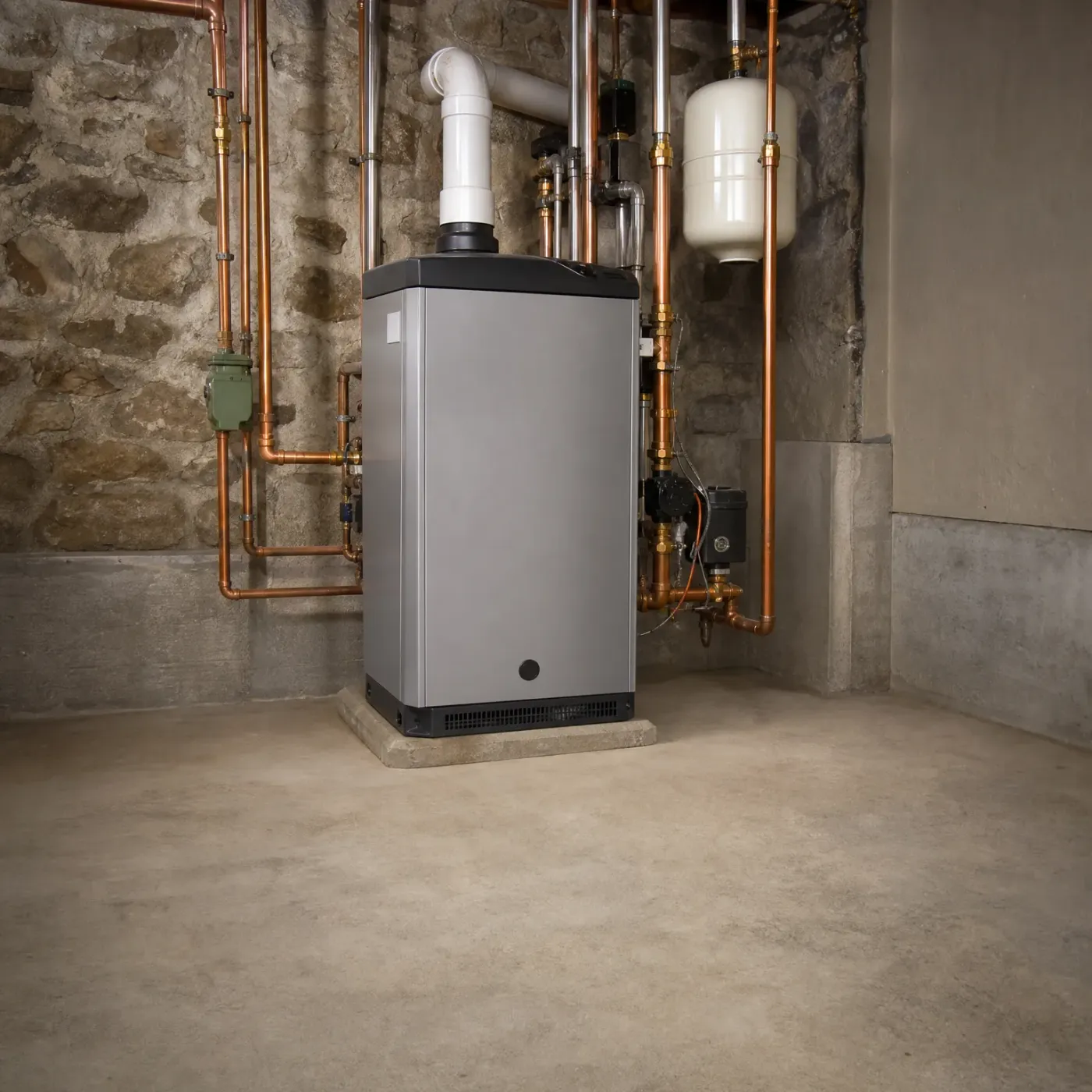
A gray floor-standing boiler on a concrete pad in a basement, connected to copper pipes, a white expansion tank, and a white PVC vent against a stone and concrete wall.

A condensing boiler installed right

This one sits clean on its pad, copper and brass fittings tight, venting through PVC instead of metal flue. That PVC pipe is the giveaway that it's pulling extra heat out of the exhaust before letting it go.

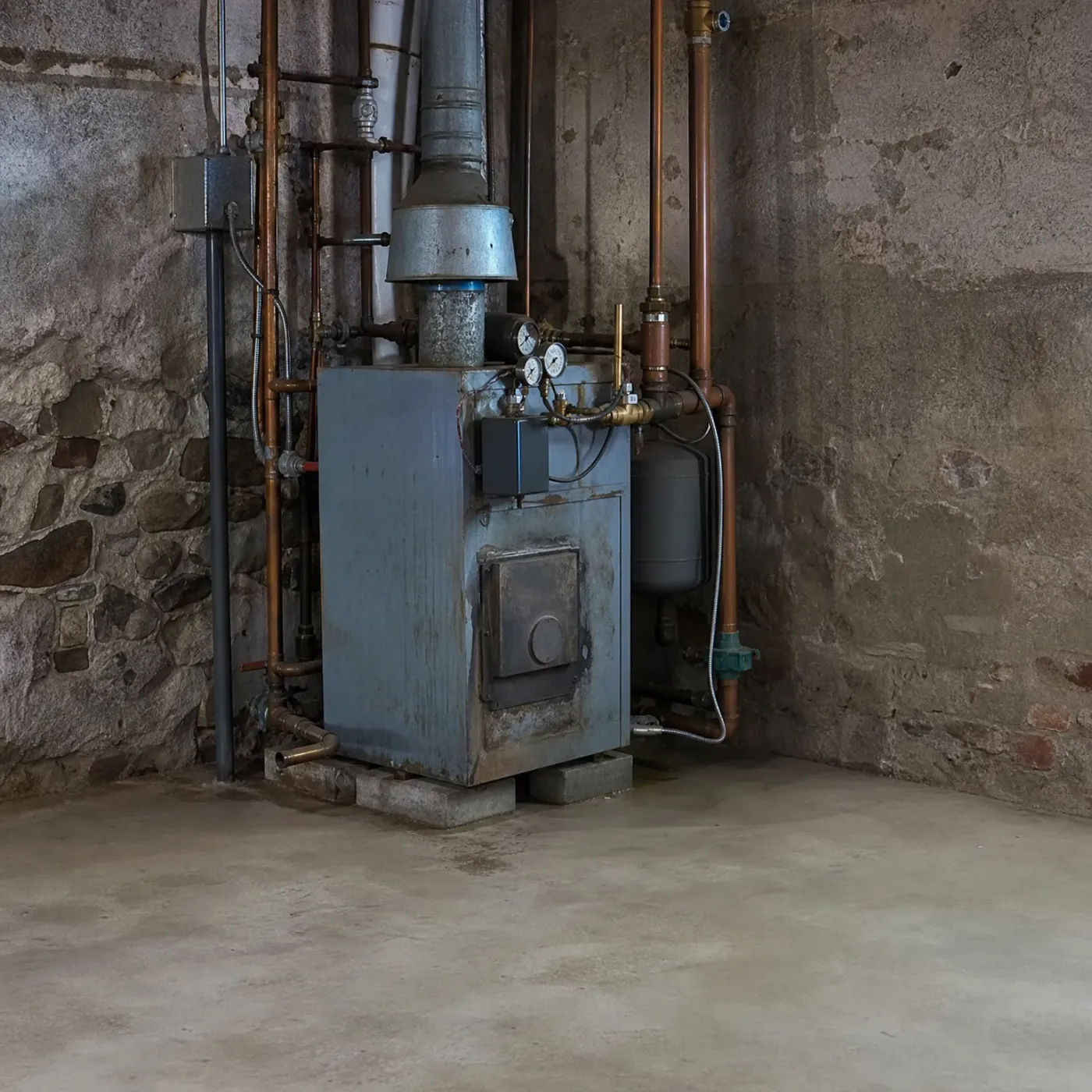
An older gray boiler with a metal flue, copper piping, pressure gauges and an expansion tank sits on concrete blocks in a basement corner with stone and concrete walls.

An old cast iron boiler still running

This one has been through a lot of winters. The wide flue pipe carries exhaust out hot, heat you paid for that never reaches your radiators. Pressure gauges and valves age with it, and cast iron sections can crack after enough years of hard cycling.

How does a condensing boiler avoid corroding like the old kind would

You've heard that letting exhaust cool down inside a boiler ruins it, which is exactly what a standard boiler avoids by keeping that exhaust hot all the way out the flue. So if a condensing boiler deliberately cools the exhaust enough to pull extra heat from it, you want to know why that doesn't just wreck the unit the same way.

It's built from different metal, so the corrosion that would ruin a standard unit doesn't touch it

A standard boiler uses a steel heat exchanger, and steel corrodes fast once that acidic condensate touches it, which is why the design keeps exhaust gas hot and moving straight out. A condensing boiler is built around stainless steel or aluminum instead, metals that hold up against the condensate rather than rusting through. The unit is also designed to drain that condensate away through a dedicated line rather than let it sit and pool against the metal. That's the whole difference. Same chemistry happening inside both units, but one is built to let it happen safely and the other is built to prevent it from happening at all.

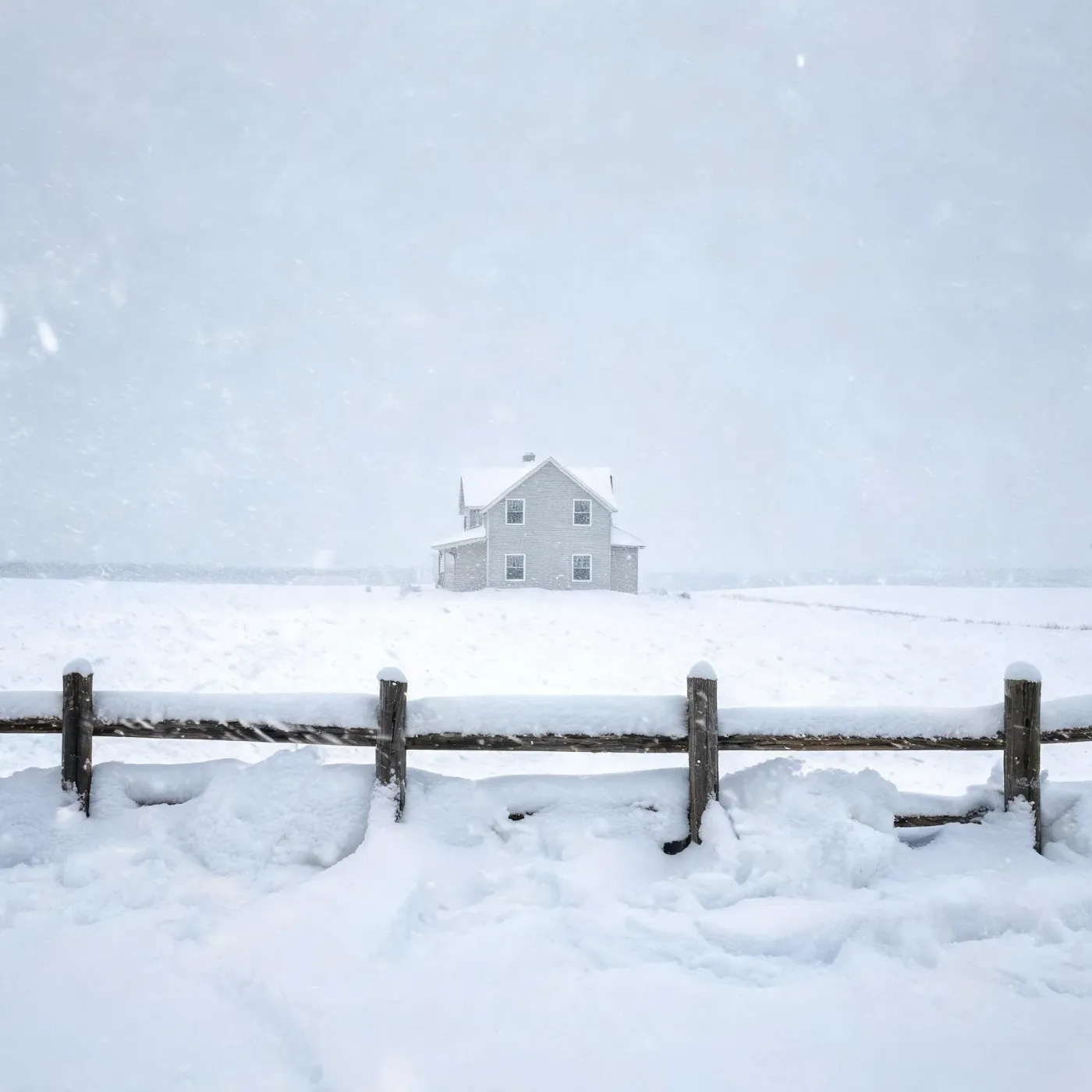
A two-story light-colored house with a gabled roof stands alone in a snow-covered open field during falling snow, with a snow-topped wooden post-and-rail fence crossing the foreground.

The National Weather Service puts the statewide average winter night at 23°F. On a night like that your boiler isn't just cycling on and off, it's running long stretches to hold the house at temperature, and it keeps doing that for months, not days. An older boiler sends a good share of that effort straight out the flue as wasted heat, which is why the room by the furthest radiator still feels cooler than the rest of the house. A condensing boiler holds onto more of that heat on the same cold night, so it doesn't have to work as hard to keep the far end of the house even. Over a whole winter of nights near that mark, that difference shows up in how evenly the house holds heat, not just in one reading on one night.

NOAA nClimDiv 1991-2020 county normals weighted by homes

A woman wrapped in a cream textured blanket sits in an armchair beside a lit lamp and a dark window, with an open book in the foreground.
A smiling older woman with gray hair in a cream knit sweater stands in a dimly lit kitchen beside a window showing snow outside, with a round loaf of bread on the counter in the foreground.

Where that leaves you

  • A high-efficiency boiler costs more to put in than a standard replacement, but it pulls more heat out of the same gas over a Kansas winter.
  • Your current boiler's condition, age, and venting setup all factor into whether swapping it now makes sense or waiting does.
  • A cast iron or oil-fired boiler that's still running fine doesn't need to be replaced just because a more efficient option exists.
  • Getting quotes on a condensing boiler usually means contacting several contractors, explaining your setup to each one, and comparing bids that aren't laid out the same way.
  • A contractor who looks at your specific boiler, your venting, and your gas line can tell you what a condensing unit would actually cost to install in your house.
  • The answer to whether it's worth it depends on your boiler's age and condition, not just the statewide numbers.

A condensing boiler makes sense for a lot of Kansas homes, because the winters here are long enough and cold enough that the fuel savings add up over the years you keep it. But that's a general answer, and your boiler isn't a general case. If it's cast iron or oil-fired and still heating the house without trouble, there's no rule saying you have to swap it out now. If it's old enough that parts are wearing or it's started needing repairs more often, that changes the math. The venting matters too. A condensing boiler vents through PVC, not metal flue, and whether that's a simple swap or a bigger job depends on how your house is set up.

None of that is something a statewide average can tell you. It takes someone looking at the actual boiler, the actual vent run, and the gas line feeding it. Getting to that point usually means calling around to a few contractors, walking each one through the same details about your setup, and then trying to make sense of quotes that don't break down the same way twice. That's the part that takes the time, more than the work itself.

Answering the question for your house means getting a contractor who installs these in Kansas homes to look at what you've actually got and tell you what it would take.

Corner of a house with cream horizontal lap siding and tree shadows, beside a covered porch with a square column, wooden deck, steps, white balusters, and a shrub at right.
Corner of a white clapboard house with a multi-pane wood window in warm low-angle sunlight, with hydrangea shrubs and other green foliage growing along the base and dark trees behind.
A wooden front door with divided-light glass panes set under an arched entry on a white shingled house, with a black wall lantern, a tall gray planter, flowering shrubs, and a flagstone walkway.
Exterior corner of a house with cream horizontal siding, a dark-framed three-section window, and a stone veneer foundation, with white hydrangeas and clipped shrubs along a paved walkway and tree branches overhead.
Corner of a white-clad house with a dark-framed grid window, dark downspout and eaves, surrounded by trimmed hedges, shrubs, white hydrangeas and a leafy tree in sunlight.

A pro who works on boilers

Skip collecting and comparing quotes for the new boiler.

Skip calling around

Asking costs nothing, and the choice to hire stays yours.