
Repair or replace an old boiler in Kansas

Send it once and finding someone is no longer on you.

Let a pro reach out

Should I repair my old boiler or replace it?

A boiler that's acting up in the middle of a Kansas winter puts you in a tough spot fast. You don't want to throw money at a repair if the thing is just going to quit again next month, but you also don't want to replace a boiler that still has a few good years left. The decision usually comes down to the age of the unit and what's actually gone wrong with it.

Replace a boiler that's 15 years or older if it needs a major repair

A boiler built to last 15 to 20 years starts failing in more expensive ways once it passes that mark. A cracked heat exchanger, a failed circulator pump, or a control board that's gone bad on an old unit usually costs enough to repair that putting the money toward a new boiler makes more sense. A younger boiler with a minor issue, like a bad valve or a thermostat problem, is worth fixing outright. Winters in Kansas are hard on a boiler that's already struggling, and a unit on its last legs is more likely to leave you without heat on the coldest night of the year, not the mildest one.

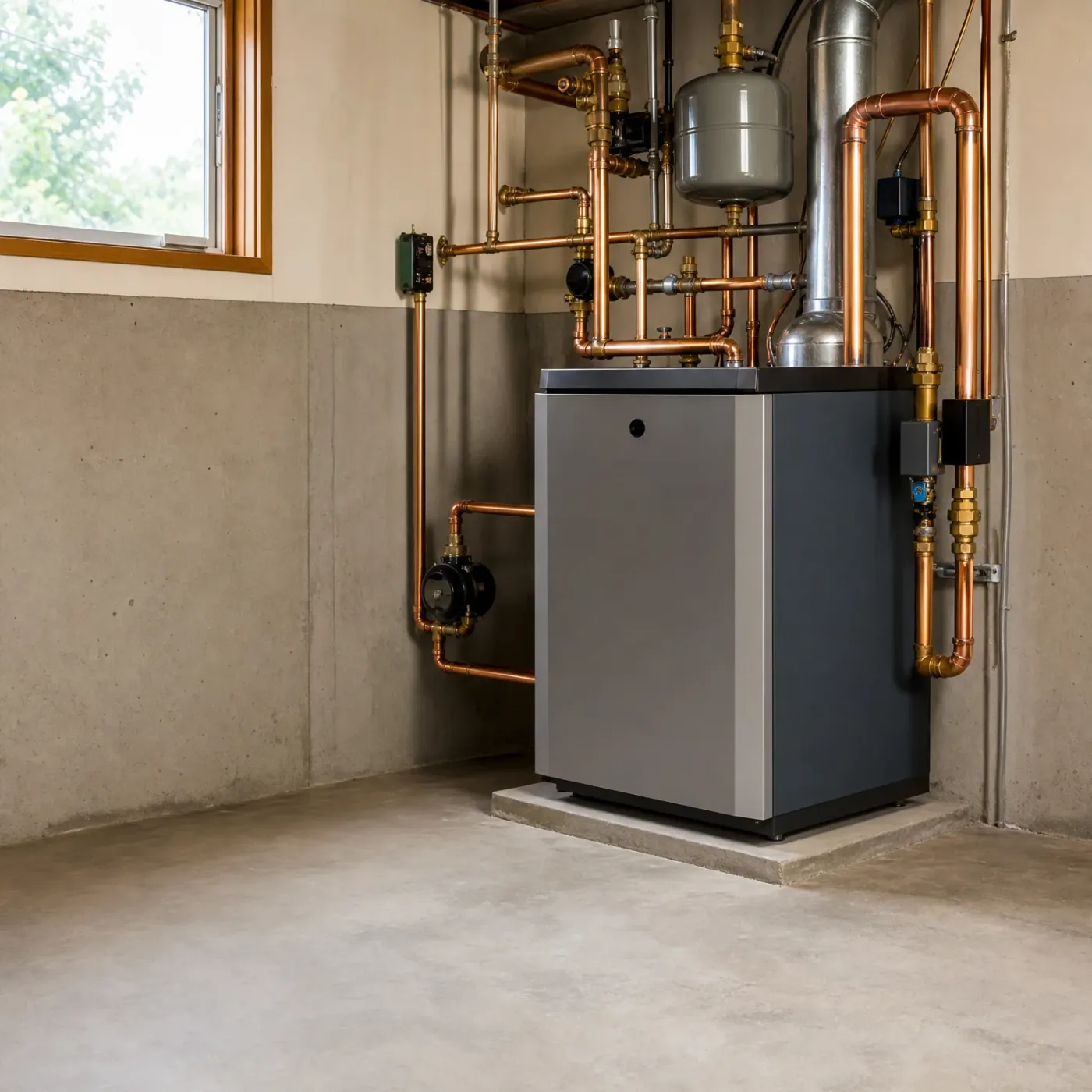
A gray floor-standing boiler on a concrete pad in a basement corner, connected to copper piping, brass valves, a circulator pump, an expansion tank, and a metal flue, with a window at upper left.

Keeping it running

A boiler that's heating evenly and holding pressure the way it should is worth another season. If yours fires up without hesitation and the pipes and fittings around it look sound, a repair now can carry you through this winter and the next one.
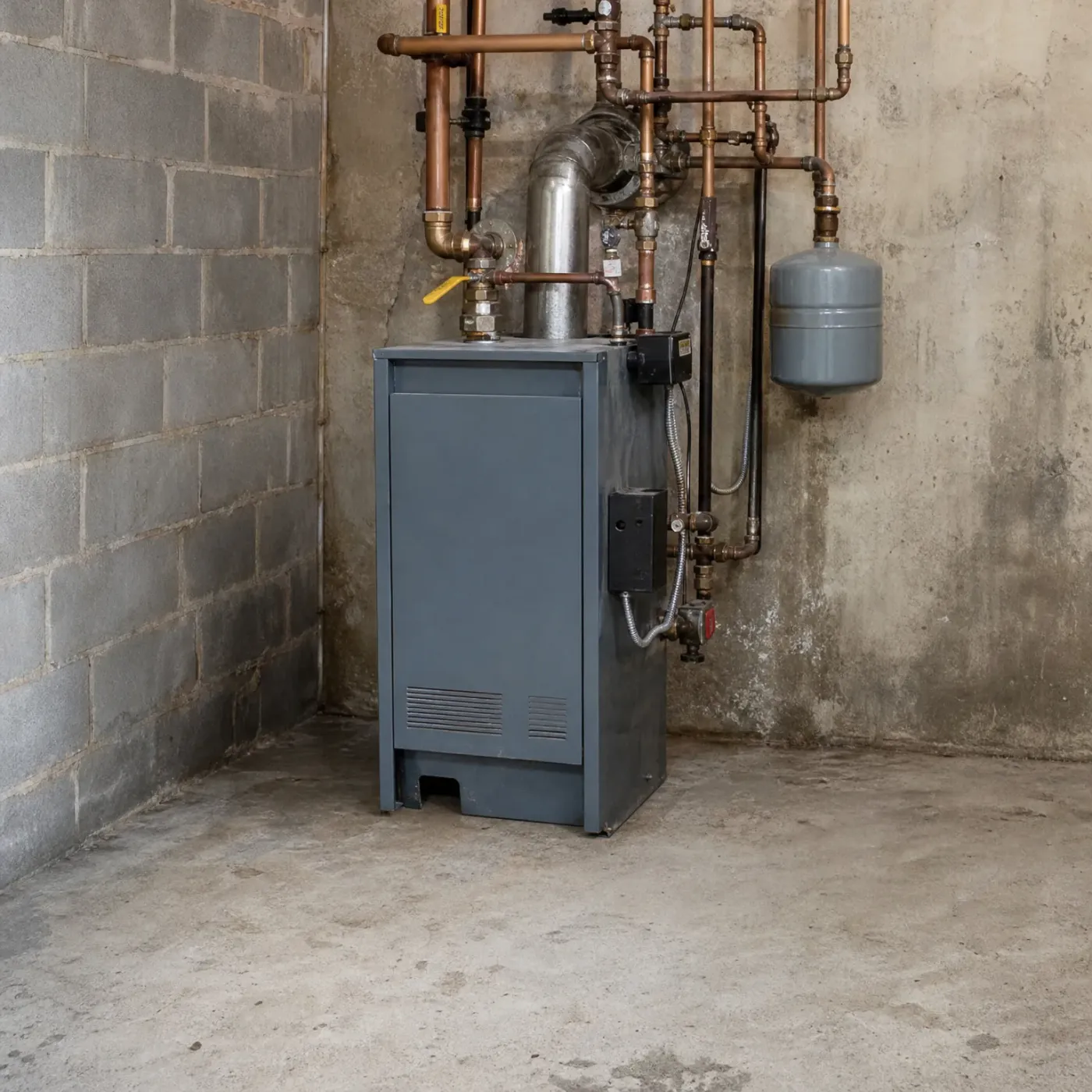
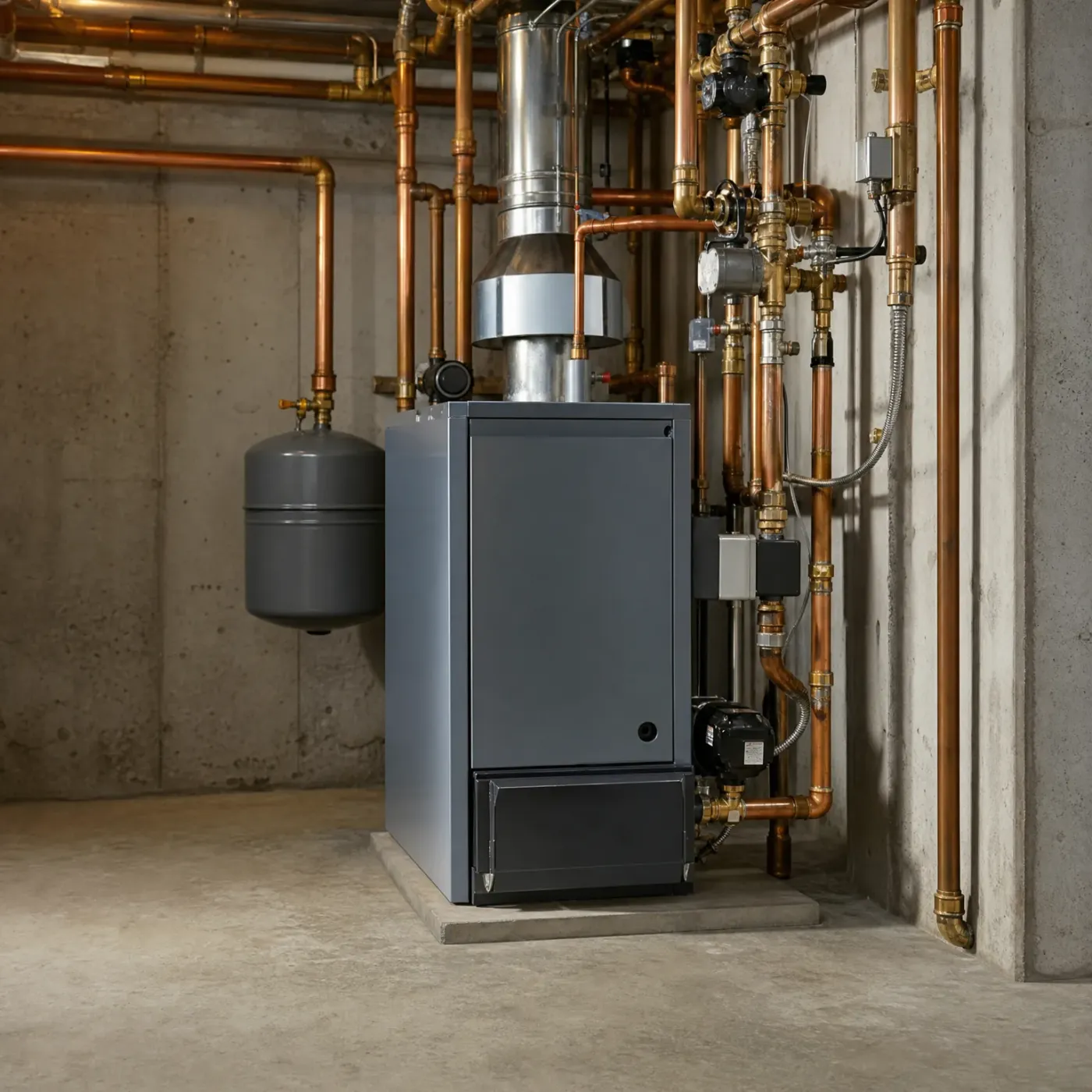
A gray floor-standing boiler in a basement corner with copper and black piping above it, a flue vent, and a gray expansion tank mounted on the concrete wall beside a concrete block wall.

Past the point of fixing

A boiler that's leaking at the fittings or struggling to keep pressure is telling you something. Once the unit itself is the problem and not just a part, a repair buys you a few months at best. Replacing it ends the guessing.

Fix It or Replace It

Repair

  • A cracked heat exchanger or a leaking circulator pump can often be swapped out without touching the rest of the system.
  • If the boiler is still under warranty, a repair may cost you nothing but the labor to get it done.
  • A single repair keeps you heating through this winter without the days it takes to size and install a new unit.
  • Gas boilers that have been maintained can run for decades past a repair, so one fix doesn't mean the clock is about to run out.
  • Repairing lets you spread out the bigger expense of replacement to a year when you're ready for it.

Replace

  • A boiler that needs its third repair in two winters is telling you the next failure is closer than you think.
  • Newer boilers burn less gas for the same heat, which matters over a Kansas winter that runs long.
  • Replacing now means you pick the unit and the timing, instead of making the call during a January cold snap with no heat.
  • If parts for your boiler are getting hard to find, a repair might take longer than you can afford to wait.
  • A new boiler comes with its own warranty, so you're not paying out of pocket again for years.
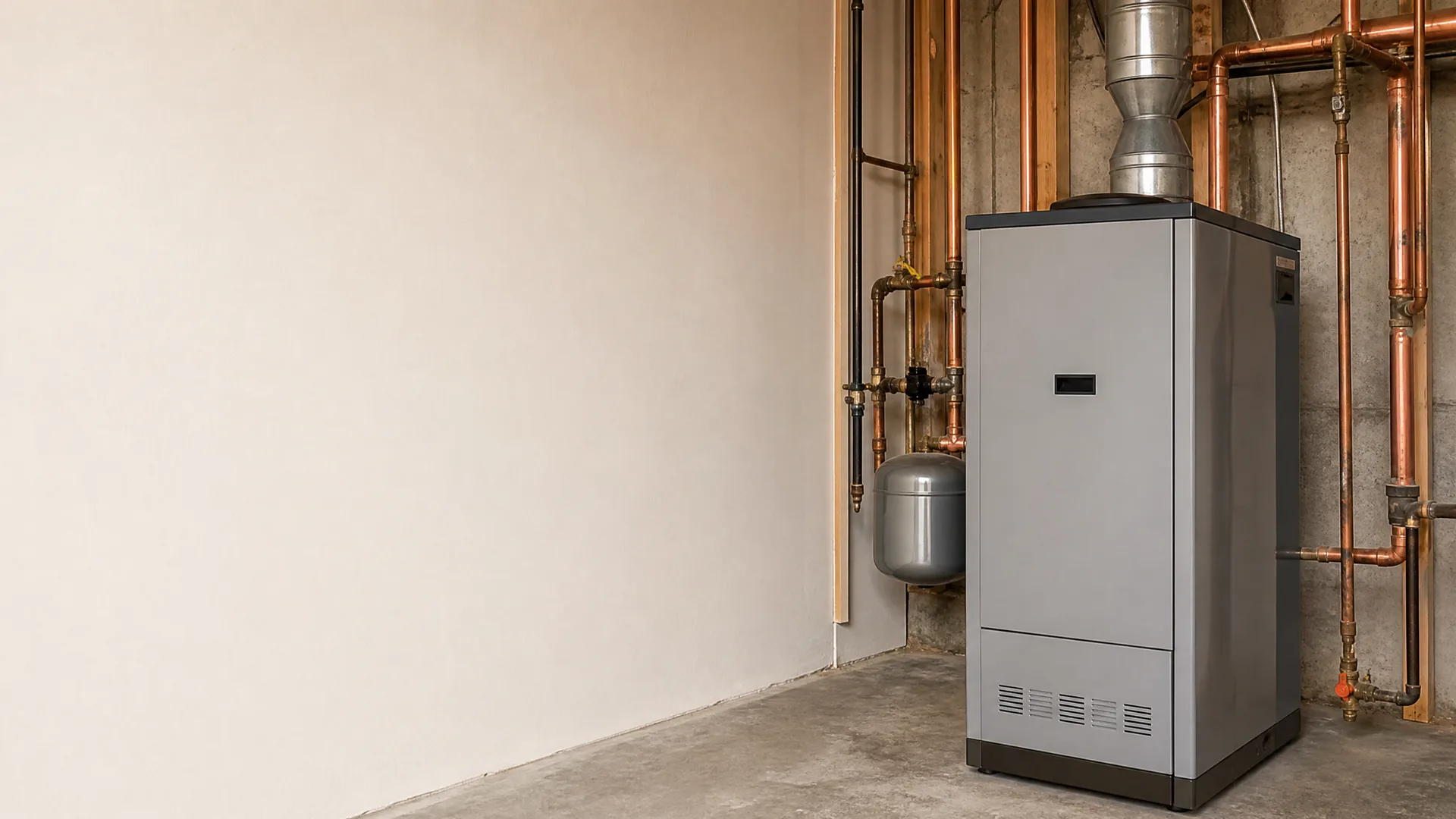
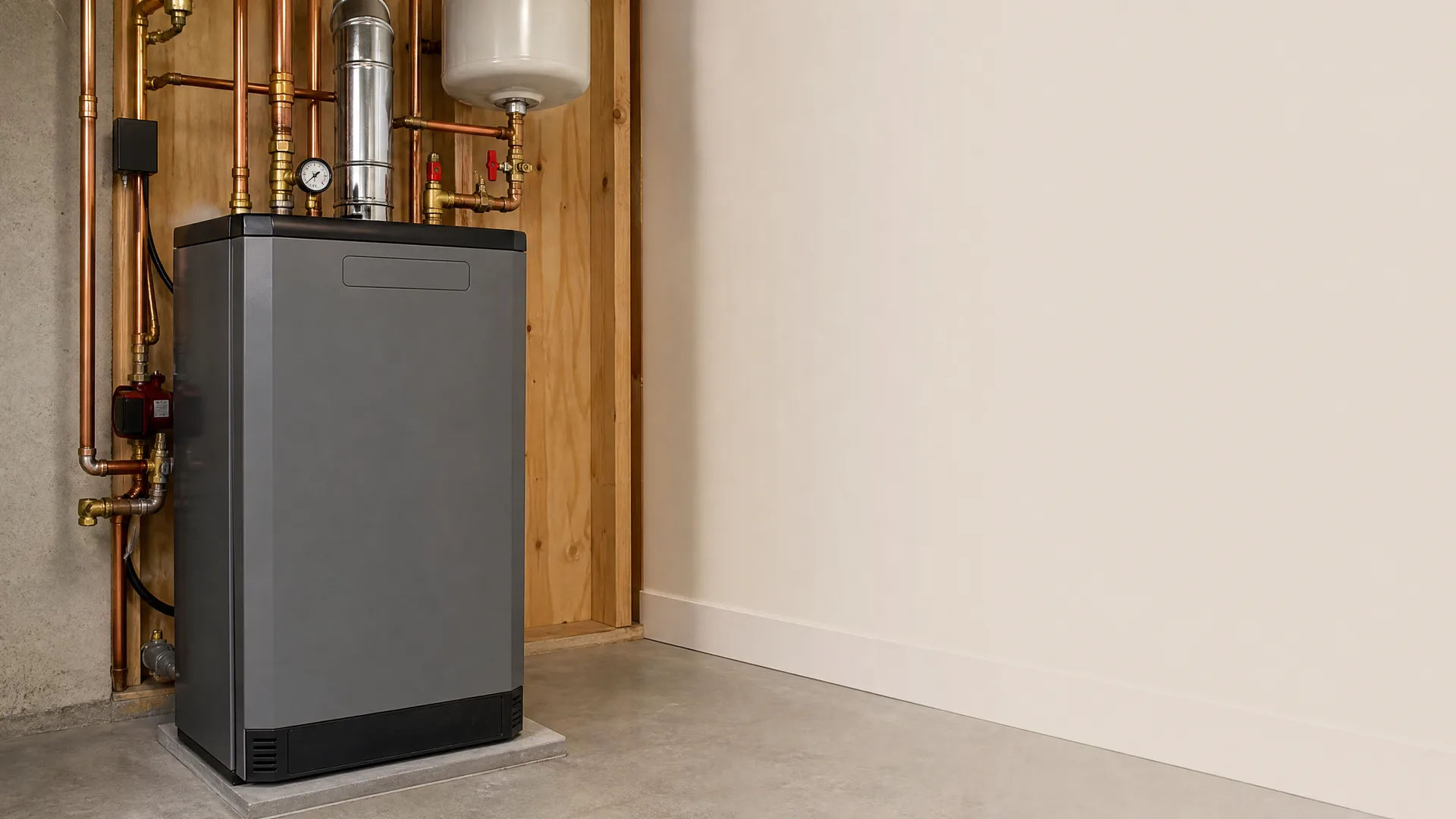
A dark grey floor-standing boiler on a concrete floor in front of a plywood wall, with copper pipes, valves, a pressure gauge, a flue pipe and a white expansion tank above it, beside a plain light-coloured wall.

Why age changes the math

A boiler loses efficiency slowly, then all at once. Scale builds inside the heat exchanger, the burner works harder to hold the same temperature, and the gas bill creeps up a little more each winter even though nothing has failed yet. Past a certain point the unit is spending more fuel to make the same heat it made for less a few years back. That's a cost a repair doesn't touch, because the parts being replaced aren't the ones losing you money.

A gray boiler unit with a metal flue pipe stands in a basement corner, surrounded by copper piping and an expansion tank against a plain light wall and concrete floor.

What a cracked exchanger means

A heat exchanger that's cracked isn't a part you patch. It's the piece that separates the combustion gases from the water running through your system, and once it fails that separation is gone. Most manufacturers don't sell it as a standalone part for units past a certain age, so a contractor finds it cracked and the repair conversation ends there. It's one of the few failures where the boiler itself decides the answer for you.

Winter nights average 23°F statewide

That 23°F average is the overnight low, not the cold snap. Your boiler is built to hold a steady temperature through nights like that for months at a stretch. An old heat exchanger or a failing circulator pump doesn't get a break until spring, which is why a borderline repair tends to show its limits in January, not October.

NOAA nClimDiv 1991-2020 county normals weighted by homes

A man in a blue sweatshirt reclines with closed eyes in a brown leather armchair in a living room with a bookshelf, houseplant, sofa, window, and a side table holding newspapers and a dark mug.
A bearded man in a gray pullover reclines with closed eyes on a brown leather sofa in a sunlit room with a window, framed picture, potted plant, and a wooden cabinet holding papers and a dark mug.
A man in a gray sweater leans back with closed eyes in a brown leather armchair beside a wooden side table holding a dark mug and a folded newspaper, with bookshelves and a window seat behind him.
A man in a green sweater reclines in an armchair with his eyes closed and a slight smile, beside a window with plants, a small table holding a mug and folded newspaper, and bookshelves behind him.

Let someone else find the pro

Skip collecting and comparing quotes for the new boiler.

You're not committing to anything by asking.

How a boiler actually works

  • A boiler lights its burner, heats water in the exchanger, then pushes it out through the supply line to your radiators or baseboards.
  • A circulator pump keeps that hot water moving; when it fails, parts of the house go cold while the boiler itself still runs fine.
  • An aquastat reads the water temperature and tells the burner when to fire and when to shut off, holding the system near a set point.
  • Pressure in a closed system is kept steady by an expansion tank, and a pressure relief valve opens if it climbs too high.
  • Sediment and mineral scale settle in the bottom of the exchanger over years, insulating the metal and forcing the burner to run longer for the same heat.
  • A failed igniter or flame sensor stops the burner from lighting at all, which reads to most homeowners as a dead boiler even when the rest of the system is sound.

A boiler's job looks simple from the thermostat, but there's a sequence behind it. The burner lights, heats water inside the exchanger, and a circulator pump pushes that water out to the radiators or baseboards around your house. The aquastat is what tells the burner when to fire and when to rest, holding the water near a set temperature instead of letting it run constantly. Meanwhile the system stays sealed and pressurized, with an expansion tank absorbing the water's natural swings as it heats and cools, and a pressure relief valve standing by in case something pushes that pressure past where it should be.

Most of what goes wrong traces back to one part in that chain rather than the boiler as a whole. A circulator pump that seizes up will leave the boiler firing normally while one end of the house goes cold, because the heat has nowhere to go. An igniter or flame sensor that fails stops the burner from lighting at all, and that one looks like a dead system even though the exchanger, pump, and aquastat are all fine. Age works against the exchanger itself in a quieter way. Sediment and mineral scale build up inside it year after year, coating the metal and making the burner work longer to push out the same heat. None of this means a repair is the wrong call. It means the right fix depends on which part in that sequence actually failed.

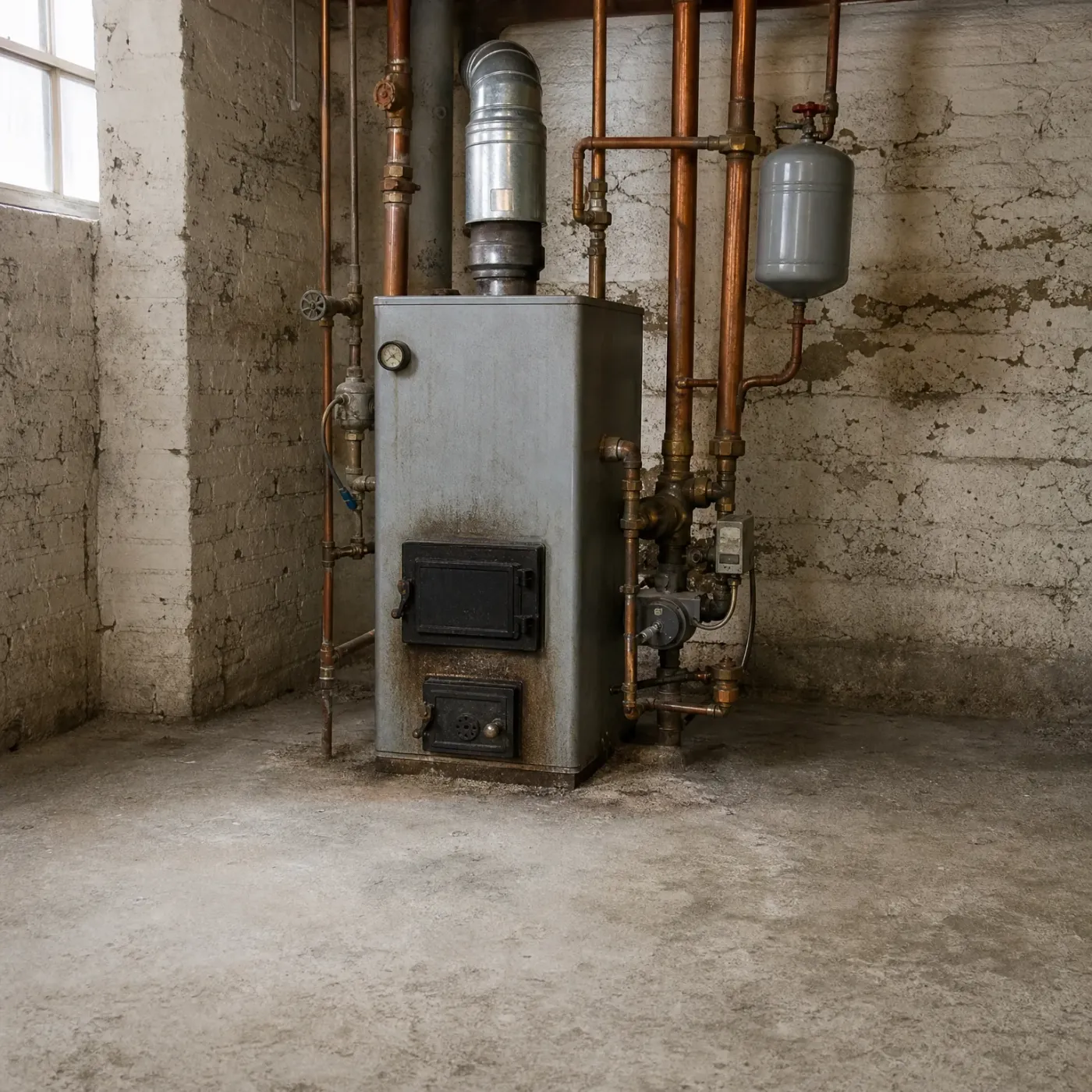
An old gray boiler with copper piping, a flue duct, pressure gauge and an expansion tank stands in the corner of a basement with painted masonry walls and a bare concrete floor.
Before you get your boiler installation
A gray boiler on a concrete pad in a basement, connected to copper piping, valves, circulator pumps, a metal flue, and a wall-mounted expansion tank.
After you get your boiler installation

A boiler that still holds pressure and heats evenly can earn its keep for another winter. One that's leaking, short-cycling, or asking for repairs every few months is telling you it's done. The age and the pattern of what's going wrong are the two things to weigh, and most of the time the boiler itself has already shown you the answer. What changes once you decide on a new install is simpler than the decision itself: you stop being the one calling around Kansas for quotes, explaining the same leak or the same cold radiator to every contractor who picks up, and trying to judge who's worth the call back. Send the form and that search is off your plate. Someone who installs boilers for a living takes it from there, and you go back to deciding when you want it done, not who can even do it.

An older man with gray hair and a beard leans back on a beige sofa with his eyes closed, in a sunlit room with potted plants, a wicker chair and large windows behind him.
A woman in a cream knit sweater sits in an armchair with her eyes closed and a slight smile, beside an open window showing orange autumn foliage, with a mug, books and a lit candle on a small side table.

Boiler Installation

One request and it's handed off

Skip the round of in-home estimates for a new boiler.

A black-framed smartphone standing upright against a plain white background, its screen filled with solid green.
Step 1 of 3: Equipment