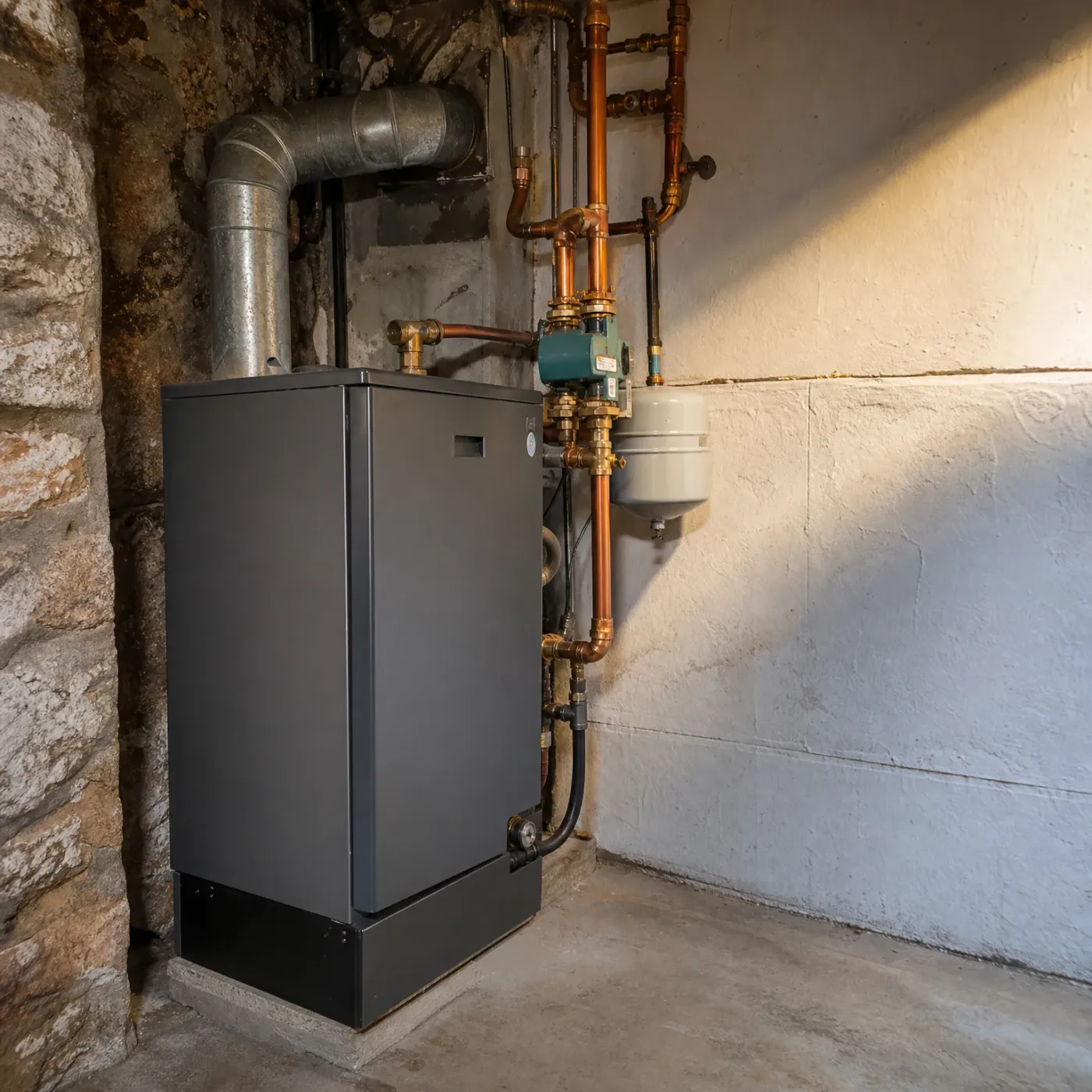
Running the way it should
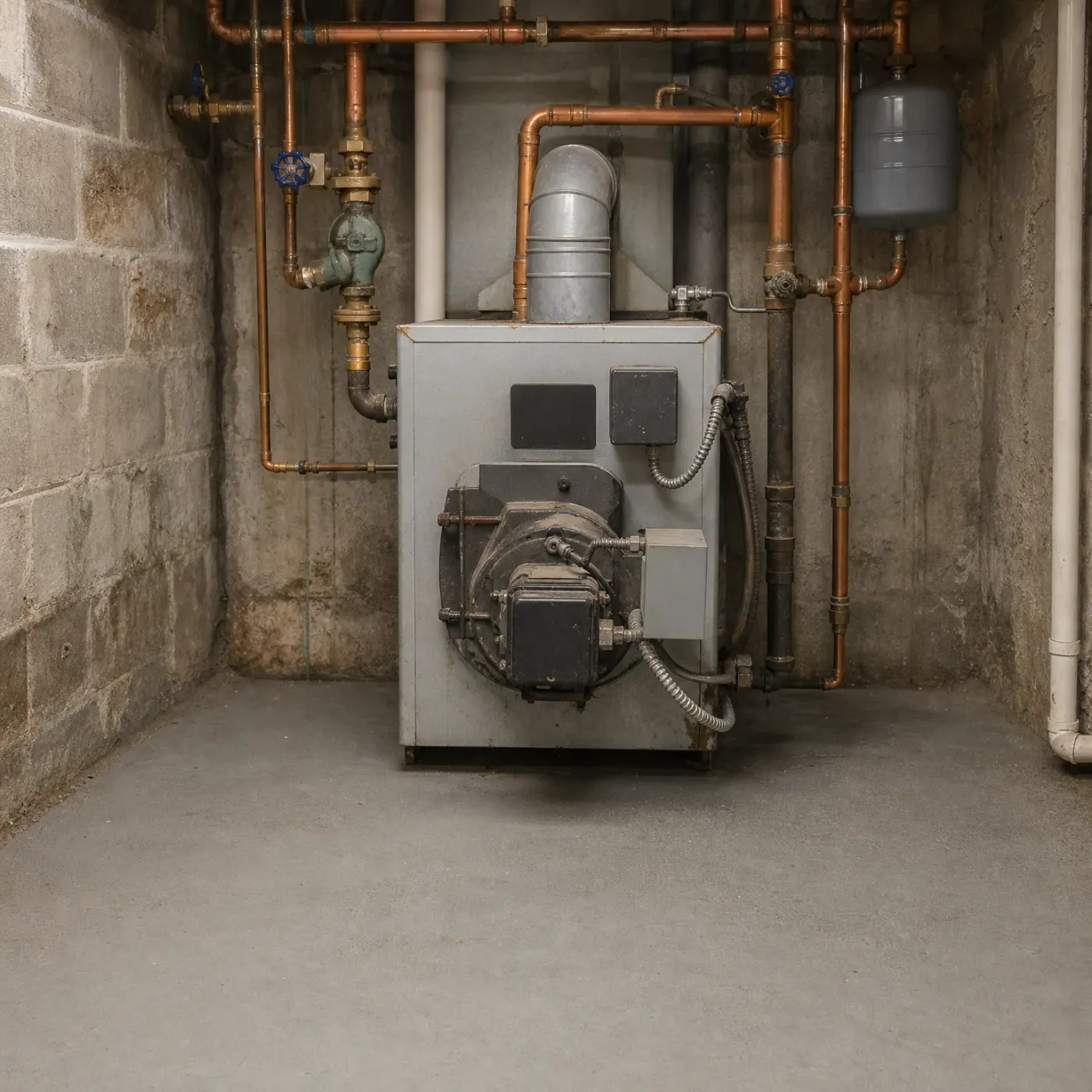
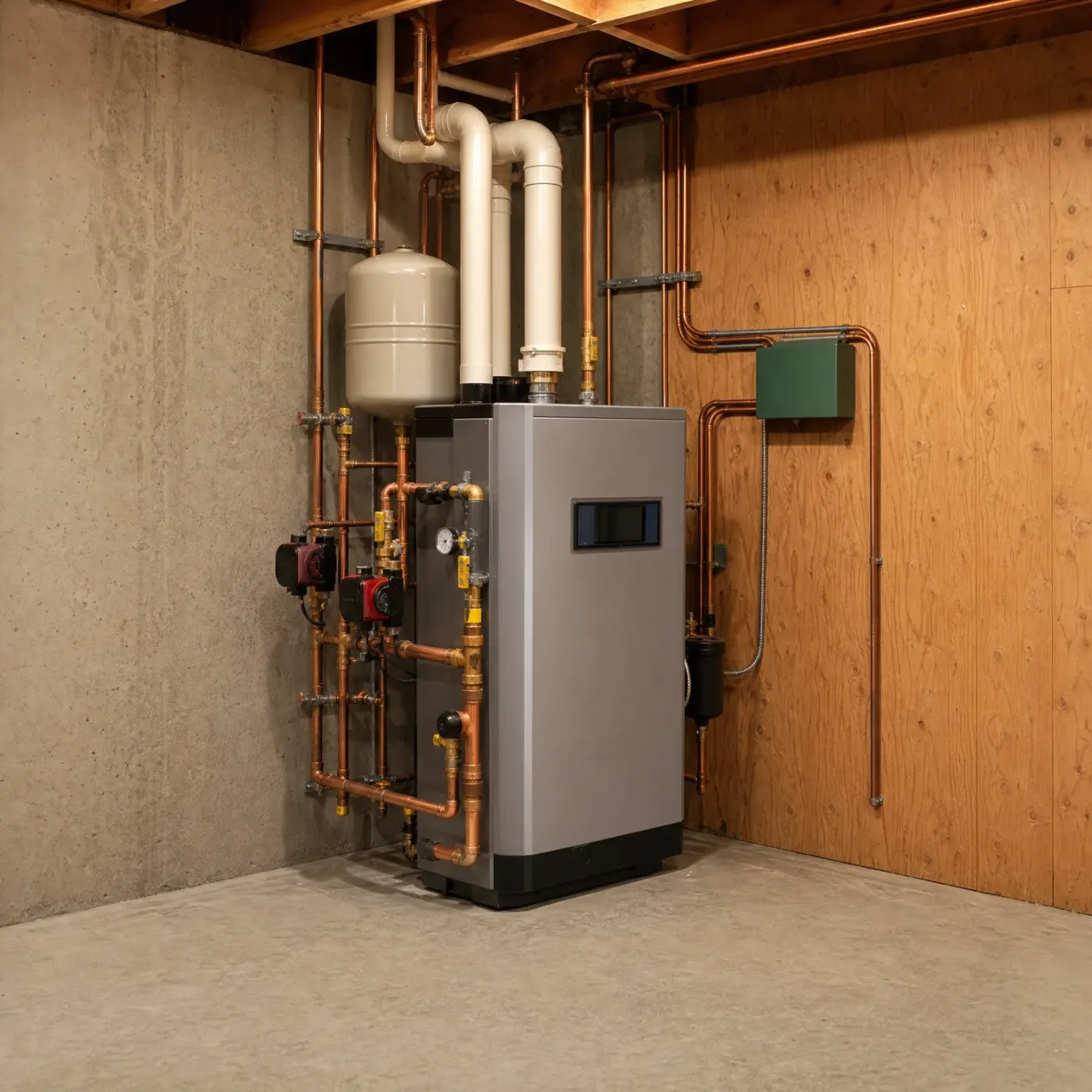
A boiler like this heats evenly and holds pressure without you touching it. The expansion tank stays quiet, the pump runs smooth, and the flue vents clean. No rust at the seams, no water on the floor beneath it.
A boiler that won't make it through a Kansas winter usually tells you first. Listen for banging or kettling in the tank, that's sediment built up on the heat exchanger making it work harder than it should. Watch for a pilot or ignition that won't stay lit, or a burner flame that's yellow instead of blue. Check for water pooling near the base, which means a seal or valve is failing inside. If you're bleeding radiators or reheating rooms more than once a day to keep them warm, the system is losing ground. None of these mean the boiler is finished, but they mean it's under strain, and strain in October gets worse by January when it's running nearly nonstop. A boiler that's struggling in mild weather has little left in reserve for a hard cold snap, and that's usually when it quits for good.
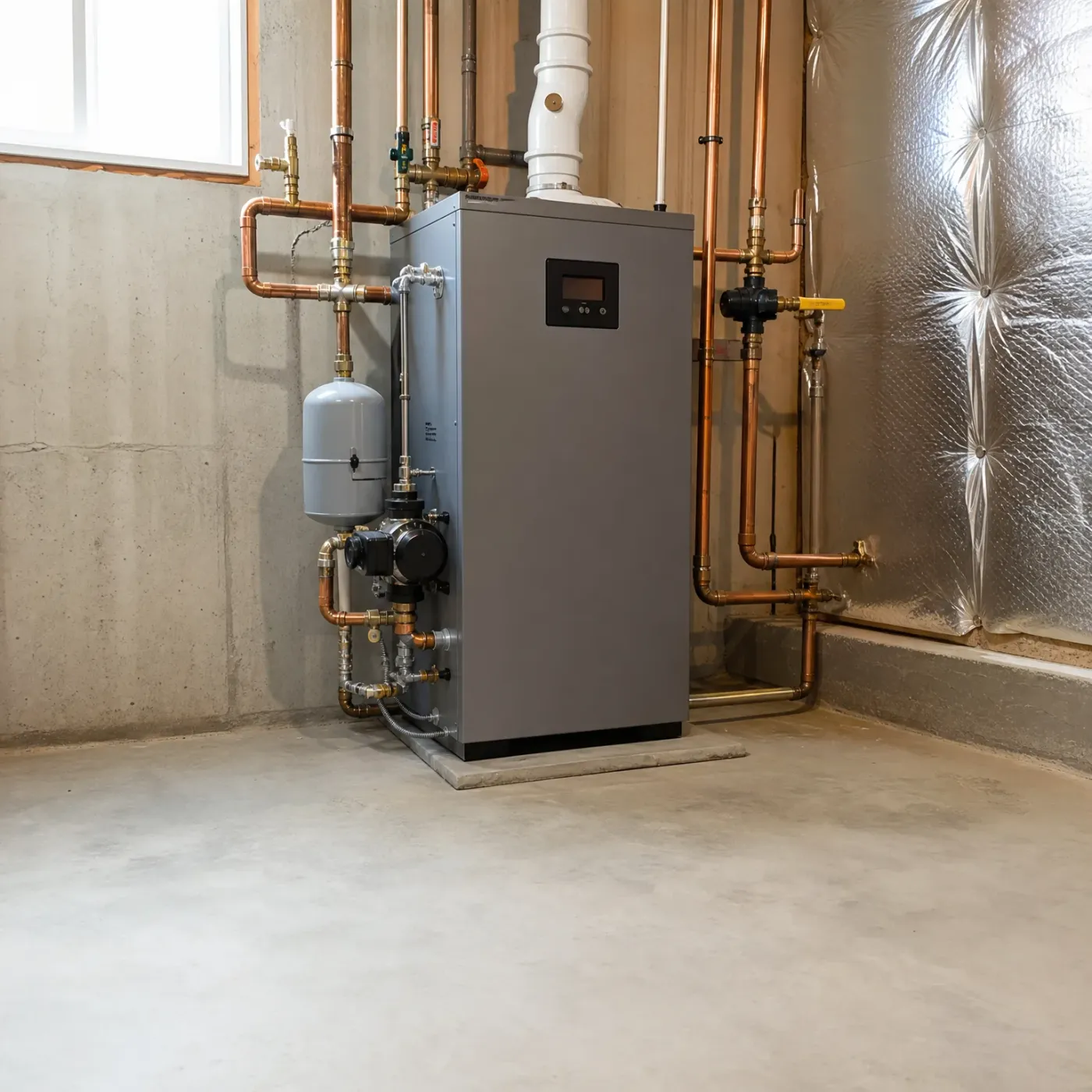
A boiler like this heats evenly and holds pressure without you touching it. The expansion tank stays quiet, the pump runs smooth, and the flue vents clean. No rust at the seams, no water on the floor beneath it.
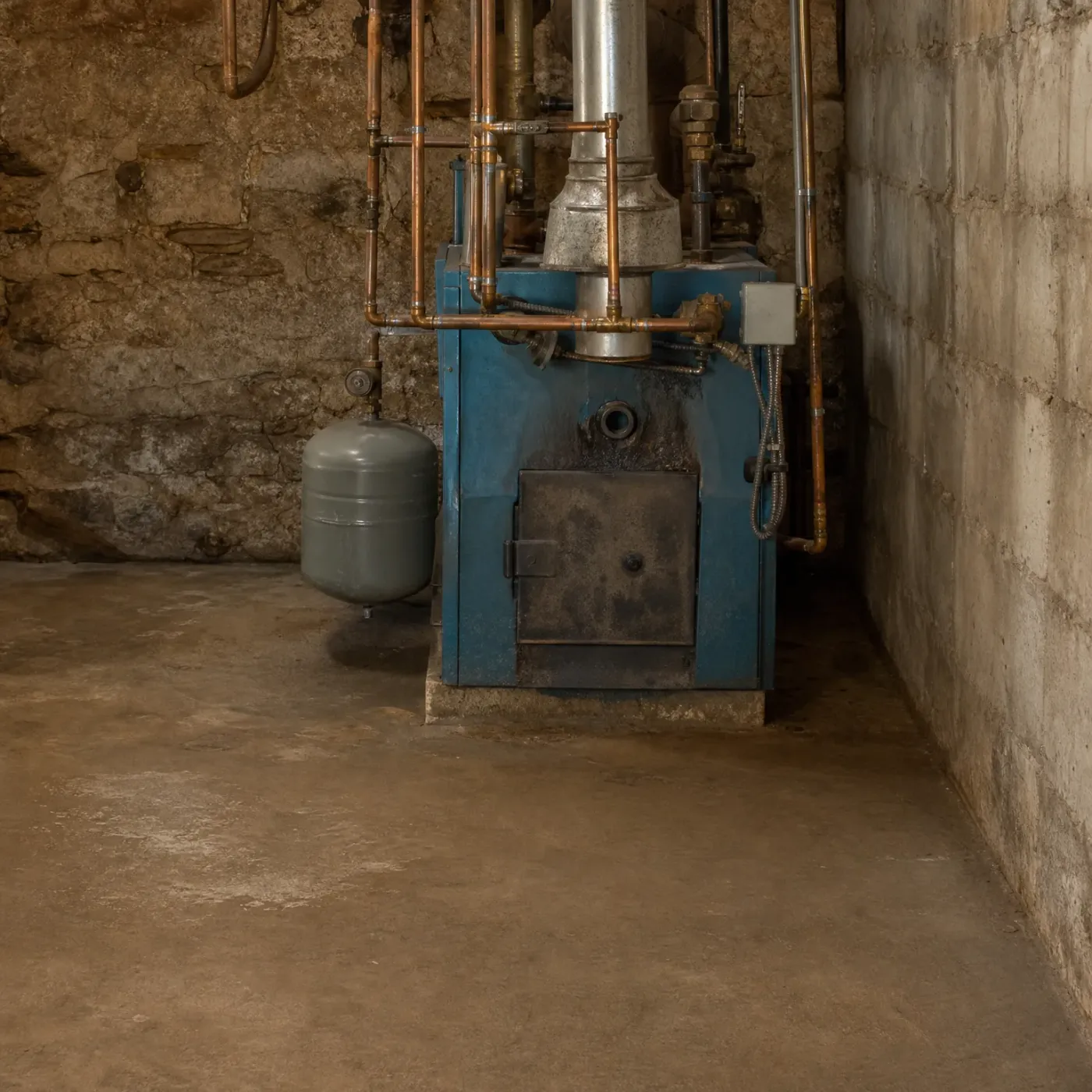
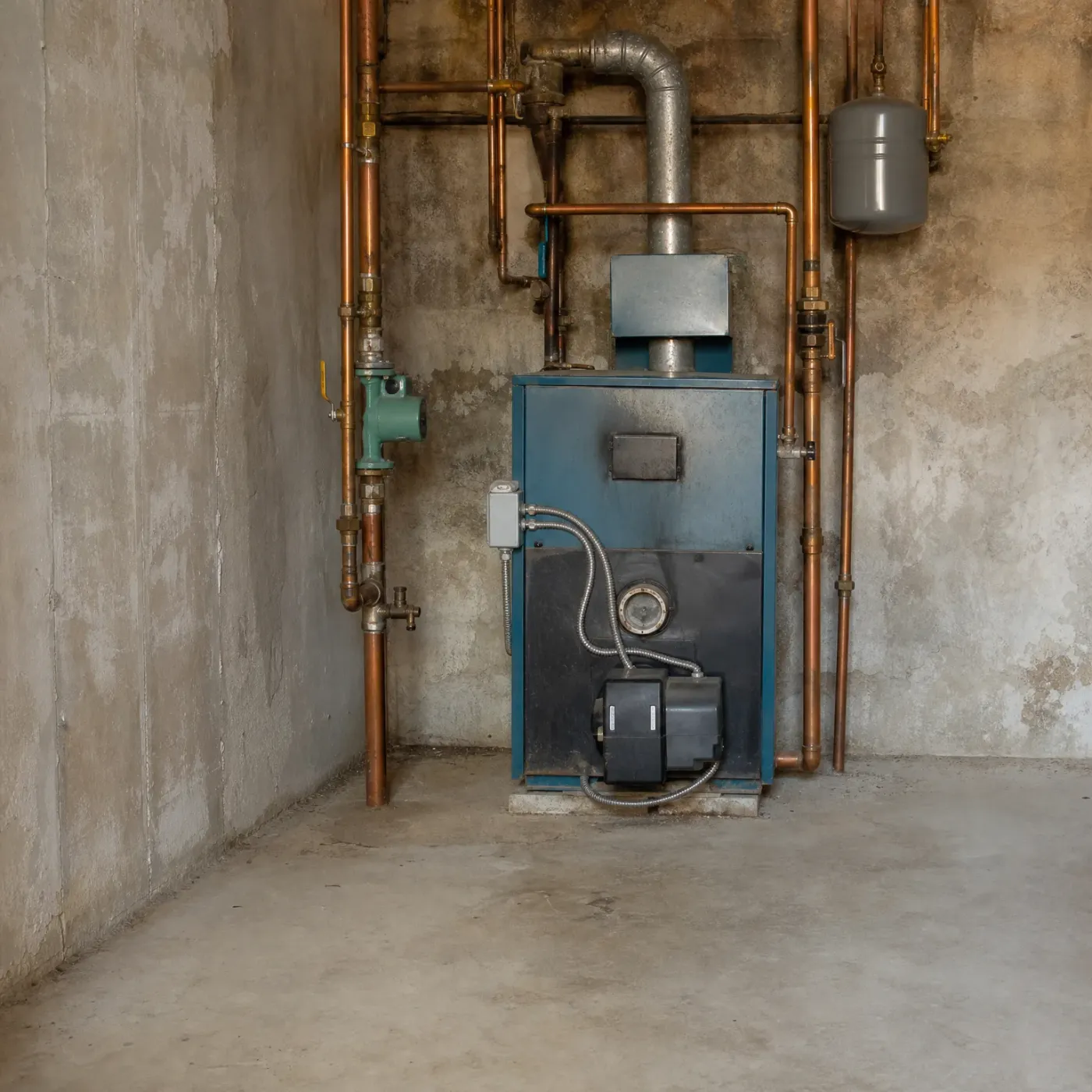
Rust around that access door means the cast iron inside is going the same way. A boiler that looks like this one has likely been patched more than once already. A cracked section here means replacement, not repair.




Most boiler trouble starts small and quiet, long before the banging or the leak shows up. Sediment settles at the bottom of the heat exchanger first, a little at a time, and the burner compensates by running longer each cycle. You won't notice unless you're watching the gas bill. Pressure problems usually start with the expansion tank, not the boiler itself. Once that tank stops absorbing air the way it should, pressure swings, and a relief valve that keeps dripping is often just reacting to that, not failing on its own. Short cycling works the same way. The burner firing on and off every few minutes points to the thermostat or aquastat telling it the wrong thing, or a circulation problem keeping water from moving right. Even the rust you see at the flue connection has a cause behind it. That's flue gas condensing inside the unit instead of venting out, which means something in the venting isn't doing its job. A boiler that needs relighting again and again is usually a thermocouple or flame sensor misreading the flame, not the burner quitting on you.
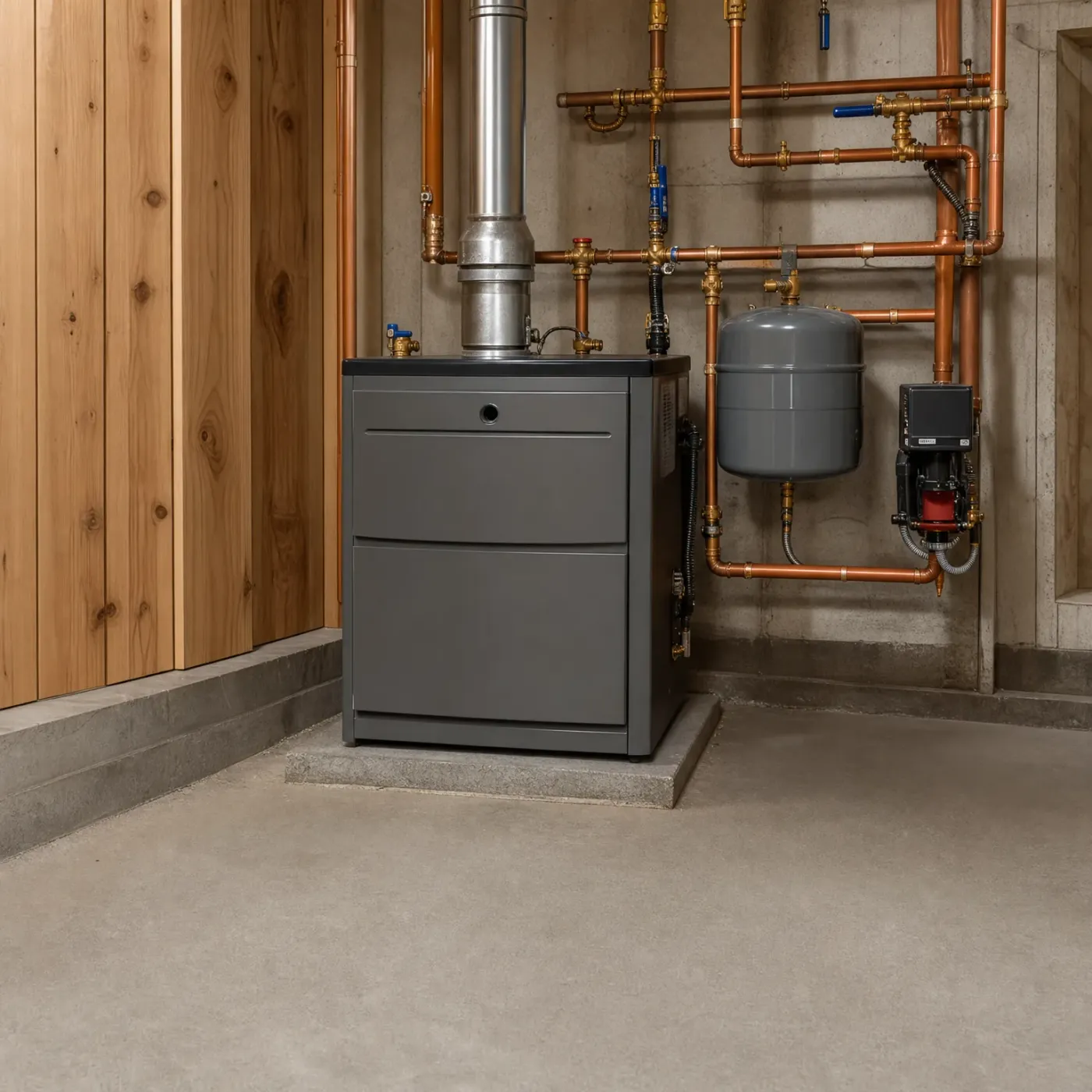
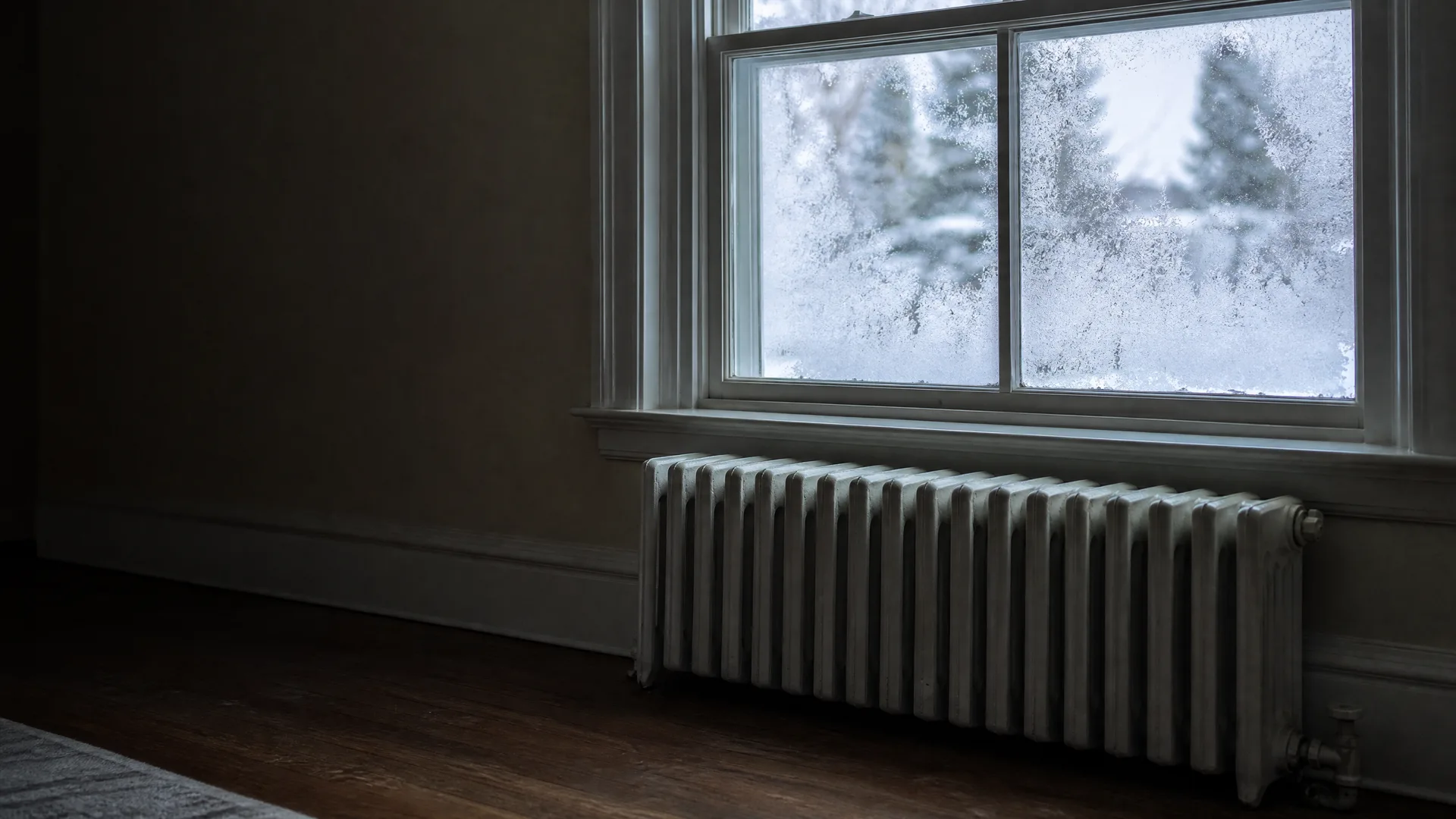
Six in the morning and the house is cold enough that you can see your breath near the window. The radiator under it ticks but the glass has iced over on the inside, a thin white film across the bottom pane. You put a hand on the cast iron and it's barely warm, not the kind of heat that should be fighting a Kansas January. Somewhere below the floor the burner is cycling on and off, trying. You already know this isn't the first morning it's done this, just the first time you've stood here long enough to watch the frost instead of reaching straight for the thermostat.
The pro who reaches out is licensed in Kansas.
No fee to send it, and nothing to sign.
A boiler running at full efficiency still loses some heat up the flue, but once the heat exchanger is coated in sediment, the burner has to stay on far longer to put out the same heat.
That extra runtime is hard on the ignition system and the pump, the two parts most likely to fail outright on a January night when the temperature outside is doing the most damage.
A boiler with sediment on the heat exchanger or a failing expansion tank doesn't quit outright. It keeps heating the house, just with the burner working longer to do it. You can live with the banging in the tank and the pilot that needs relighting a couple of times a month. Some owners do that for years. The tradeoff is a system running harder than it has to, through a Kansas winter that will ask a lot of it, and a small problem like a weeping valve or a strained pump left to become a bigger one. Nothing forces your hand until the morning it doesn't come back on.
A boiler technician who works on this equipment every winter in Kansas has seen what sediment buildup and a bad expansion tank turn into if they're left alone. Getting one out now means someone qualified checks the heat exchanger, the pump, and the pressure before the coldest months arrive, not after. It's one contractor, not a list of names to call and compare, and you explain the banging or the pilot problem once. The alternative is doing that yourself: searching, calling around, describing the same symptoms to each one, then sorting through what they tell you to figure out who's right.


A licensed local contractor who works on these systems every winter checks the heat exchanger, the expansion tank, and the pump, and repairs what's actually failing.
The banging, the weak pilot, the pressure that won't hold all point to parts working harder than they should, with a Kansas winter still ahead.
Overnight lows average 23°F across December, January and February here. That's not a cold snap, that's a normal Tuesday night. A boiler already struggling to hold pressure or stay lit has no room to coast through a stretch like that.
NOAA nClimDiv 1991-2020 county normals weighted by homes

A boiler that bangs, loses pressure, or can't keep its pilot lit is telling you something now, before a January night tests it. Sediment on the heat exchanger, a failing expansion tank, a flue that's not venting clean. None of it fixes itself, and none of it needs to turn into a cold house to prove the point.
Finding someone to look at it is usually its own chore, searching around, calling a few places, explaining the banging and the pressure drop over again to each one, then trying to make sense of quotes that don't match. A licensed contractor near you who works on boilers all winter already knows what that banging usually means and what to check first. One call covers it, to someone who's seen this system before.