A gray floor-standing boiler with copper pipework, valves and a pressure gauge in a stone-walled basement, beside a small window and a wicker basket with a blanket.

Get your boiler to the right pro

What a boiler tune-up covers before a Kansas winter

A boiler tune-up before winter checks the parts that keep it running safely and the parts that keep your gas bill from creeping up once the cold sets in. This page walks through what gets checked and why it matters before the weather turns. When you're ready, send in your information and a contractor who works on boilers in Kansas will reach out to you directly.

Find a boiler pro

A boiler tune-up checks the burner, the ignition, the pressure, and the venting, then looks at the heat exchanger for soot or scale that keeps it from transferring heat the way it should. A technician bleeds air from the lines, checks the expansion tank, and tests the pressure relief valve and the thermostat or aquastat controls so the system reads temperature correctly. Kansas winters swing cold enough that a boiler running on a dirty burner or a weak pilot works harder to hold a room at temperature, and that shows up on the gas bill fast. Carbon monoxide testing matters here too, since a cracked heat exchanger or blocked flue can leak it into the house with no smell to warn you. Catching a worn part in October means fixing it before a January night when the system can least afford to quit.

An older man with gray hair and a beard, wearing a dark coat dusted with snow, stands smiling in a doorway of a warmly lit home with a sofa, lamp and window visible behind him.
An older man with grey hair and a beard, wearing a dark coat dusted with snow, stands in a dimly lit entryway with a ceiling lamp, a side table with two shaded lamps, and a lit fireplace visible in a room beyond.
A bearded older man in a dark snow-dusted coat and scarf stands just inside a home's front door, with a lamp-lit room and snowy window visible behind him.
An older man with gray hair and a beard stands in a doorway of a home, wearing a dark coat dusted with snow, with a lit fireplace and lamp visible in the blurred room behind him.

Tune-Up Now or Risk It This Winter

Tune-up now

  • A technician catches a cracked heat exchanger or a failing gas valve while there's still time to get parts before the cold hits.
  • Combustion gets tested and the burner adjusted, so the boiler isn't quietly burning more gas than it needs to all winter.
  • Low pressure, trapped air, and a sticking expansion tank get found and corrected before they cause uneven heat on the coldest nights.
  • A working boiler that passed its check keeps running through a Kansas winter without an unplanned no-heat call in January.
  • The flue and venting get checked for a blockage or corrosion, which matters more once windows and doors stay shut for months.

Skip it

  • Soot or scale left on the heat exchanger keeps transferring heat poorly, and the burner runs longer to make up for it.
  • A pilot or igniter issue that would have shown up on a check instead shows up as a cold house during a cold snap.
  • Small problems, a weak flame sensor or a blocked condensate line, get worse once the boiler is running daily instead of sitting idle.
  • If the boiler fails outright in January, scheduling a repair takes longer than scheduling a tune-up would have in October.
  • A boiler running with trapped air or low pressure all winter puts more strain on parts that would otherwise last the season out.
  1. Technician checks gas pressure and inspects the burner for even flame

  2. Ignition system gets tested so the boiler lights reliably every cycle

  3. Heat exchanger is inspected for soot, scale, or cracks

  4. Venting is checked to confirm exhaust is leaving the house safely

Why does the technician bleed air from the lines during a tune-up?

You noticed the question in the bleed valve instructions or heard a technician mention it, and you want to know why air in the lines matters enough to be part of a tune-up instead of something you'd only deal with if a radiator went cold. It sounds like a small step compared to checking the burner or the heat exchanger, but it changes how evenly the heat gets to every room in your house this winter.

Trapped air stops hot water from reaching every radiator or baseboard

Air gets into the system over time, through the expansion tank, a recent repair, or water that's been topped off. It collects at the high points of the lines and sits there, so hot water can't fill that section the way it should. That's why one radiator stays lukewarm while the rest of the house heats fine, or why you hear gurgling when the system runs. Bleeding the lines means opening the valve at each radiator until water comes out steady with no air, then closing it. A technician does this at every radiator during a tune-up, not just the one you've noticed acting up, so the whole house heats evenly once the cold settles in for good.

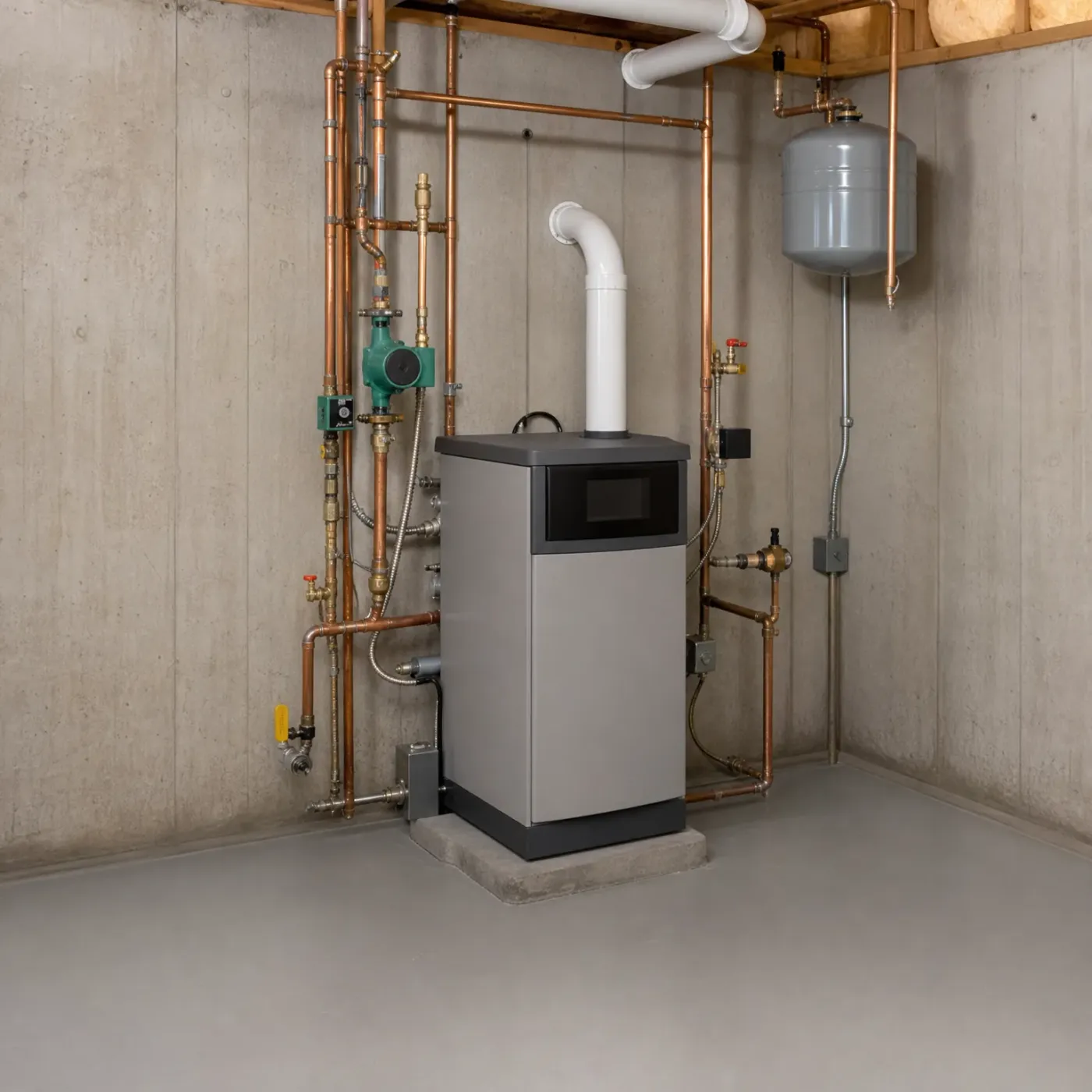
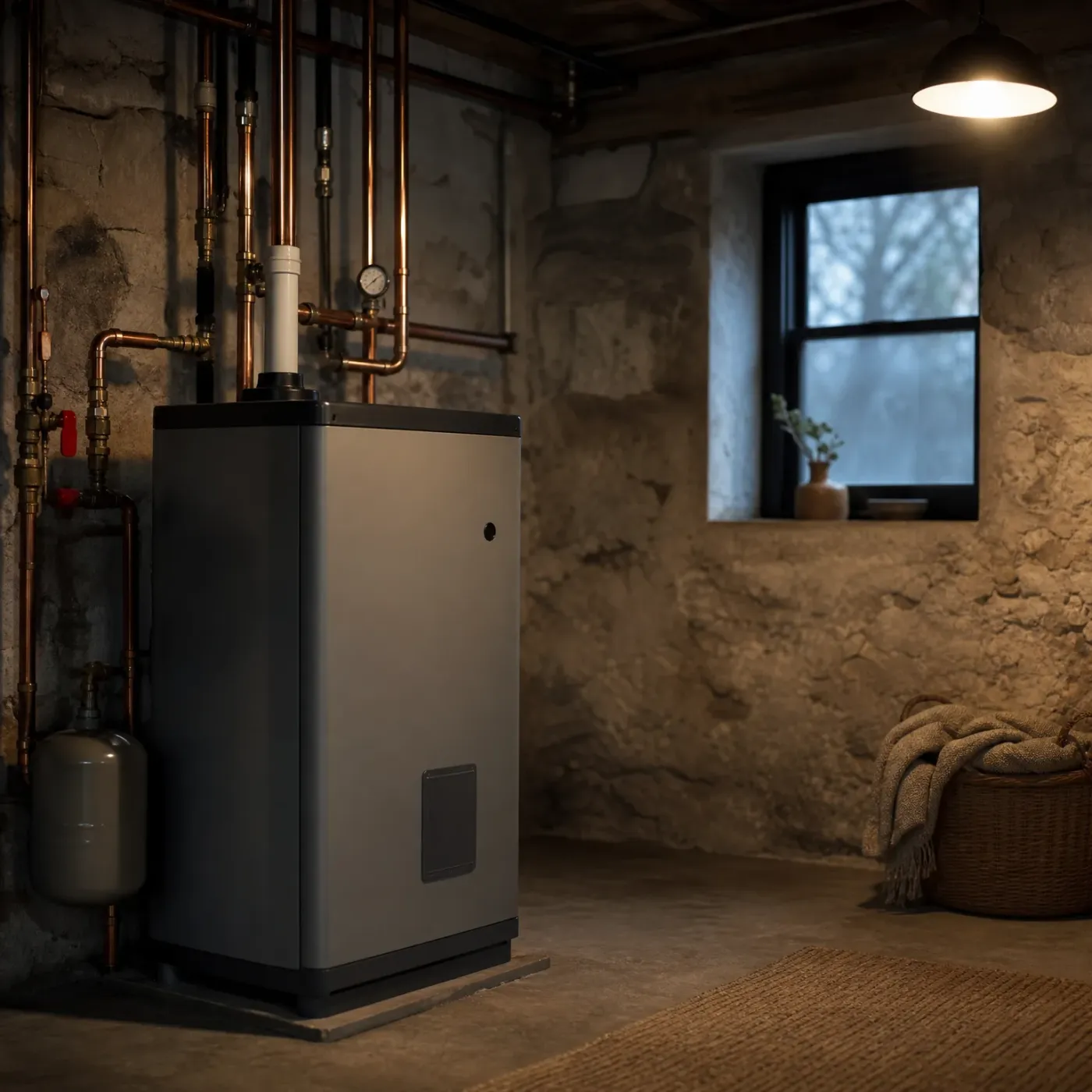
A gray floor-standing boiler on a concrete pad in a basement corner, with copper piping, a circulator pump, a white PVC flue, and a gray expansion tank mounted on the wall.

Running the way it should

This is a boiler that got looked at before the cold came. The pump moves water through the pipes without strain, the expansion tank holds steady pressure, and the hoses show no sign of a slow leak. Nothing here is fighting itself to keep the house warm.

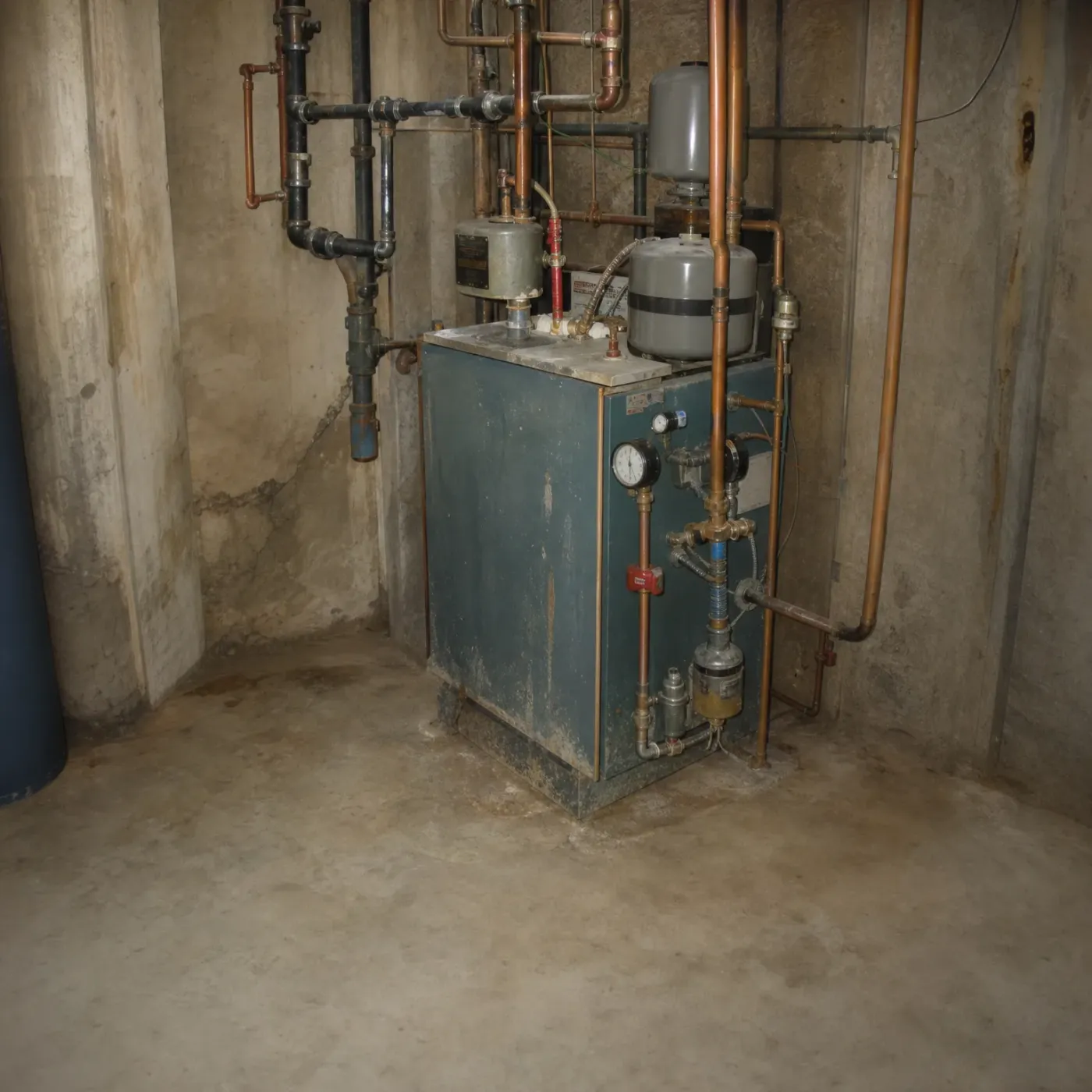
A green metal boiler with pressure gauge stands in a concrete basement corner, surrounded by copper and black iron pipes and two tank-shaped vessels.

What gets missed without a look

This boiler has been doing the job on its own for years. Pressure can creep up or drop without anyone noticing, and a valve or fitting can start weeping before it ever fails outright. By the time it's loud or cold water comes out of the tap, it's past the easy fix.

A woman wrapped in a thick cream knit blanket sits in an armchair beside a lit table lamp, with an open book in the foreground and a frost-covered window behind her.
A woman in a cream knit sweater sits in an armchair with her eyes closed and head tilted back, beside a window showing orange autumn foliage and a wooden side table with a mug.
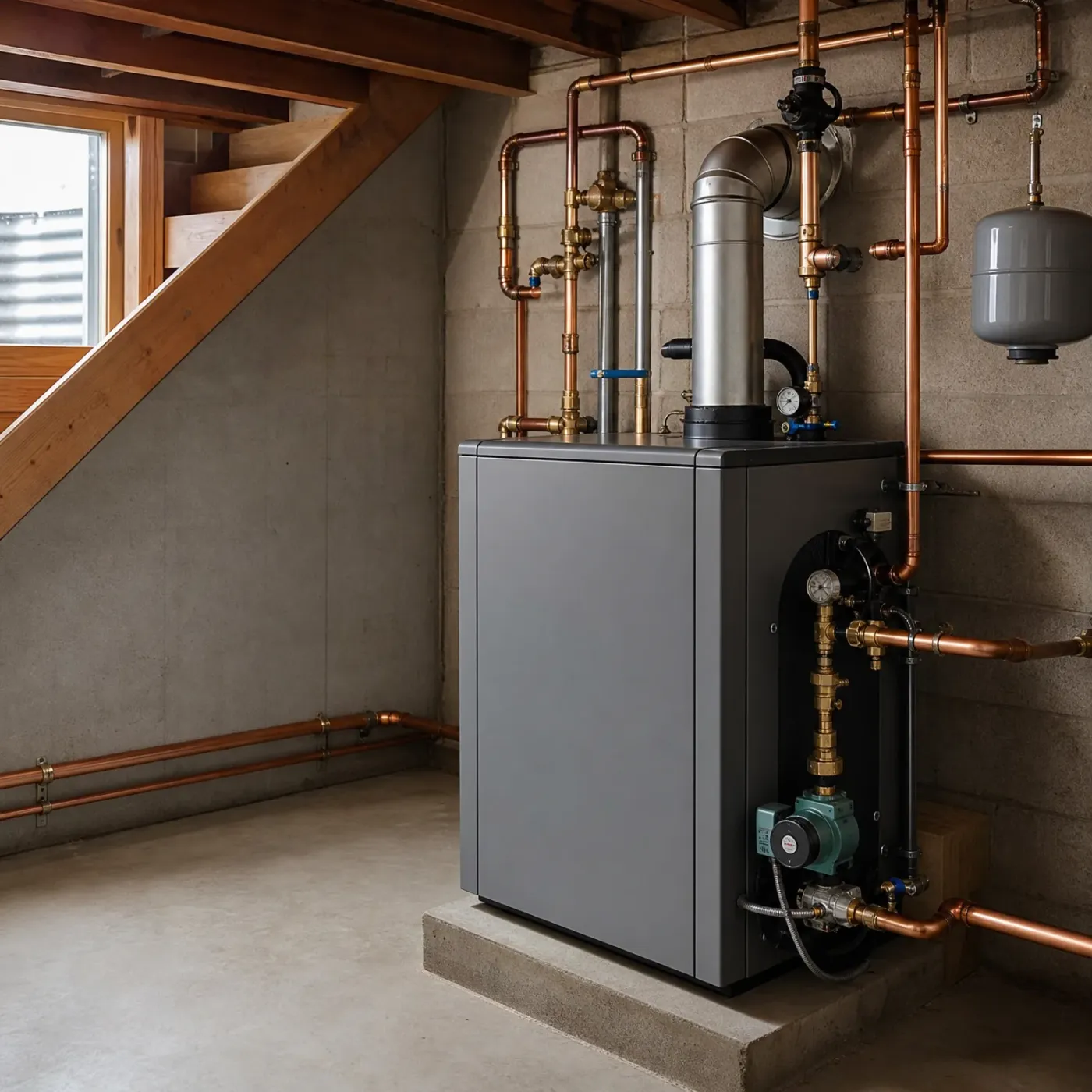
A gray boiler on a concrete pad in a basement, connected to copper and black pipes with valves, gauges, a circulator pump, a flue, and a wall-mounted expansion tank, beside a wooden staircase.

The right pro for this job

Send the form, and lining up the boiler tune-up stops being yours to chase.

A local pro who services boilers gets in touch about the tune-up.

Get a local pro

There's no charge for the request.

What are you hearing from the boiler right now

A knock or gurgle when it fires up usually means air in the lines, or sediment sitting in the bottom of the heat exchanger. A boiler that takes longer to reach temperature than it did last winter is working harder to make the same heat, and that shows up on the gas bill before you notice anything else. A kettling or rumbling sound points to scale buildup. If the burner flame looks yellow or uneven instead of a steady blue, combustion isn't clean, and that's worth having checked before you're relying on this boiler through a Kansas winter. A pilot that won't stay lit, or a boiler that short cycles, both point to something that needs attention now rather than in January.

A gray boiler with a round pressure gauge and copper and metal pipes stands in a dim concrete basement lit by a small window.

You're down in the basement on a Saturday afternoon, the kind of gray October day that still smells like cut grass from the last mow. You went down to grab the ladder and noticed the boiler running, so you stopped to look at it the way you do sometimes. The pressure gauge sits low, the needle resting closer to zero than the middle of the dial where it used to sit. You don't know what the number should be, only that it looks different than you remember from last winter. Upstairs your kids are watching television, not thinking about any of this. You stand there a minute, then head back up for the ladder, the number still sitting in the back of your mind.

Winter nights average 23°F statewide

Once those overnight lows settle near 23°F, your boiler is holding a bigger gap between outside and in than it was in October. That's more hours firing a night, which is exactly when a worn igniter or a clogged burner shows itself.

NOAA nClimDiv 1991-2020 county normals weighted by homes

A gray boiler unit with a flue pipe stands on a concrete pad in a basement, surrounded by copper piping, a circulator pump, an expansion tank mounted on a stone wall, and an electrical outlet.

Maintained and ready

This is a boiler that got its yearly look before the cold set in. The copper lines run clean to the expansion tank, the circulation pump turns without strain, and the flue vents straight up with nothing blocking it. Pressure holds steady, so the system isn't working harder than it has to.

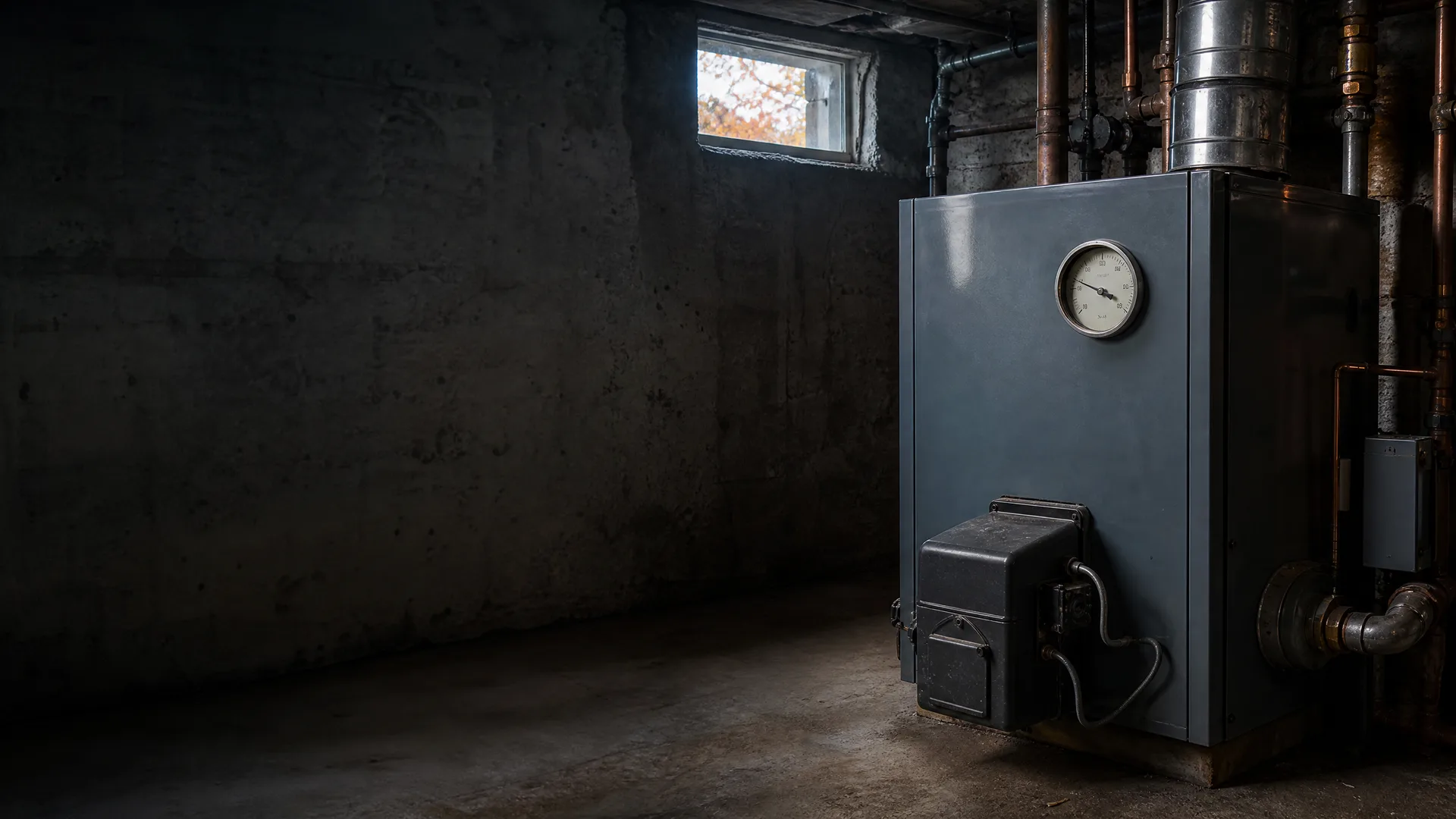
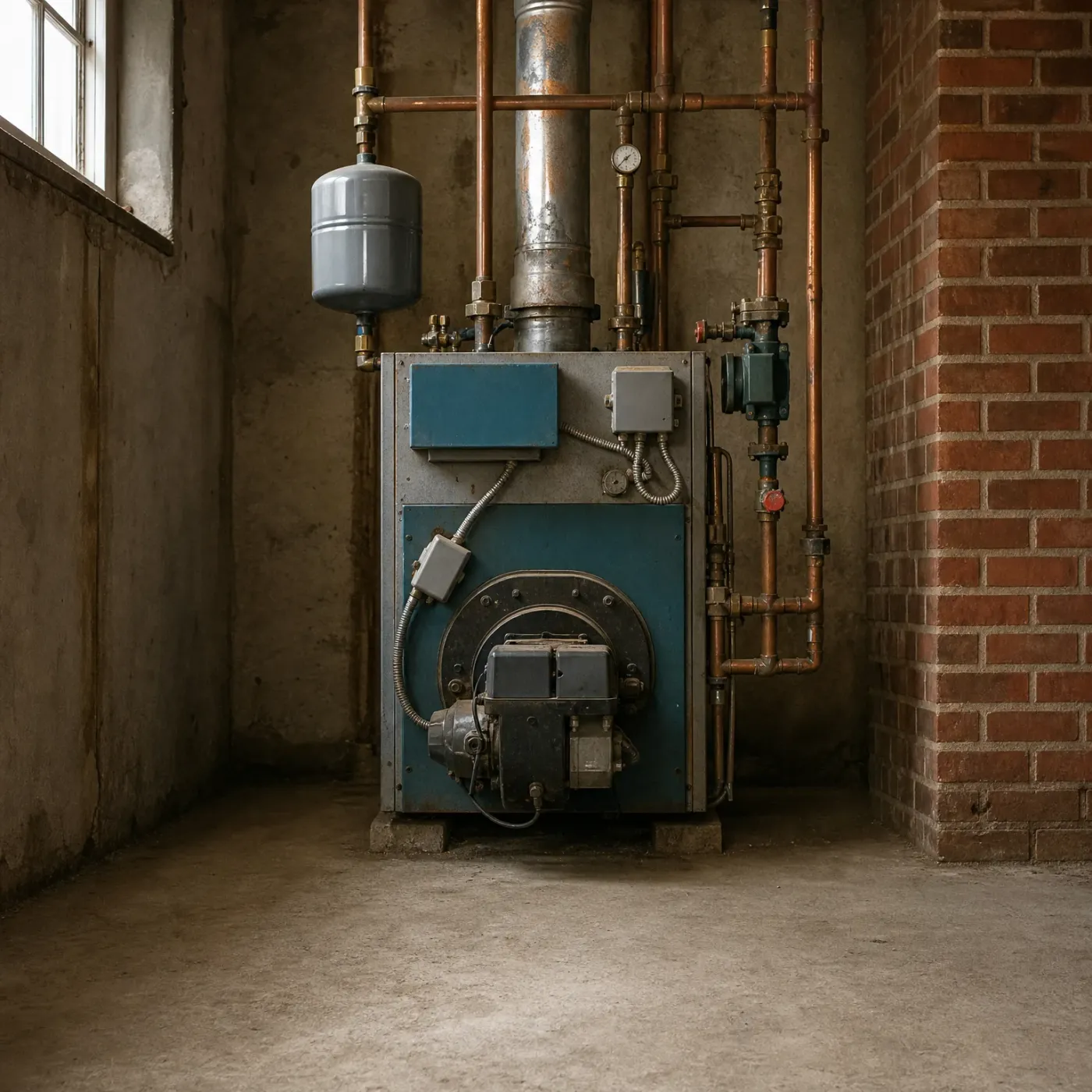
A blue cast-iron boiler with a burner unit, gauges and copper piping stands in a concrete-floored basement room beside a red brick pillar and a window.

Overdue for a look

This boiler has gone a while without anyone checking it. The valves and gauges show their age, and there's no way to know from looking whether the pressure is right or the flue is still drafting clean. A technician checks these things before winter, not after something fails.

A woman stands in the open front doorway of a single-story house with stone and wood siding while a man in a dark polo shirt and cap walks toward it along a concrete path.

A boiler checked now is one less thing to wonder about in January

You know what a tune-up covers now. The burner, the ignition, the pressure, the venting, the heat exchanger. A technician either finds something worth fixing while there's still time, or confirms the boiler is ready to run through a Kansas winter without surprises. Either way, you know where you stand instead of guessing.

Finding the right person for the job is the part most people put off. Once you send the request, that part is done. You get matched with a contractor who takes on jobs like yours, and they'll reach out to you directly. No more sorting through names, no more wondering who's any good. Just a boiler worth trusting and one phone call ahead of you instead of a dozen.

A speckled beige ceramic vase holding thin dried branches sits on a round wooden table near a window with sheer curtains, with a dark upholstered chair and draped blanket blurred in the background.
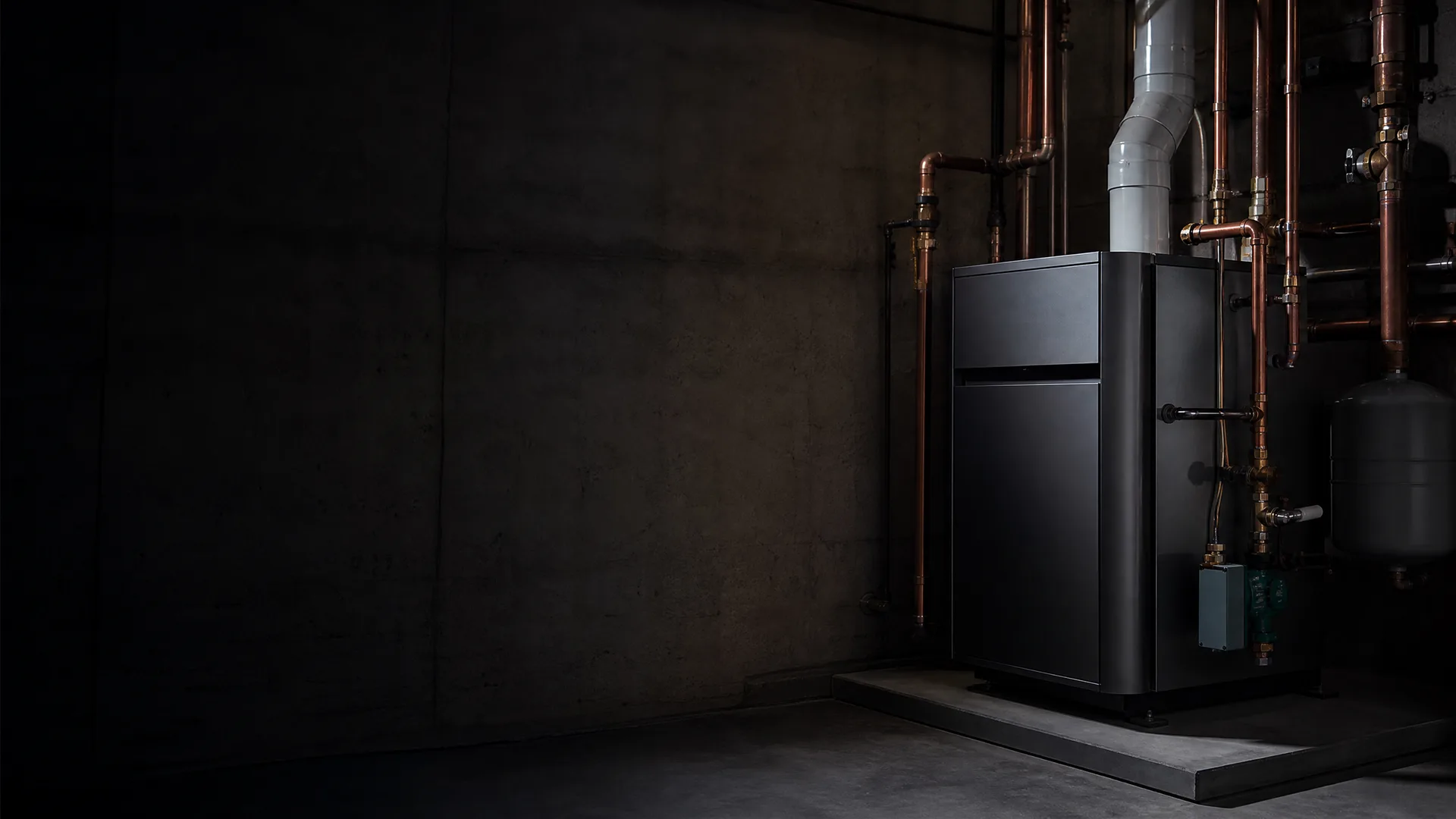
A black boiler unit on a concrete pad in a dim basement room, connected to copper pipes, a metal flue duct, and an expansion tank against a bare concrete wall.

Matched to your boiler job

Send the form and the boiler tune-up stops being something to remember.

Step 1 of 3: Equipment