Why your boiler is kettling in Kansas

Send the request today and stop worrying about who to call.

I'm done searching

Why is my boiler making a kettle whistling noise?

You're hearing a high pitched whistle or rumble from the boiler, like a kettle coming to a boil, and it's loud enough that you've stopped what you're doing to figure out what it is. It usually happens when the heat's running hard. You're not looking to just live with it, since noises like this tend to mean something's working harder than it should, and you'd rather find out now than wait for it to get worse.

That sound means scale or sludge has built up on the heat exchanger

The whistle comes from water boiling into steam pockets against a surface coated in mineral scale or sludge, inside the heat exchanger. That buildup stops heat from moving into the water the way it should, so the water right against the metal gets much hotter than the water around it and flashes to steam. The steam bubbles collapse fast, and that's the kettling sound. With Kansas water running hard in a lot of places, scale collects faster than it would with soft water, so this shows up sooner in gas boilers here than it might elsewhere. Left alone, the heat exchanger keeps working against that buildup, and it's the kind of strain that gets worse the longer it runs.

A gray boiler unit on a concrete pad in a basement corner, connected to copper piping, valves and a metal flue against painted concrete block walls.

Normal operation

Water moves freely through the boiler and the pipes feeding it. The flow stays steady from the expansion tank through every fitting, so heat moves out without the water ever sitting still long enough to turn to steam. No whistle, no rumble, just quiet runs through the winter.

A blue oil-fired boiler with a burner unit sits on a concrete pad in a basement corner, with copper piping, valves and a gray expansion tank overhead against concrete block walls.

Kettling in progress

Scale has built up on the heat exchanger, or flow through the unit has dropped. Water trapped against that surface boils in small pockets while the rest stays cooler, and the steam collapsing against the cooler water is what makes the kettle sound. Left alone, it stresses the exchanger further.

Ignore the Whistle or Fix It Now

Leave it alone

  • Kettling means scale or sludge is already restricting flow through the heat exchanger, and that doesn't clear itself.
  • The spots where buildup collects keep overheating every cycle, and that's where a crack or a leak eventually starts.
  • The boiler has to work harder to push heat through a partly blocked exchanger, so your gas use climbs even though the house doesn't feel any warmer.
  • Left alone, what's now a cleaning and a flush job can turn into a heat exchanger replacement.
  • The whistling tends to get louder and more frequent as more mineral deposits build up on the same hot surfaces.

Get it looked at

  • A licensed contractor can flush the scale and sludge out of the heat exchanger before it causes a crack.
  • Clearing the blockage restores normal flow, so the boiler stops overheating at those spots and the noise stops with it.
  • Once flow is restored, the boiler isn't fighting a restriction, so it doesn't need to run as hard to heat the same rooms.
  • Catching it now means a flush and inspection instead of a heat exchanger replacement later.
  • You skip the work of finding a contractor yourself and explaining the noise over and over to get quotes.
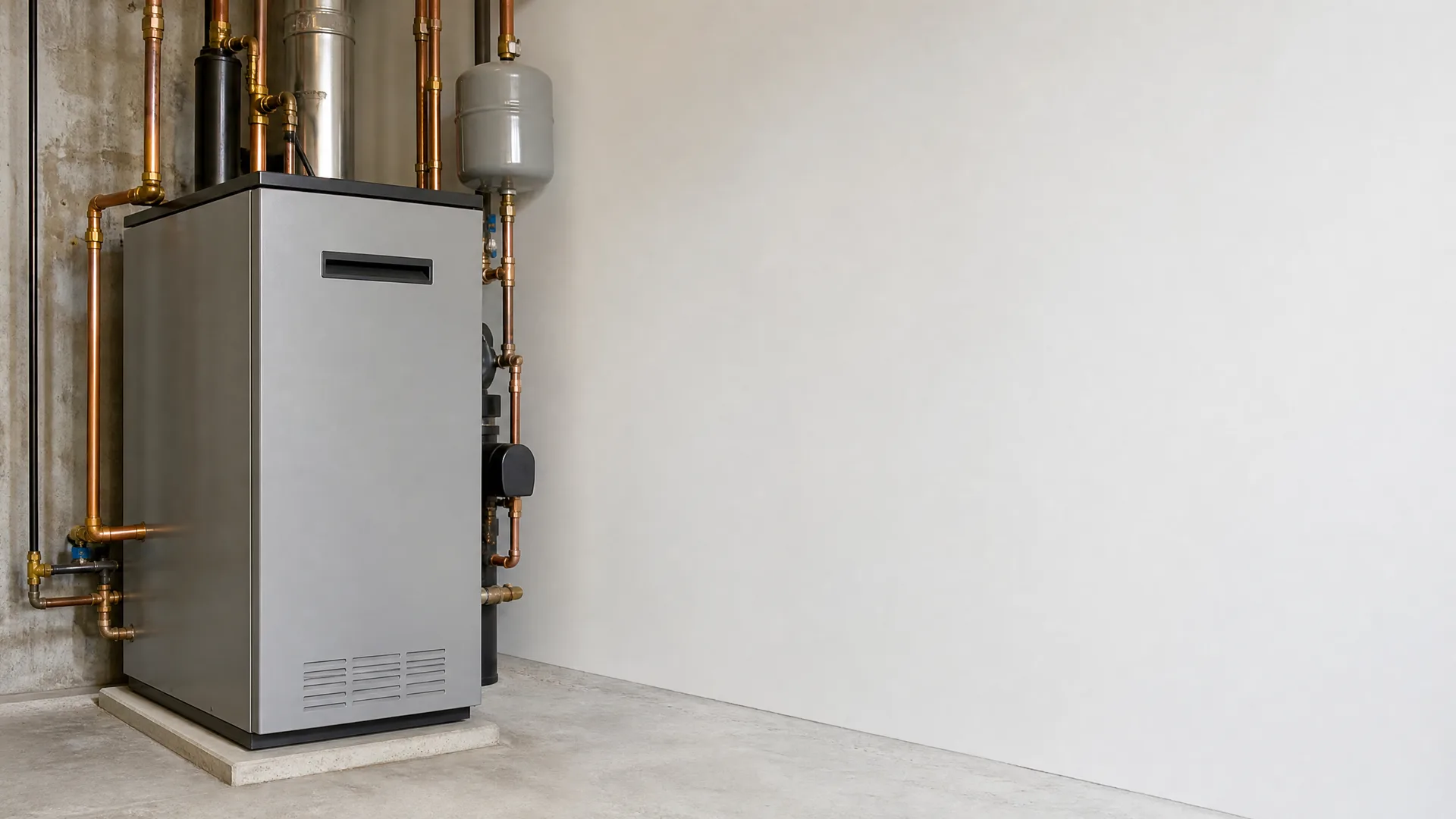
A gray floor-standing boiler on a concrete pad in a bare room, connected to copper pipes and an expansion tank against a plain light wall.

Where scale builds up first

The heat exchanger is where the burner puts the most heat into the water, so it's also where mineral scale collects fastest. Once a layer of scale coats that metal, water sitting against it heats faster than it can move away. That trapped water flashes to steam and collapses again as cooler water reaches it, and that collapse is what you hear as the whistle or rumble.

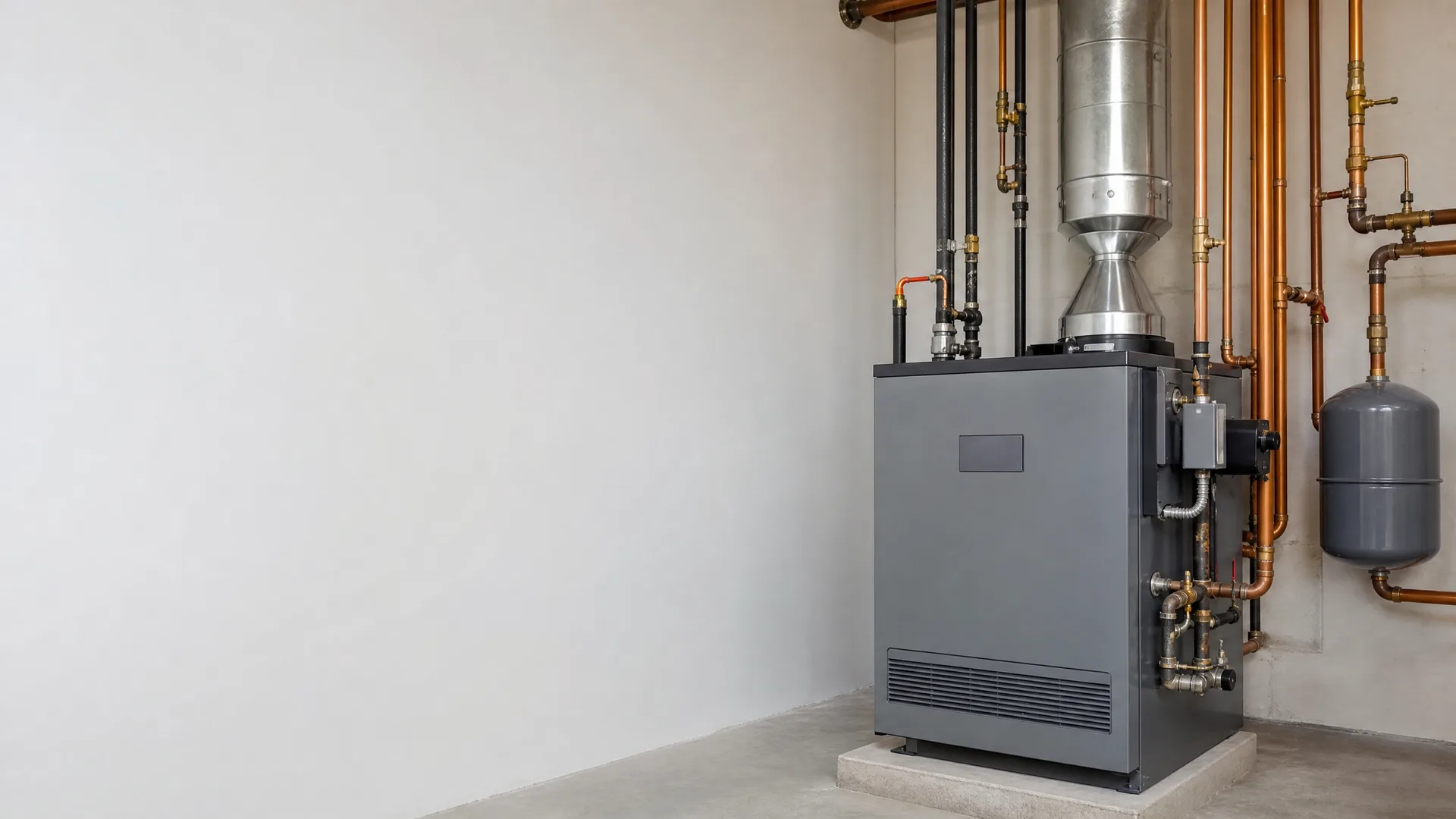
A gray boiler on a concrete pad in a plain room, connected to copper and black pipes and a stainless steel flue.

Why the noise comes and goes

Kettling tends to show up early in a heating cycle and quiet down once water is circulating at full flow, then start again the next time the burner fires from cold. That pattern follows the scale buildup rather than the thermostat setting. A boiler with a clean heat exchanger doesn't make this noise at any point in the cycle, in Kansas or anywhere else, no matter how hard it's working.

A closed silver laptop and a glazed ceramic mug on a wooden table, with a blurred kitchen counter, potted plant, cutting board and window in the background.

What it means for your boiler this winter

Kansas winters lean on a boiler for months at a stretch, and every cycle it runs with scale on the heat exchanger is another cycle of overheating that metal in the same spot. That's the part that eventually cracks or leaks. Left alone through a full winter of runs, a small whistle now can turn into a boiler that needs replacing instead of repairing, and a repair that doesn't come with a cracked heat exchanger attached is the cheaper outcome by far.

You already know to deal with small problems before they turn into big ones, which is why you're reading this instead of ignoring the noise. The part that's actually hard isn't knowing you need someone out to flush the system and check the exchanger. It's finding a contractor who works on boilers specifically, getting them on the phone, describing the sound and hoping they ask the right questions, then doing it again with the next name on the list to compare what they quote you. Send the form here and that search is off your plate.

A dark ceramic mug on a round wooden table beside a light grey sofa with a woven cushion and knit throw, with a window, potted plant, floor lamp and wooden cabinet blurred in the background.
  1. Scale or sludge coats part of the heat exchanger and blocks water flow there.

  2. Water trapped against that spot keeps absorbing heat from the burner.

  3. That pocket of water flashes to steam while the water around it stays liquid.

  4. Steam bubbles collapse against the cooler water, and that collapse makes the kettling noise.

What are you noticing in the house right now

The whistle or rumble isn't steady. It comes and goes with the burner cycle, loudest right after the boiler fires and quieting as it runs. You might notice the boiler room feels warmer than it used to, or that a radiator or two heats slower than the rest of the house even though the boiler sounds like it's working harder than it should. Some homeowners catch a faint burnt smell near the unit when it's been running a while. None of this means the boiler is about to fail tonight, but it does mean the heat exchanger is working against buildup instead of just heating water, and that's extra strain on the one part of the boiler that's expensive to replace on its own.

A smiling man in a navy long-sleeve shirt sits at a wooden table in a kitchen and dining area, with a ceramic mug, a potted plant, and a sliding glass door behind him.
A smiling bearded man in a green henley shirt stands at a kitchen island with a gray mug, looking off to the side, with a dining area and shelves blurred behind him.
A smiling bearded man in a navy sweater sits at a white kitchen island with a ceramic mug, with open shelves, potted plants and a range hood behind him.
A smiling man in a dark olive long-sleeve shirt sits in a kitchen beside a counter with a dark mug, with a dining table, sideboard and hallway visible in the blurred background.

Hand off the boiler problem

Skip searching for a boiler pro and answer a few questions instead.

No charge to send it. You decide if you hire them.

What makes scale build up faster

  • Hard water feeding the boiler leaves more mineral content behind on the heat exchanger with every fill and makeup cycle.
  • A boiler that loses water slowly and gets topped off often builds scale faster than one that holds its original fill.
  • Sludge forms from corrosion inside the system, and it settles in the same low spots and tight passages that scale does.
  • Low water pressure lets dissolved minerals come out of solution faster, so a system running under its normal pressure scales sooner.
  • Short cycling, where the boiler fires and shuts off repeatedly, heats the same patch of water again and again before it ever moves through the loop.
  • A circulator pump running weak moves less water past the heat exchanger, so heat builds up in one place instead of spreading through the system.

Scale doesn't appear overnight, and it doesn't appear evenly. It builds where conditions favor it, and several things in a system push it along faster than normal. Fill water carries dissolved minerals, and every time a boiler loses a little water and gets topped off, it gets a fresh dose of those minerals along with it. A system that holds its original fill year after year scales slower than one that's been refilled a dozen times. Pressure matters too. Minerals stay dissolved more easily at the pressure a boiler is designed to run at, and once pressure drops below that, they come out of solution and land on the hottest metal they can find, which is the heat exchanger. Corrosion inside the system adds sludge to the mix, and sludge settles in the same low spots and narrow passages where scale already collects, so the two end up layered together. A circulator pump that's lost some strength only makes this worse. It can't push water past the heat exchanger fast enough, so heat concentrates in the same spot instead of moving out through the loop. Short cycling adds to it from a different angle. A boiler that fires and shuts off over and over is heating the same patch of water again and again before that water ever gets pushed along, and that repeated heating is exactly what turns a thin mineral film into a thick one.

A bearded man in a navy T-shirt sits on a light-colored couch indoors, smiling while looking down at a laptop screen in the foreground, with a framed picture and a potted plant blurred behind him.
A bearded man in a plaid flannel shirt sits indoors looking out a window at snow-covered trees, with a steaming mug on the sill and wooden kitchen shelves behind him.
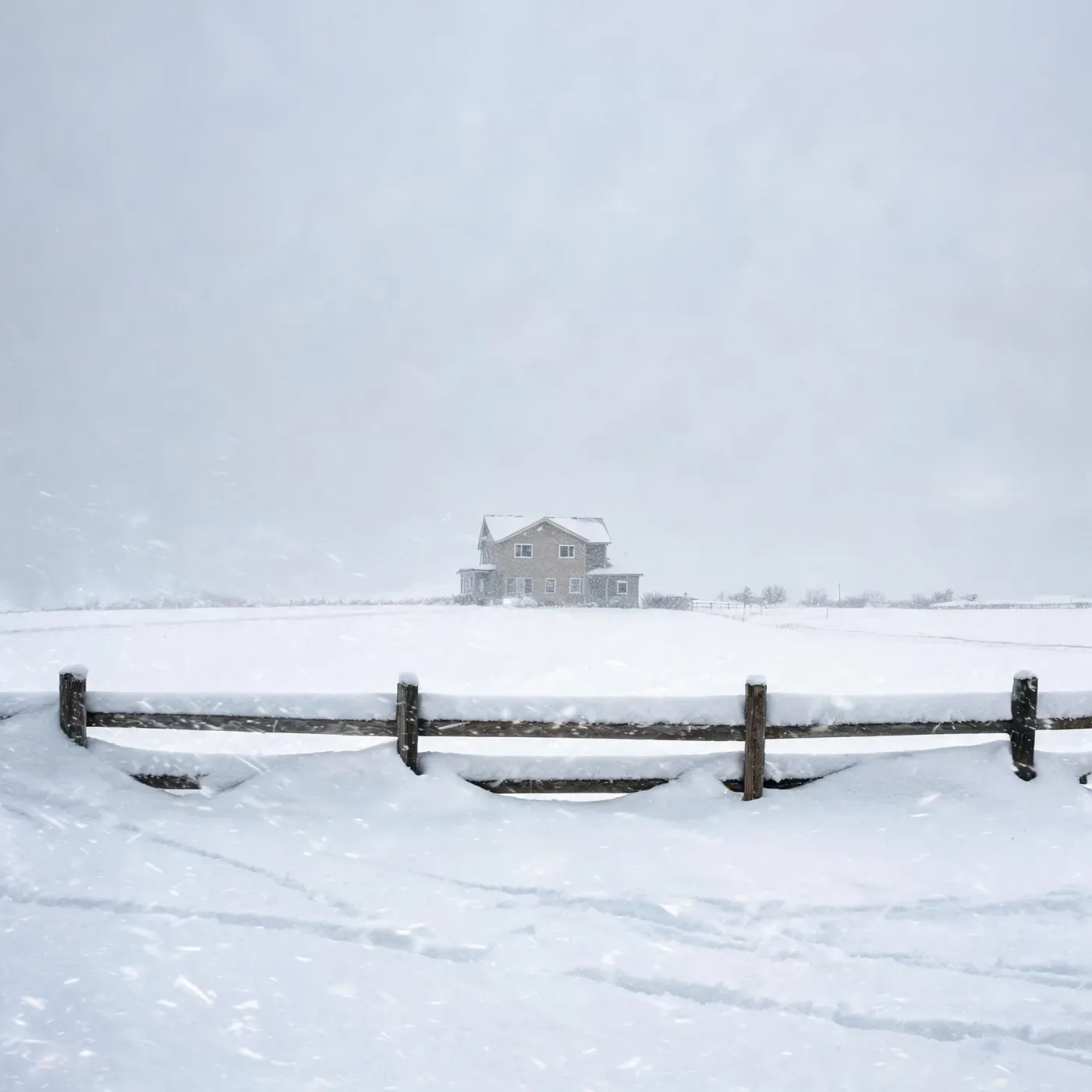
A two-story house stands on a flat snow-covered field in falling snow, with a partly buried wooden post-and-rail fence crossing the foreground under a pale gray sky.

Statewide, winter nights average 23°F, according to NOAA. That's cold enough that your boiler isn't cycling on and off through the night, it's running long stretches to keep up, and every one of those long runs is more time for water to sit against whatever scale has already built up on the heat exchanger. The kettling you hear tends to get worse as the night goes on, not better, because the metal stays hot longer with less chance to recover between cycles. If the whistle seems loudest in the early morning hours, that's why.

NOAA nClimDiv 1991-2020 county normals weighted by homes

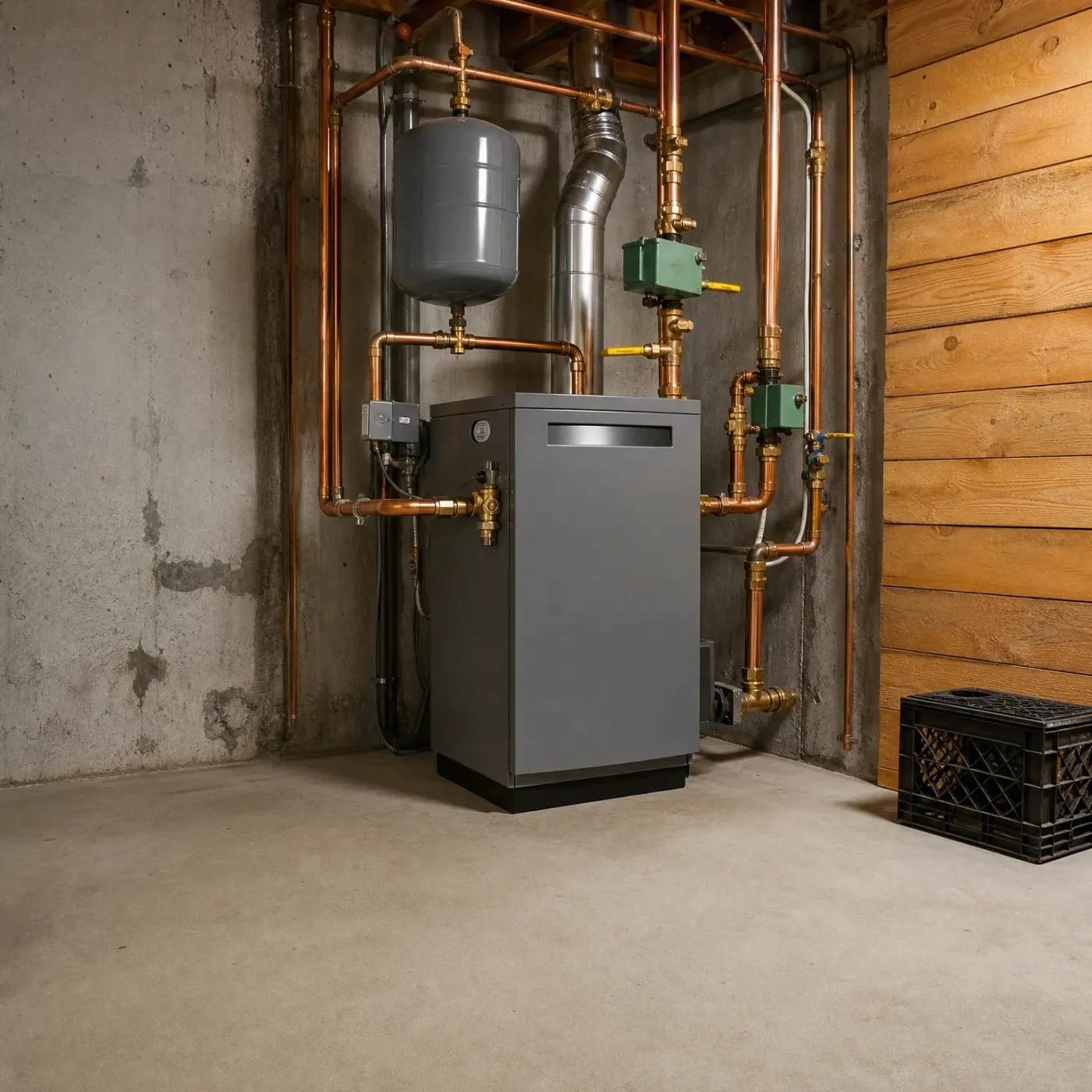
A gray boiler unit in a basement corner with copper piping, brass valves, a gray expansion tank, a metal flue duct, concrete walls and a wood-paneled wall, with a black plastic crate on the floor at right.
A boiler with clear piping and steady flow doesn't trap water against hot metal, so it has nothing to flash into steam.
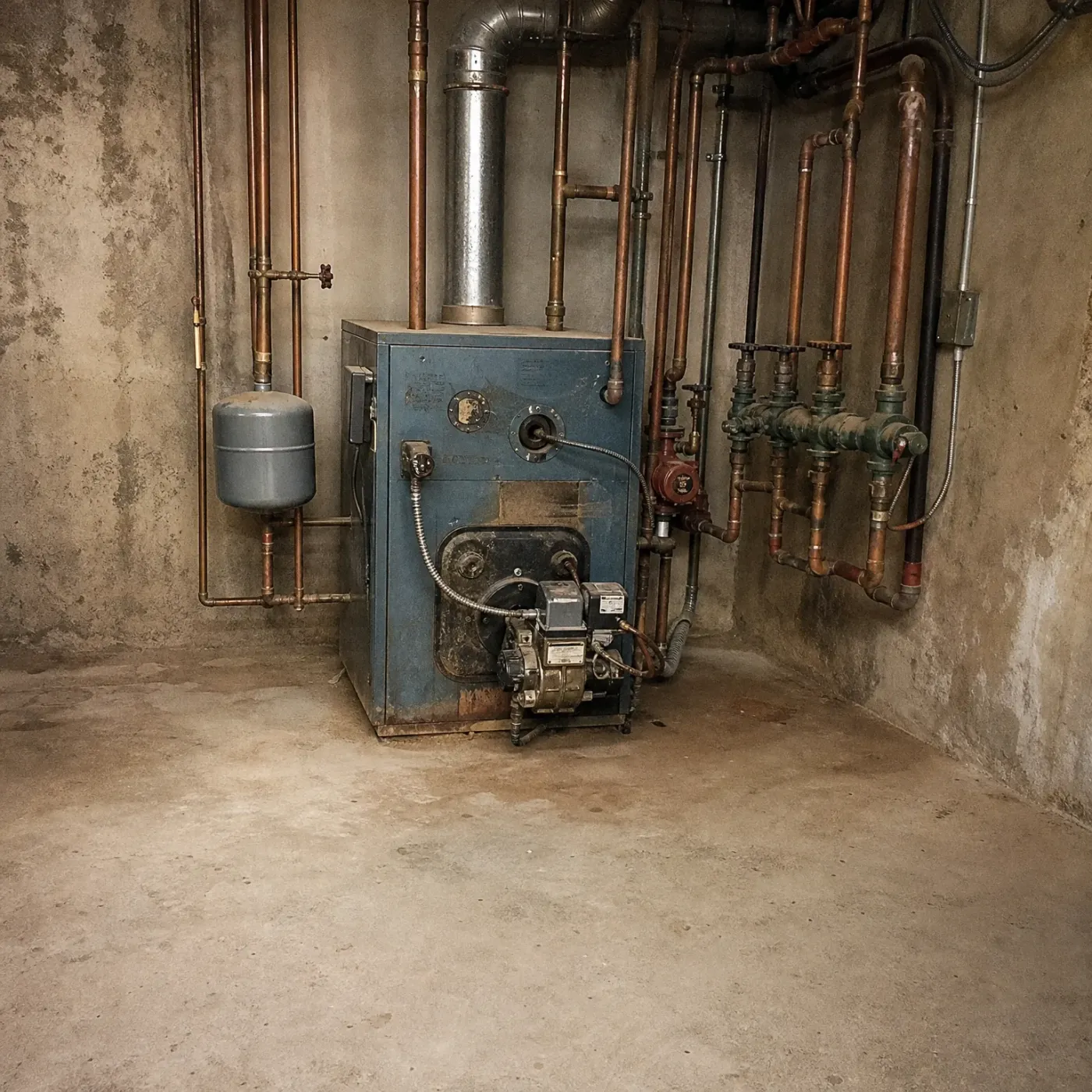
An older blue boiler with a burner unit stands in a concrete basement corner, connected to copper and steel piping, valves and a gray expansion tank on the wall.
Once pipes and valves have years of mineral scale on them, water sits still in those spots long enough to kettle.

Winter nights average 23°F statewide

At 23°F overnight, your boiler is firing on long runs most of the night, not short bursts. Every one of those long runs holds heat against the scaled spot in the heat exchanger that much longer, which is exactly what turns a small patch of buildup into a kettling noise.

NOAA nClimDiv 1991-2020 county normals weighted by homes

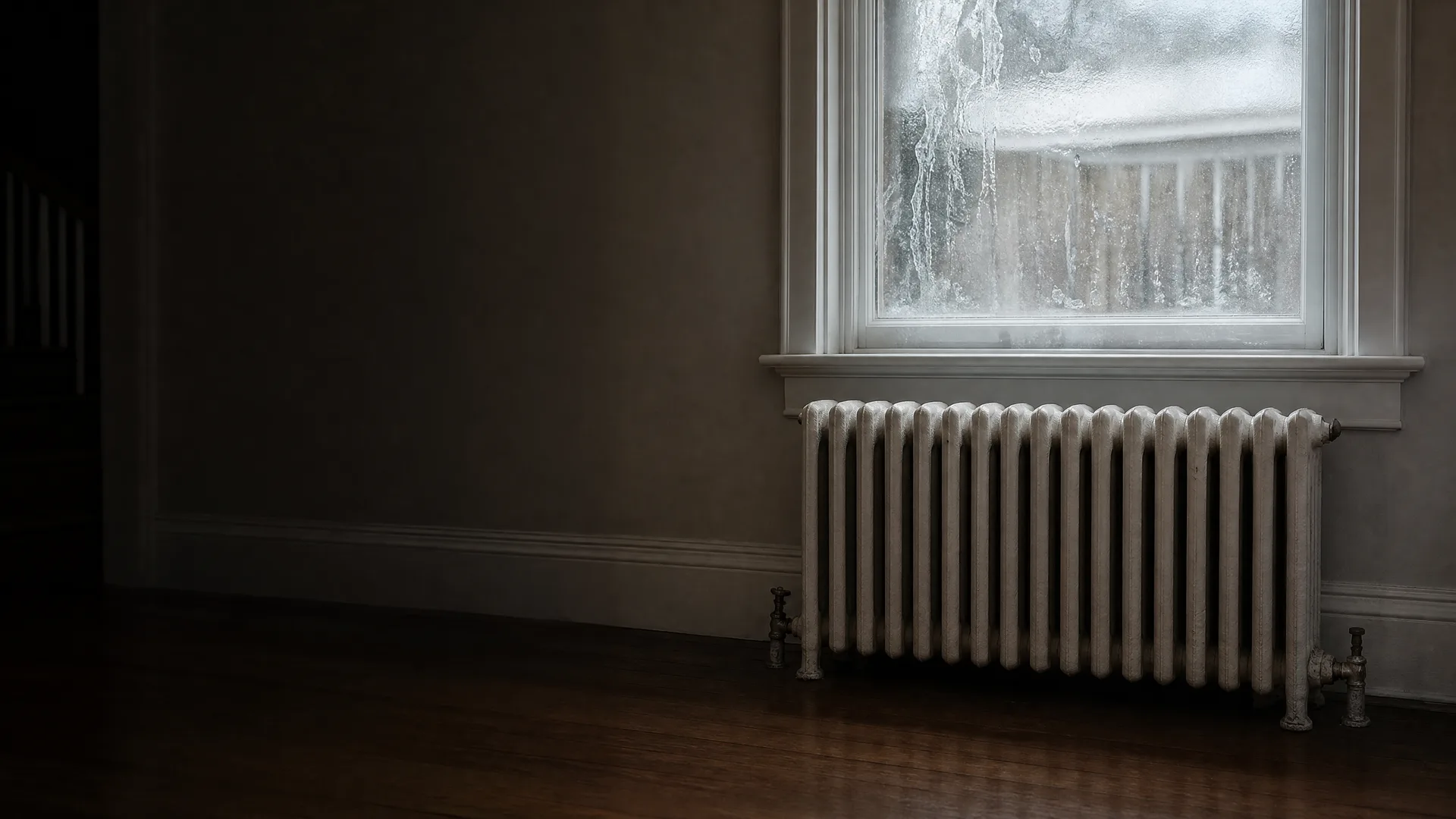
A white cast-iron column radiator with valves at each end sits beneath a frosted, condensation-covered window in a dim room with dark wood flooring and gray walls.

It's just past six on a January morning and the house is still dark. You're in the living room, waiting for the water to heat up before you head to the shower, and the radiator under the window ticks as it warms. The glass above it has ice on the inside, a thin film at the corners where the cold sits against it overnight. Then the sound starts, that rattling rumble from down in the boiler room, loud enough that you stand still and listen. It eases off after a minute, same as it did yesterday. Outside the window the yard is gray and frozen, and the radiator keeps ticking like it's going to run like this all morning.


The whistle is scale on the heat exchanger, trapping water against hot metal until it flashes to steam. It won't stop on its own, and it won't get quieter. Every long burner run this winter adds another layer in the same spot, and that spot is what eventually cracks or leaks. A boiler technician can flush the scale and sludge out and check what shape the heat exchanger is in before that happens. You don't have to spend the next hour searching boiler repair companies around Kansas, calling a few to see who picks up, explaining the kettling noise over and over, then sitting on quotes trying to guess which one is fair. Send the details once and a licensed contractor who works on boilers takes it from there. The noise doesn't need to wait until it turns into a bigger repair in February.

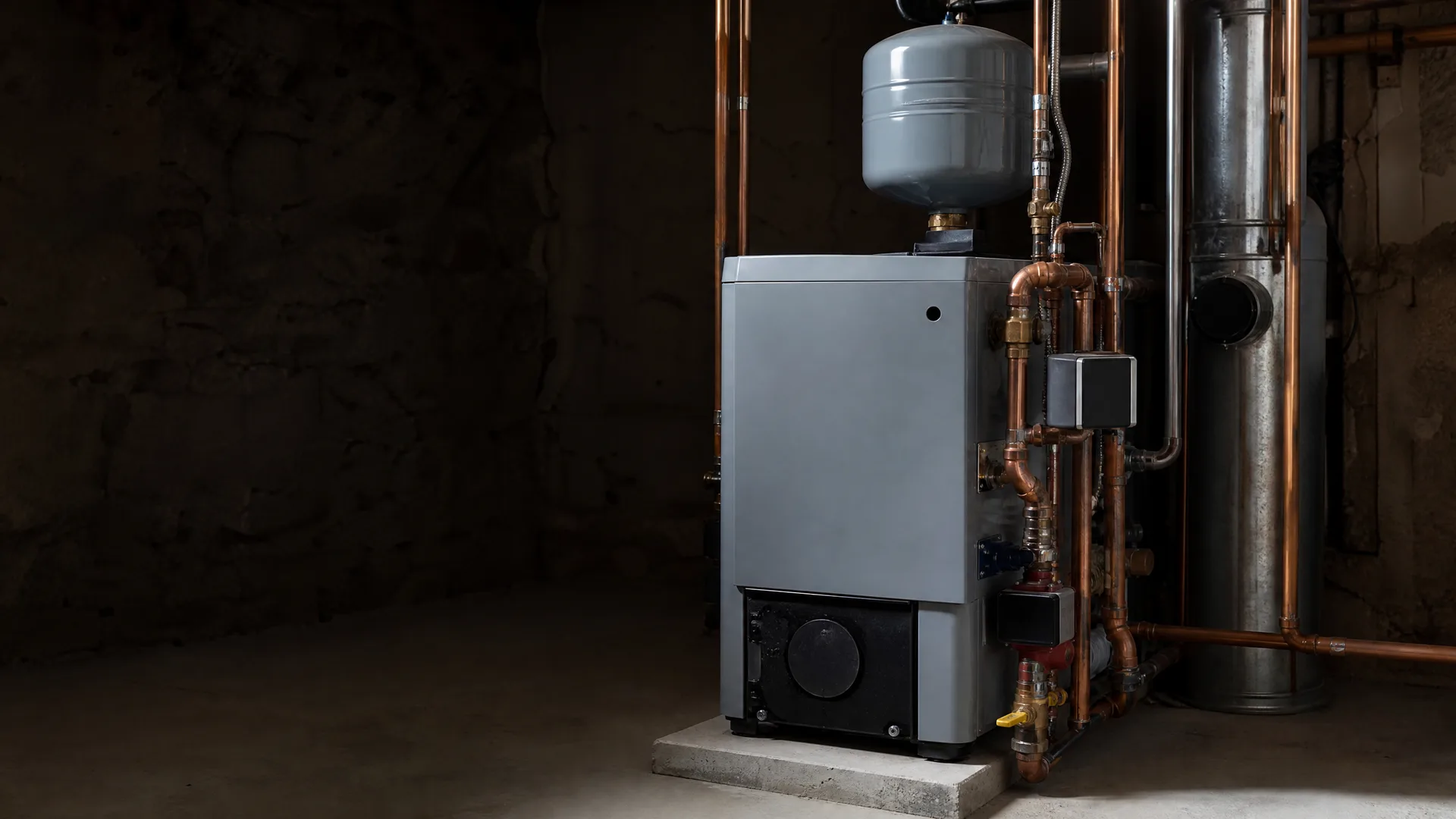
A gray residential boiler on a concrete pad in a dim basement, connected to copper piping, a gray expansion tank overhead, and a metal flue pipe along the wall.

Let someone else find the pro

Step 1 of 3: Equipment