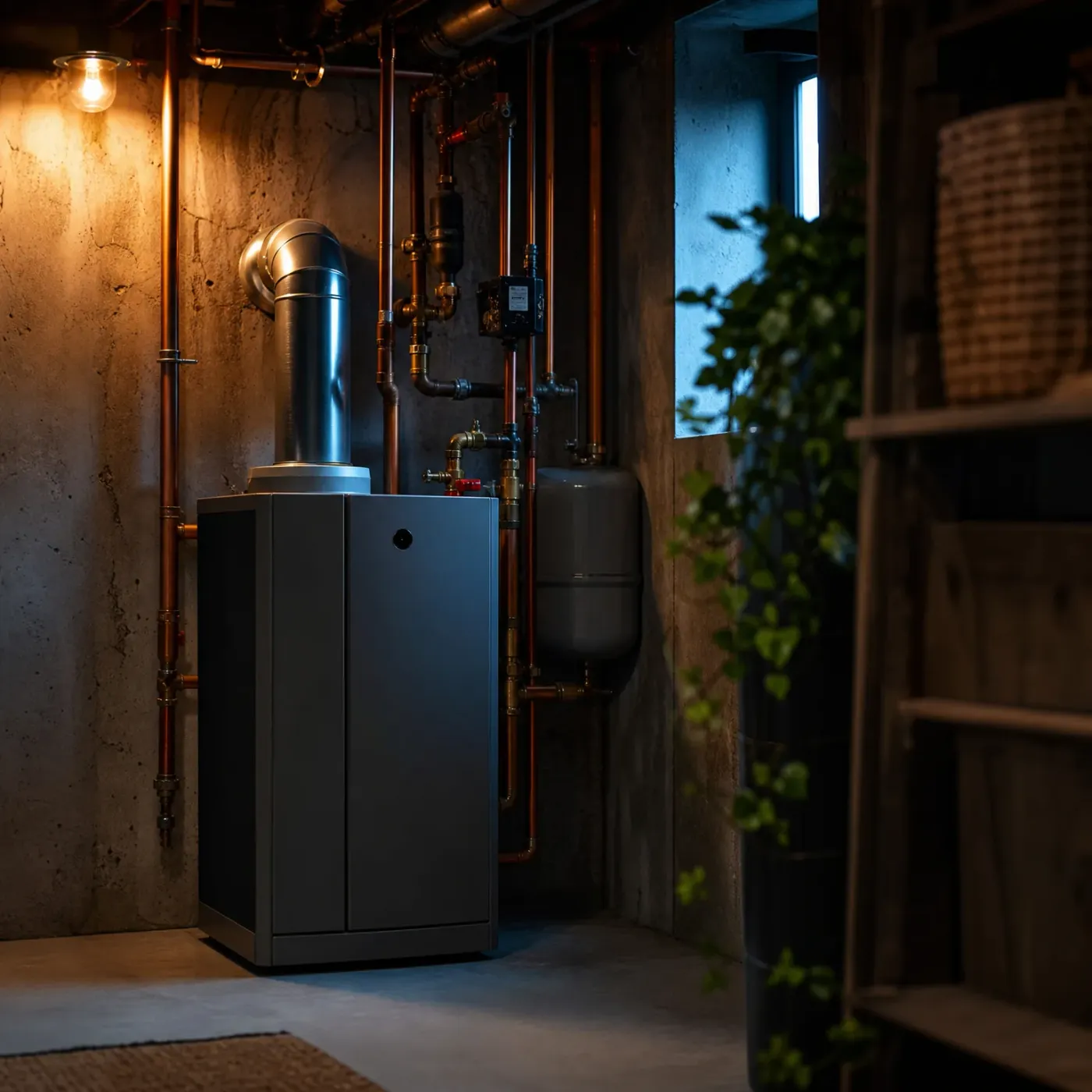
A dark grey floor-standing boiler with a metal flue stands against a concrete basement wall, surrounded by copper pipework, valves and a wall-mounted expansion tank, with ivy and a shelving unit at right.

Hand off the boiler problem

Why your boiler is leaking water in Kansas

Water pooling around your boiler usually comes down to a handful of causes: a worn pressure relief valve, a loose fitting, a crack in an old heat exchanger, or pressure that built up too high. Some of these you can check yourself before calling anyone. Once you send the form, the search for who can fix it is off your plate, handed to a local contractor who works on boilers all winter and knows which of these usually turns out to be the culprit.

Hand it off

A boiler leaks water for a few common reasons, and most of them point to one part. The pressure relief valve is built to open when pressure inside the system climbs too high, and once it opens it can start dripping even after pressure drops back down. A fitting or valve connection can loosen over years of heating and cooling, which lets water seep out slowly at a joint. On an older unit, the heat exchanger itself can crack, and that leak tends to show up as water pooling near the base rather than at a visible pipe. Gas heat runs most homes in Kansas, and a boiler here works hard from fall through spring, so the parts that hold pressure and seals get more wear over the years than they would somewhere milder. Water on the floor is not something to leave alone. It usually means a part has already failed or is failing, and running the boiler while it leaks can damage the floor, the cabinet, or the heat exchanger further.

A gray boiler on a concrete pad in a basement corner, connected to copper and black pipes with a gauge, circulator pump, and gray expansion tank, beside a wood-framed wall.
The pressure gauge reads normal and the fittings around the pump and expansion tank stay dry.
An older oil-fired boiler with a burner unit, flue pipe, expansion tank and copper piping stands in the corner of a concrete-floored basement with weathered plaster walls.
Water has reached the burner assembly at the base, where it can reach electrical and gas components.

Call Now or Can It Wait

Call now

  • Water at the burner assembly can reach the gas valve and ignition controls, and running the boiler in that state risks more than a bigger repair bill.
  • A crack in the heat exchanger won't seal itself, and firing the boiler while it leaks pushes water onto parts never meant to get wet.
  • Standing water near the base invites rust on the burner compartment and the controls, turning a contained leak into a bigger repair.
  • If the leak started suddenly or the puddle is growing, waiting even a day gives it more time to reach something it shouldn't.

Safe to wait a bit

  • A pressure relief valve dripping after a pressure spike often settles down once the system cools, and the drip may stop on its own.
  • If the water is only at a loose fitting near the pump or expansion tank, it's usually a slow, contained problem rather than an urgent one.
  • Checking the pressure gauge yourself first can tell you whether you're looking at a one-time release or something still building.
  • A small amount of moisture around a fitting, with the gauge reading normal, is worth watching for a day before you call anyone.
A man with grey hair and stubble in a dark sweater sits on a grey sofa indoors, looking off to the side, with a potted plant and a sunlit window behind him.
A man with gray hair, a beard and glasses, wearing a dark green sweater, sits on a gray sofa in a sunlit living room with a potted plant, table lamp and wooden sideboard behind him.
A middle-aged man with graying hair and a short beard sits on a blue sofa in a living room, looking toward a window, with a bookshelf, lamp and framed picture in the background.
A man with graying curly hair and a dark green sweater sits on a gray sofa in a sunlit living room, looking off to the side, with a framed picture, shelving, an armchair and a window with sheer curtains behind him.

Is it puddling under the boiler right now

Look for a damp patch on the floor under the boiler, or a drip you can hear hitting the pan below it. Check the fittings near the pump and the valve on the side where the pressure relief line ends, that's usually where water shows up first. You might notice a rust-colored ring on the floor from water that dried there before, or a musty smell in the room if it's been going on a while. If the leak keeps feeding the same spot, the floor underneath can soften and the boiler's base can start to rust, so it's worth finding where the water is actually coming from before it sits there all winter.

A blue oil-fired boiler with a burner unit and pressure gauge stands in a concrete basement corner, connected to copper pipes and a metal flue.
Before you get your boiler repair
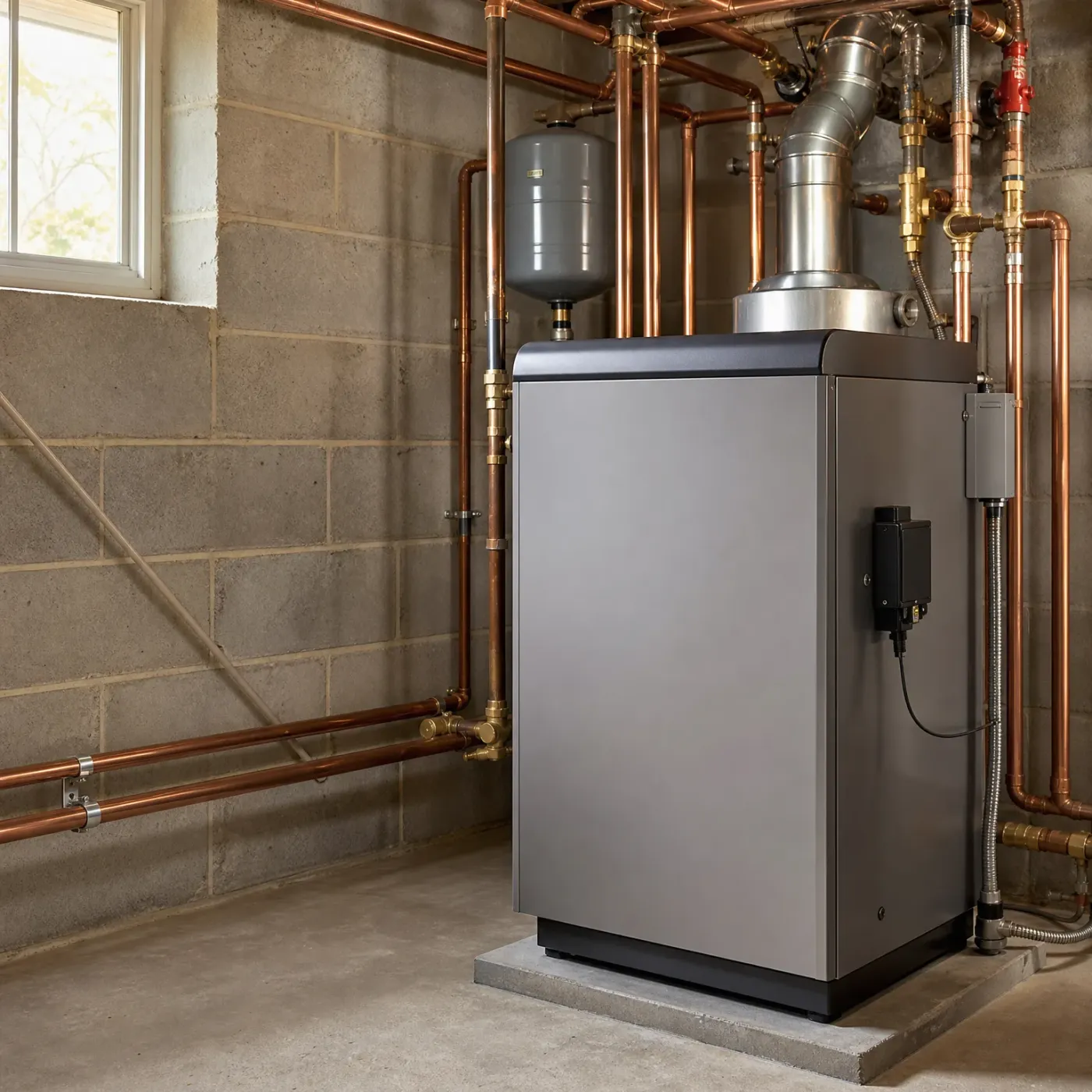
A gray floor-standing boiler with a metal flue stands against a concrete block wall, connected to copper pipes, brass valves and a gray expansion tank, on a bare concrete floor.
After you get your boiler repair
A gray floor-standing boiler on a concrete pad in a basement with concrete block walls, connected to copper piping, a flue vent, and an expansion tank.

Send one request and you're done looking

Only one pro gets your request, so you hear from one company.

Send the request today and stop worrying about who to call.

Hand off the search

It costs nothing to send, and you don't have to hire anyone.

Why does my boiler only leak when it's running, not when it's off?

You notice the floor stays dry when the boiler sits idle, but a few minutes after it fires up, water shows up again. That pattern feels like it should mean something, and it does. It points to pressure or expansion, not a fitting that was always loose. Knowing which one narrows down what a repair tech needs to look at first.

Heat is pressurizing something that only leaks under pressure

Water heats up and expands, and that raises pressure inside the system the moment the burner kicks on. If the pressure relief valve is weak or the expansion tank has lost its air charge, that rise is enough to push water out, even though the system reads fine at rest. A hairline crack in the heat exchanger behaves the same way. It can stay sealed when the metal is cool, then open just enough to weep once things heat up and expand. Either way, the leak showing up only while it runs is the clue, not the whole answer. A tech working boilers through a Kansas winter will check the pressure relief valve and the tank charge first, since those fail more often than the exchanger does.

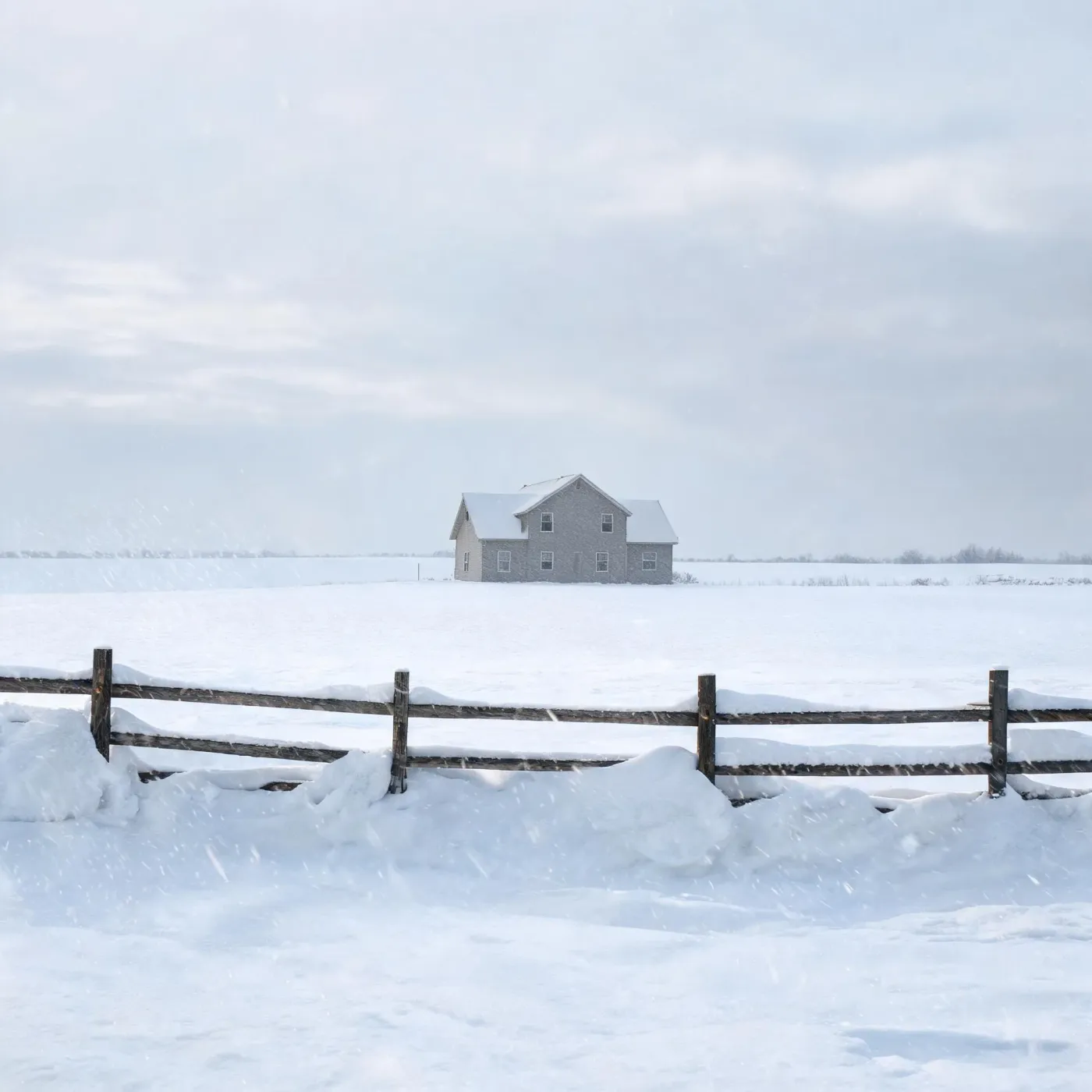
A two-story light-colored house with a gabled roof stands alone in a flat snow-covered field under a pale overcast sky, with a wooden post-and-rail fence and drifted snow in the foreground.

Winter nights average 23°F statewide, according to the National Weather Service. That kind of cold means your boiler is firing often and running longer stretches to keep up, which puts steady pressure on the same joints and valves night after night. A fitting that holds fine in October can start to weep once the system is cycling hard through January. If you've noticed the leak showing up more on the coldest nights, that's not a coincidence. It's the system working at its hardest, right when you need it least to fail.

NOAA nClimDiv 1991-2020 county normals weighted by homes

A woman with shoulder-length brown hair wearing a beige knit cardigan sits in a gray upholstered armchair near a window, looking off to the side with a slight smile, with bookshelves blurred in the background.
A woman and a sleeping child wrapped together in a cream knitted blanket on a couch, with a potted plant, framed photo and lit lamp in the background.

Why old fittings give out first

Every time a boiler heats up and cools down, the pipes and fittings expand and contract with it. Over years of that cycle, a joint that was tight when it was installed can work itself loose, and solder can fatigue at the same spots over and over. Kansas winters push boilers through that cycle hard, firing often to keep up with cold nights. A fitting near the pump or the expansion tank is usually where that shows up first, since those connections flex more than the straight runs of pipe.

What a corroded tank looks like

Steel and cast iron both corrode from the inside before you'd ever see rust on the outside of the tank. Water sitting against metal for years wears a thin spot, and once that spot gives way, it doesn't patch itself or get better on its own. Unlike a loose fitting, a corroded tank usually means replacing the tank rather than repairing it. If the leak traces back to the tank itself and not a valve or a joint, that's the difference worth knowing before you spend money on a repair that won't hold.

Winter nights average 23°F statewide

At 23°F, your boiler is holding higher pressure for longer stretches to push heat through the house. A joint or valve that's already marginal is more likely to weep under that load than it would on a milder night.

NOAA nClimDiv 1991-2020 county normals weighted by homes

Where this leaves your boiler

  • A leaking boiler almost always traces back to one part: a worn relief valve, a loose fitting, a cracked heat exchanger, or pressure running too high.
  • A dry pressure gauge and dry fittings near the pump point toward a slower leak worth watching rather than an emergency.
  • Water reaching the burner assembly at the base means stopping the boiler and getting a licensed contractor out rather than waiting.
  • Kansas winters push boilers to hold higher pressure for longer stretches, which is exactly when a marginal joint or valve tends to give out.
  • A local contractor who services boilers through the cold months here has likely already seen the same fitting or valve fail on a similar system.
  • Sending one request means one contractor looking at your boiler, not a handful of companies competing for the job.

Most leaks trace back to one part: a relief valve that's done its job and opened under pressure, a fitting that's worked itself loose, or a heat exchanger that's cracked after years of heating and cooling. Check the gauge and the fittings near the pump first. A dry gauge and dry joints there usually mean you're watching a slow leak, not living with an emergency. Water at the burner assembly is the one sign that changes things. That's close enough to the gas valve and ignition controls that running the boiler another night isn't worth it.

Kansas winters are part of why this happens when it does. Holding higher pressure for longer stretches on a cold night puts the load right on the joint or valve that was already marginal, and that's when it tends to let go. A contractor who works on boilers through a Kansas winter has likely seen this same valve or fitting fail on a system like yours before, which is the kind of thing that makes a repair go faster instead of becoming guesswork.

Sending a request through this page puts it in front of one licensed, local contractor, not a handful of companies calling you back at once. You get a straight answer from someone who already knows what usually fails on a boiler like yours, and you're done chasing down who to call.

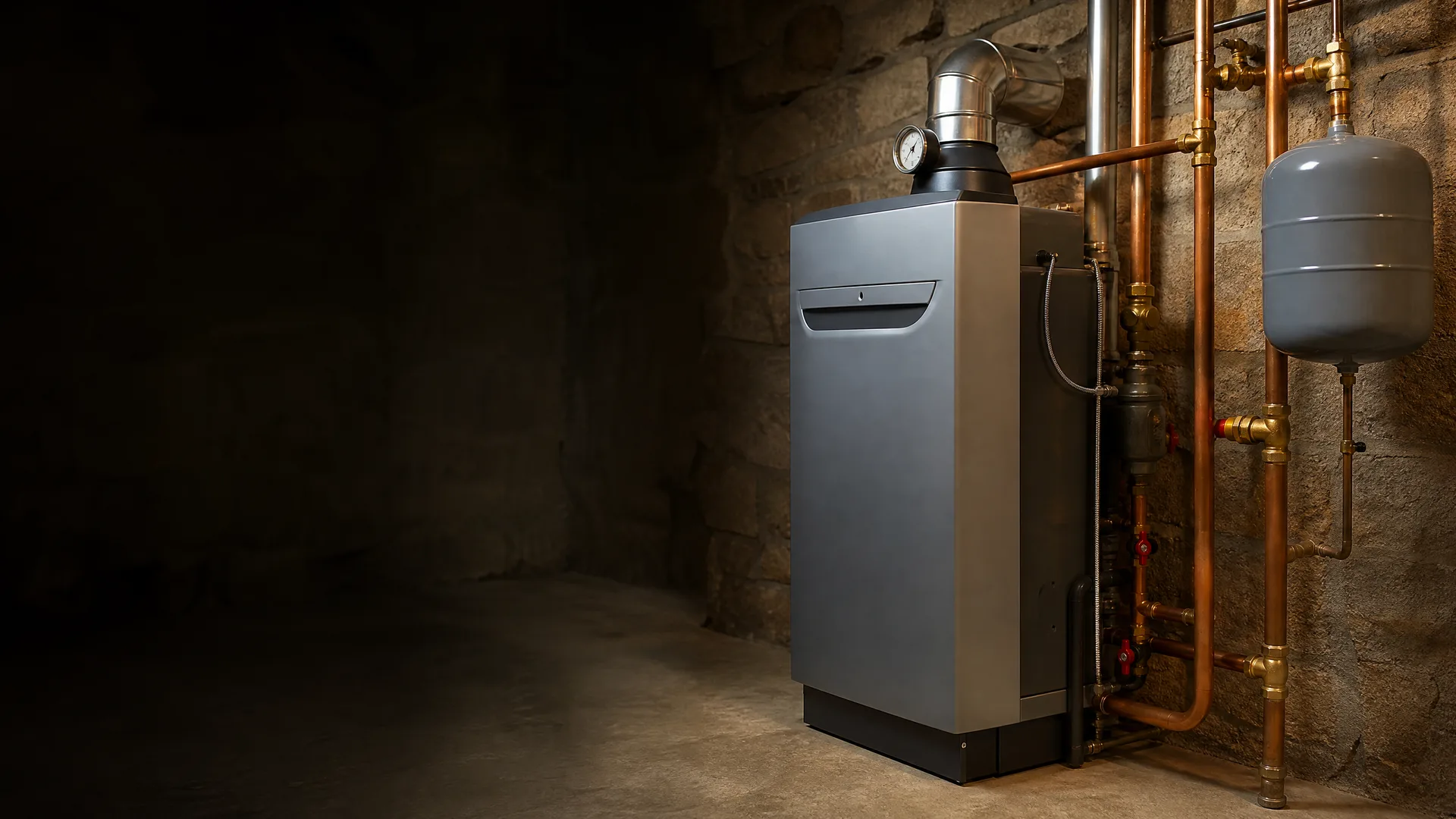
A gray floor-standing boiler with a flue pipe and pressure gauge stands against a stone basement wall, connected to copper and brass piping and a gray expansion tank.

Finding a pro stops being your job

Step 1 of 3: Equipment