Quiet and running right
A boiler that's clear of scale heats water evenly and lets it move through the pipes without trapping steam pockets. No knocking, no banging, just the normal hum and tick of the system doing its job.
That banging is usually water hammer or kettling. Most boilers in Kansas run on gas, heating water that circulates through pipes and a heat exchanger, and if mineral scale builds up inside the heat exchanger, water gets trapped under it. That trapped water flashes to steam, then collapses back into water, and the pop you hear is that collapse happening over and over. It can also mean trapped air in the lines, or a pipe that expands against a loose strap when it heats up. None of these fix themselves. Scale buildup gets worse each heating season as more collects, and a heat exchanger that keeps overheating in one spot can crack. Air in the system usually just needs bleeding, which is simple, but the two causes sound alike and only someone who opens the unit up can tell you which one you have.
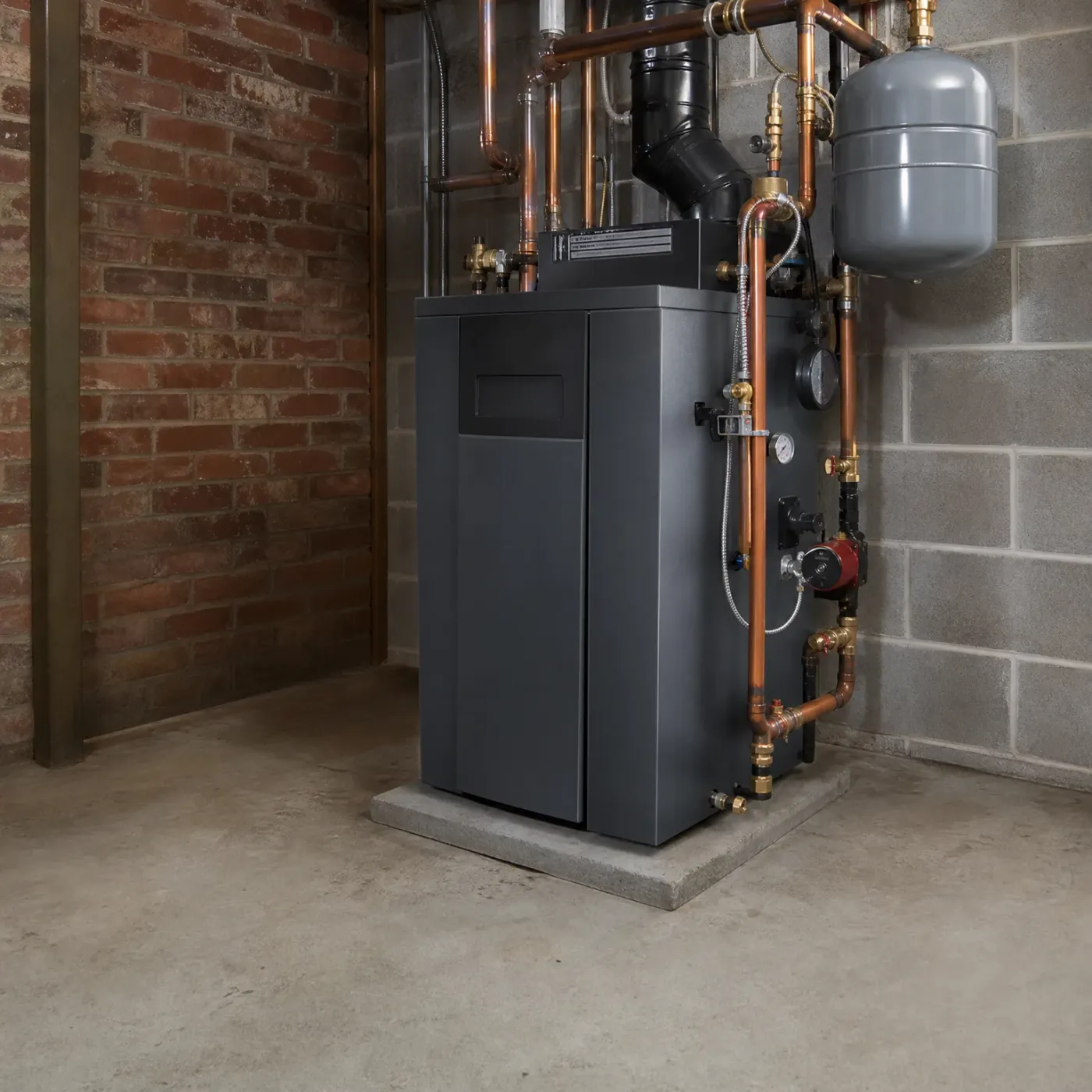
A boiler that's clear of scale heats water evenly and lets it move through the pipes without trapping steam pockets. No knocking, no banging, just the normal hum and tick of the system doing its job.
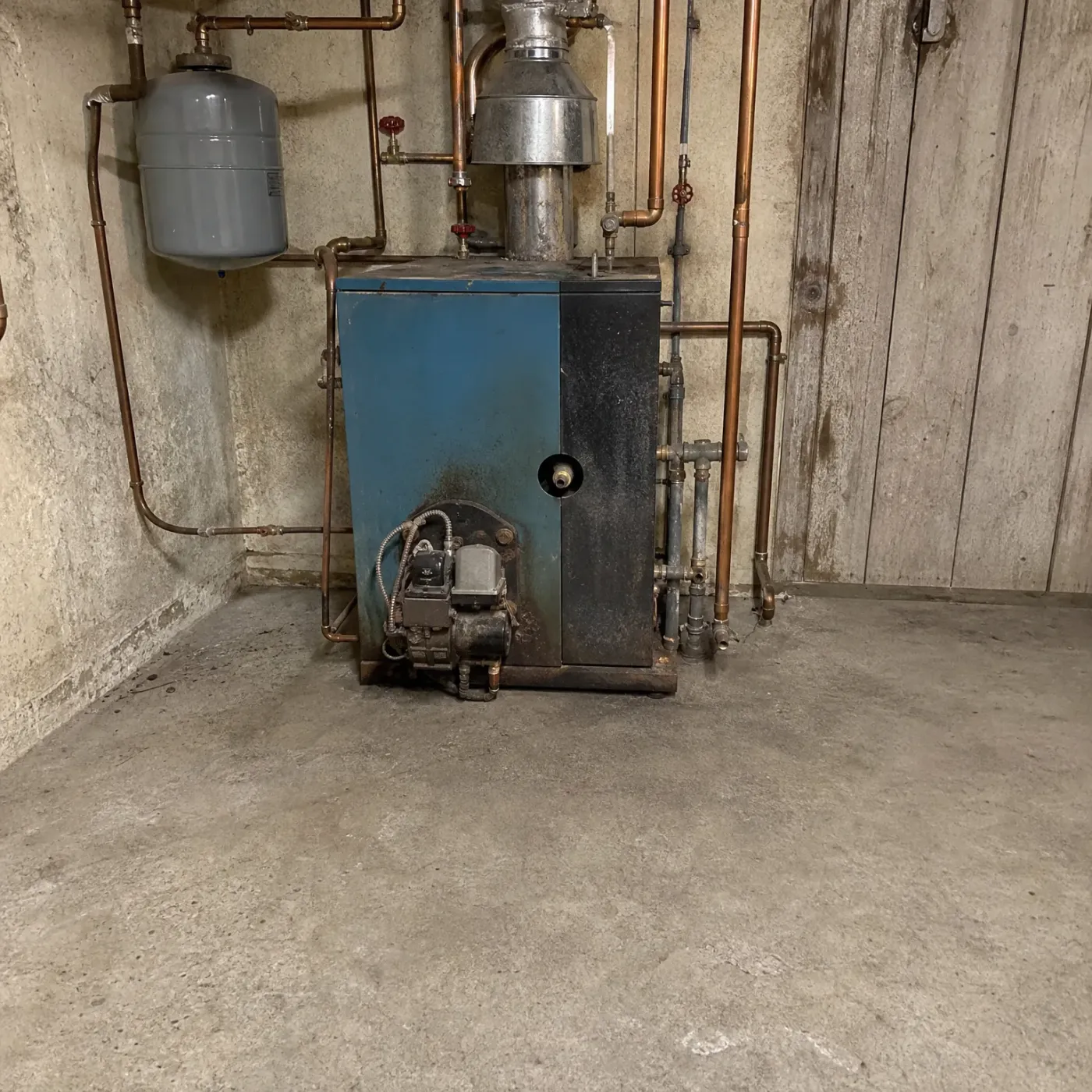
Years of mineral buildup inside the heat exchanger leave less room for water to move freely. Trapped water turns to steam, collapses, and slams against the metal. Left alone, that banging tends to get louder, not better.




The bang you hear starts inside the heat exchanger, where the burner heats water before it circulates through the system. Once scale coats the metal, a layer of water gets trapped against it and flashes to steam before it can move on. Cooler water around it collapses those steam pockets fast, and that collapse is the knock you hear, usually right after the burner kicks on. This is kettling, and it gets louder over time as more scale builds up. A different noise, water hammer, comes from a valve closing quickly and sending a shock through the pipes instead of the heat exchanger itself. Banging can also come from something simpler, a pipe strap that's worked loose or an air pocket sitting in the line, neither of which has anything to do with scale. Kansas water leaves mineral deposits behind over years of heating cycles, which is why a boiler that's been running a decade or more tends to knock more than one installed recently. Figuring out which of these it is determines what gets fixed.


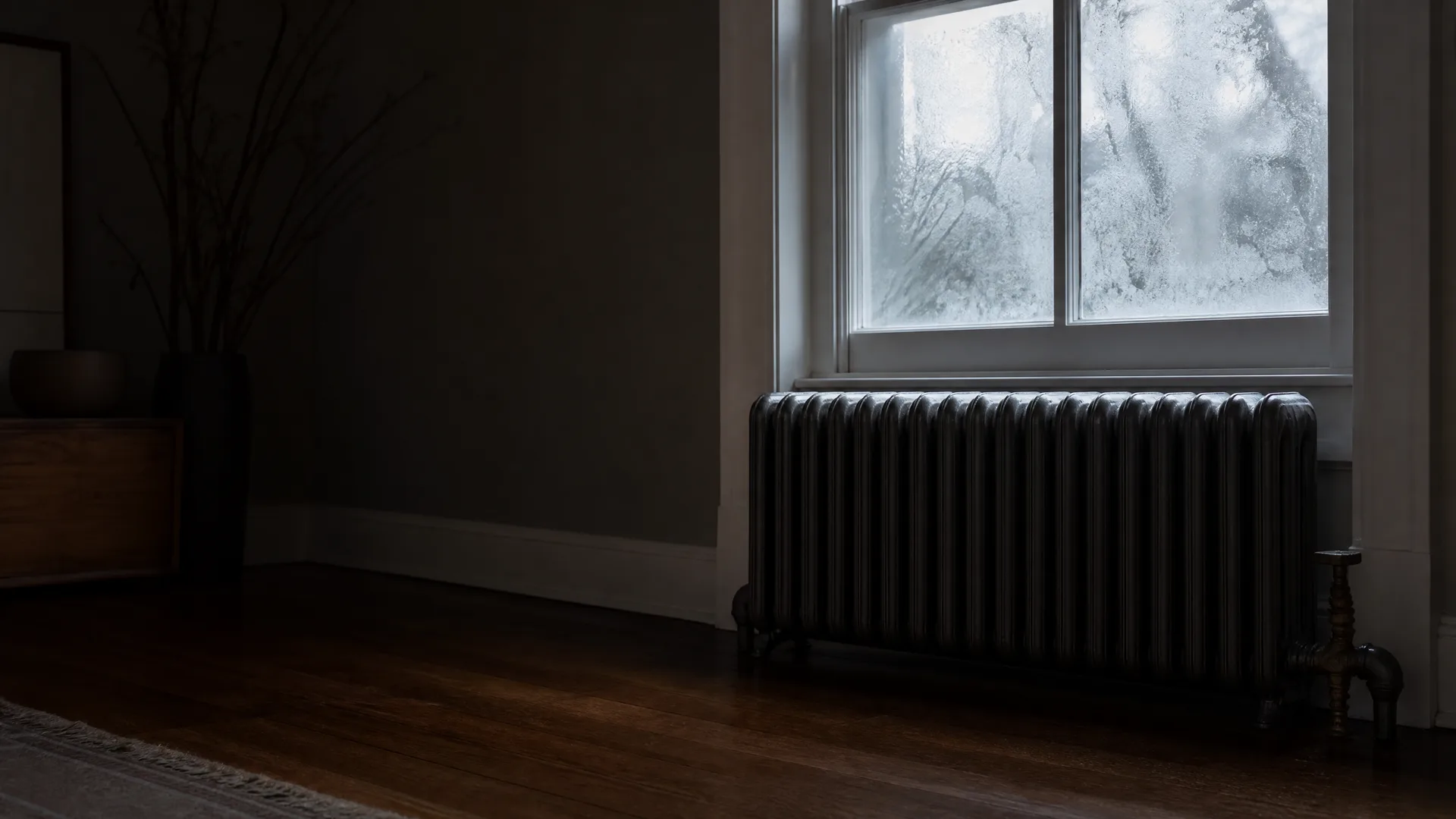
It's a January morning, early, still dark outside the window. Ice has crept across the inside of the glass above the radiator, feathered at the edges. The cast-iron radiator under the sill ticks once, then lets out a bang loud enough that you look up from your coffee. It does it again a minute later, a hard knock like someone rapped the pipe with a wrench. You put your hand on the radiator. The top is warm. The bottom, near the floor, is barely warm at all. In a house this cold outside, that uneven heat is the kind of thing worth having someone look at, someone who works on boilers around Kansas all winter and knows what that knock usually means before they even open the panel.
Only one pro gets your request, so you hear from one company.
No charge to send it. You decide if you hire them.
Water expands by about 1,700 times when it flashes to steam, and that expansion inside a confined heat exchanger has nowhere to go but out, in a shock wave you feel through the floor as much as hear.
A furnace blower just moves air, so a cracked heat exchanger there stays quiet. A boiler moves water under pressure, which is why scale in the same spot turns into a noise you can't ignore.


The banging keeps happening every time the boiler fires, and the scale causing it keeps building. Worn spots on the heat exchanger from repeated steam pockets don't heal themselves.
A local contractor who works on boilers all winter can check the heat exchanger and flush out scale before it wears a thin spot into a leak.
Minerals in the water settle out and coat the heat exchanger's inner walls.
Scale traps a thin layer of water against the hot metal.
That trapped water flashes into steam before it can circulate.
Steam pockets collapse the instant cooler water reaches them.
Winter nights here average 23°F, so your boiler is firing often and running long stretches to keep up. That steady demand gives scale more chances to build inside the heat exchanger, which is what sets off the banging.
NOAA nClimDiv 1991-2020 county normals weighted by homes


You'd hear it most when the boiler first fires, a bang or a series of knocks from somewhere near the unit or along the pipes, sometimes loud enough to notice from another room. It might come with a low rumble or gurgle right before the bang, almost like water boiling hard in a covered pot. Some houses get a rattle in the radiators too. None of this is a gas smell or a pilot light issue, so if you're not smelling anything, that's one thing you can rule out. Left alone through a Kansas winter, the banging doesn't go away on its own, and the scale behind it keeps wearing at the same spot on the heat exchanger every time the boiler runs.
Statewide, winter nights average 23°F. On a night that cold, your boiler isn't cycling on and off, it's running long stretches just to hold the house at temperature. That kind of steady firing matters because scale doesn't build up from one hot moment, it builds up from hours of hot water passing over the same spots in the heat exchanger. The colder the night, the longer those runs get, and the more chances scale has to thicken. So the banging you hear tends to show up worse on the coldest nights of the season, not the mild ones, because that's when the boiler is working the hardest to keep up.
NOAA nClimDiv 1991-2020 county normals weighted by homes

Scale built up inside the heat exchanger, trapped water flashed to steam, and the steam collapsing is the bang you hear. That's it. It's not the boiler failing, it's the boiler telling you what's built up inside it.
A local contractor who works on boilers all winter in Kansas can get into the heat exchanger, see how much scale is there, and flush it before it wears a weak spot into the metal. Once you're matched, it's one contractor calling you back, not a handful of companies competing for the job. You'll know who's coming and why they're the right fit for a gas boiler that's been kettling.

You only hire the pro if you want to.
That banging won't fix itself, and every cold night it keeps firing on a scaled exchanger is another chance for a weak spot to wear through. A local contractor who works on boilers all winter can flush it before that happens. Send the request and one contractor who knows this equipment will reach out, no one else.