Why your boiler relief valve is leaking in Kansas

Step 1 of 3: Equipment

Why is my boiler's relief valve leaking?

A few drops under the valve, or a steady drip into the pan below it, usually shows up when you're down checking the pressure gauge or topping off the system before the cold really sets in. It's easy to assume the valve itself is bad. Most of the time it's doing exactly what it's built to do, which is let water out before something worse happens.

It's releasing pressure or temperature that's too high, not failing on its own

The relief valve opens when pressure inside the boiler climbs above about 30 psi, or when water gets hotter than it should. That's its only job. If it's leaking, something upstream is pushing it past that point, often too much water pressure from the fill valve, a buildup of sediment, or expansion that the tank isn't absorbing anymore. In Kansas, a boiler running hard through a long winter puts more cycles on that valve than one that barely gets used, which wears the seat faster. A valve that drips once and stops after a cold snap is worth watching. One that keeps dripping needs a look at what's actually driving the pressure up.

A dimly lit room with a cast-iron column radiator beneath a wide window covered in frost and snow, with a pale curtain, a potted plant, and a patterned rug on a wood floor.

You're down in the basement before work, coffee still in hand, checking on the radiator that never quite heats the living room above it. It's January, maybe six that morning, and the glass block window up near the ceiling has ice crawling up the inside of the pane. The cast-iron radiator under it ticks as it fills, and that's when you see it: a thin trail down the side of the relief valve, pooling on the concrete. You crouch down, touch it, pull your hand back. It's warm. You stand there a second, coffee going cold, wondering how long it's been doing this while you slept upstairs with the heat barely keeping up.


High Pressure or a Worn Valve

High Pressure

  • A fast heating boiler with a bad expansion tank can push system pressure past 30 PSI and force the valve open to protect the boiler.
  • If the gauge reads above 25 or 30 PSI right before the drip starts, pressure is the likely cause, not a worn-out valve.
  • A waterlogged expansion tank loses its air cushion, so every time the burner fires, the water has nowhere to expand except out through the valve.
  • An automatic feed valve stuck open will keep refilling the system past where it should stop, building pressure that the relief valve then has to release.
  • This shows up most when the boiler is cycling hard against a Kansas cold snap, since more heat called for means more expansion inside the system.

Worn Valve

  • A relief valve that drips even when the pressure gauge sits normal, around 12 to 15 PSI, usually means the valve itself has failed, not the system around it.
  • Mineral buildup on the valve seat, common with Kansas water, keeps it from sealing fully once it has opened even once.
  • A valve that's been in service for years can lose its spring tension and start weeping well below its rated trip point.
  • Sediment or grit lodged in the seat during a past relief event often keeps the valve from closing fully afterward.
  • If replacing the valve stops the drip without touching the expansion tank or pressure settings, the valve was the problem all along.
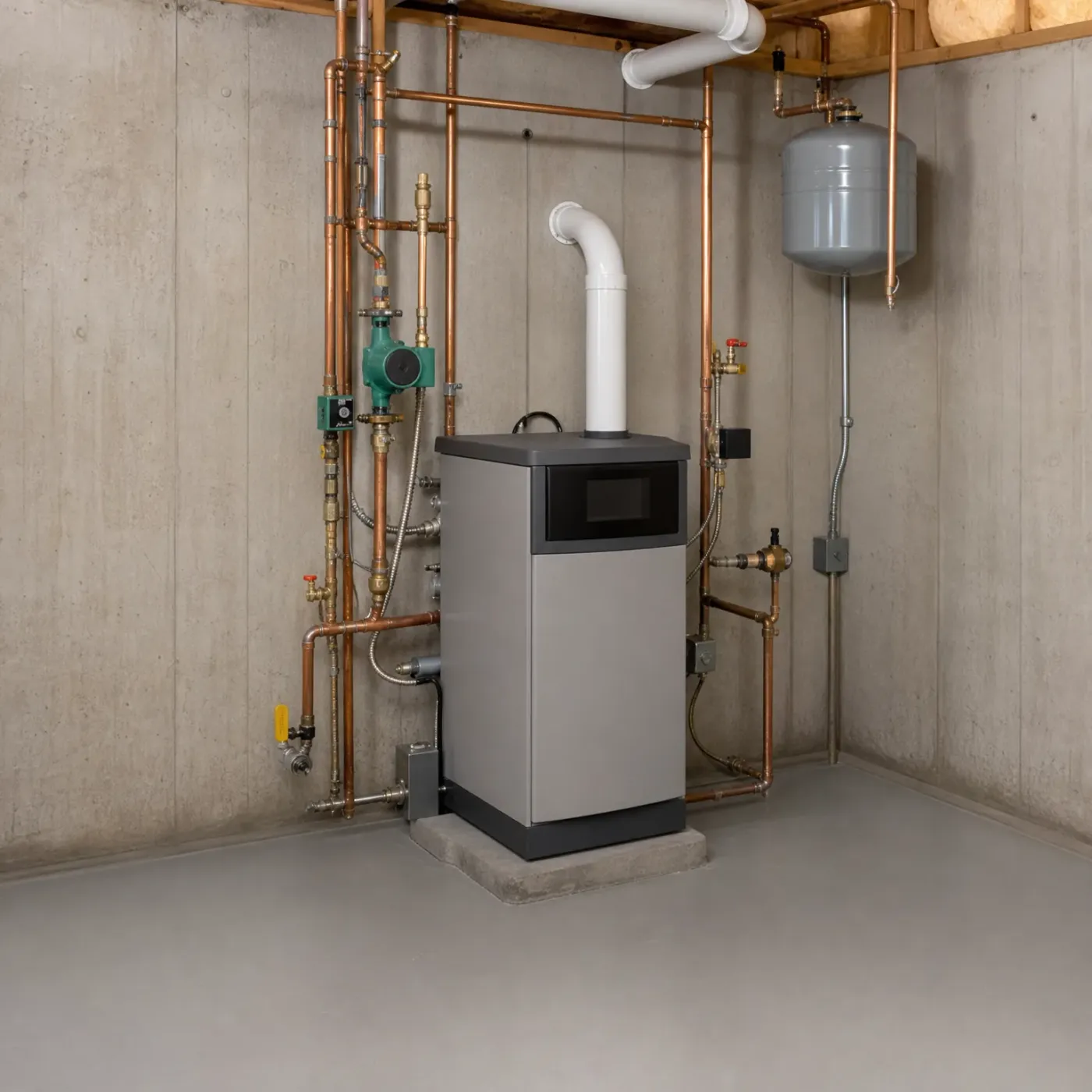
A gray floor-standing boiler on a concrete pad in a basement corner, with copper piping, a circulator pump, a white PVC flue, and a gray expansion tank mounted on the wall.

Pressure Holding Steady

The gauge sits in the normal range, the expansion tank is doing its job, and the relief valve stays dry. Copper lines, the circulator, the hoses all run quiet. This is a system where the valve only opens if something actually goes wrong, which is what it's built for.

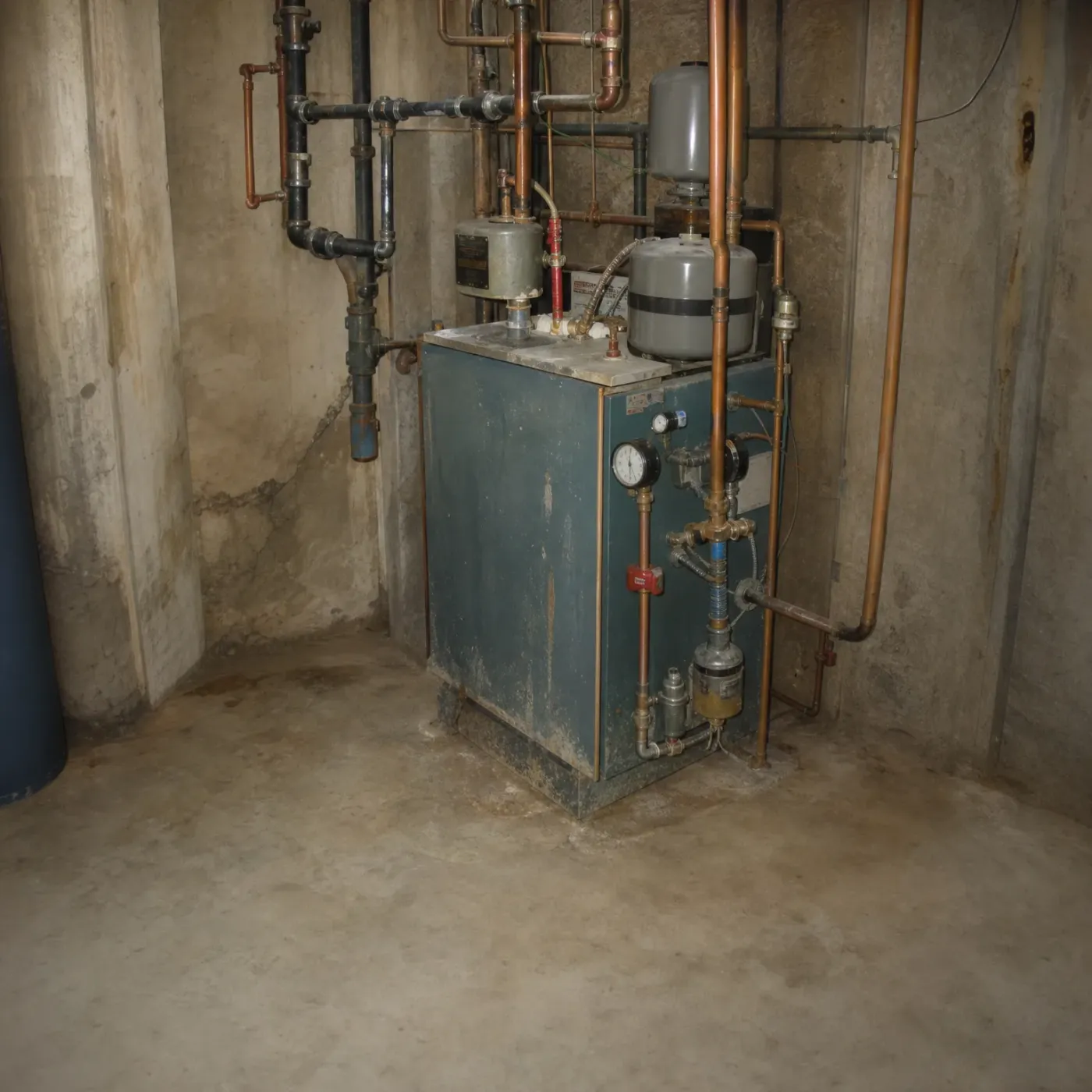
A green metal boiler with pressure gauge stands in a concrete basement corner, surrounded by copper and black iron pipes and two tank-shaped vessels.

Valve Under Strain

An older cast iron boiler like this one depends on every fitting and gauge doing its part, and when the expansion tank waterlogs or pressure creeps up, the relief valve takes the hit first. A steady drip here means the valve is doing its job, but something upstream is pushing it too hard.

What are you noticing around your boiler right now

You might see a small puddle on the basement floor, or rust and white mineral crust built up on the pipe below the valve from drips that dried between visits. There could be a faint metallic or sulfur smell near the boiler, or a hiss right when the burner kicks on. If the drip has been going a while, you may notice the pan underneath is never quite dry, or a water stain spreading across the concrete. Left alone, a leaking valve wastes water and can mask a pressure problem that's wearing on the boiler itself. It won't fix itself, and a valve that's stuck or corroded open may not reseat when it needs to.

A smiling bearded man in a dark green hooded jacket and blue t-shirt sits on a couch in a living room with shelves, a potted plant, and a bowl of popcorn on a wooden table.
A smiling man in a green long-sleeved shirt sits on a beige sofa in a living room, with a bowl of popcorn in the foreground, a large potted plant and shelving behind him.
A smiling man in a dark blue T-shirt sits on a couch in a dimly lit living room with a bowl of popcorn and a remote on a wooden table, a lit floor lamp and bookshelves behind him, and windows showing greenery.
A smiling bearded man in a dark green long-sleeved shirt sits on a leather couch in a living room, with a bowl of popcorn and a remote control on a wooden table in the foreground.
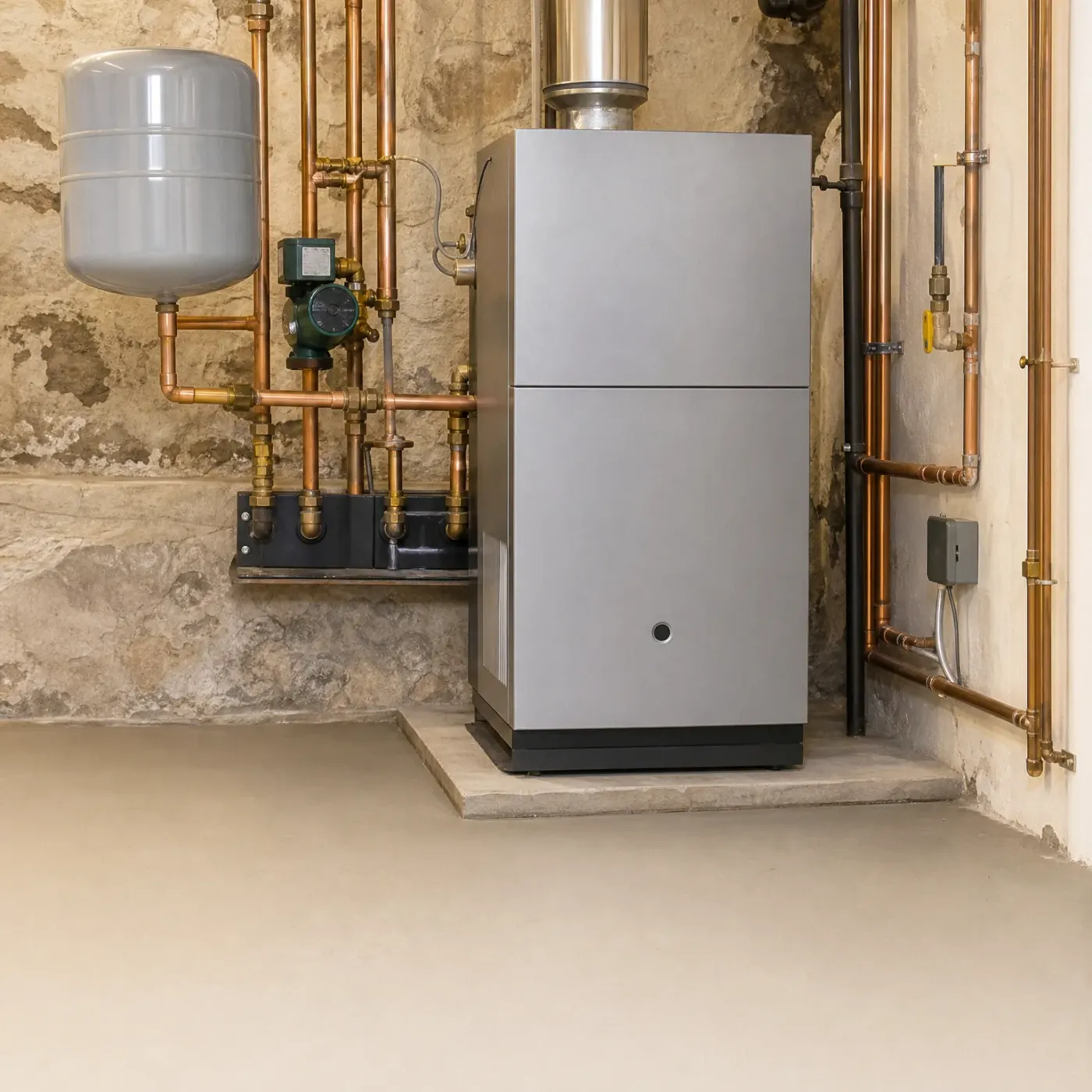
A gray boiler unit with a flue pipe stands on a concrete pad in a basement, surrounded by copper piping, a circulator pump, an expansion tank mounted on a stone wall, and an electrical outlet.
A boiler like this holds steady pressure because the expansion tank and valve are both doing their job, so the gauge stays put week to week.
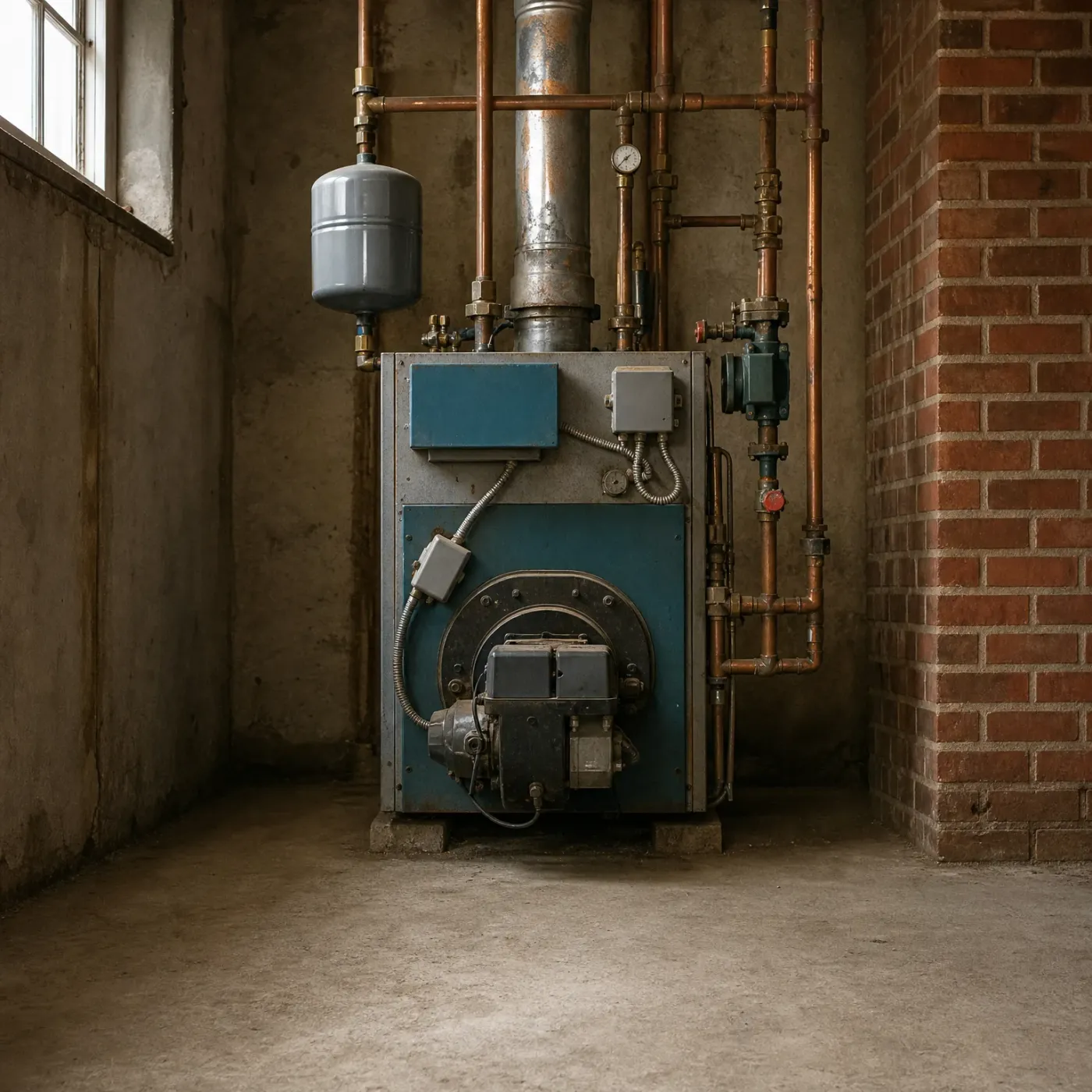
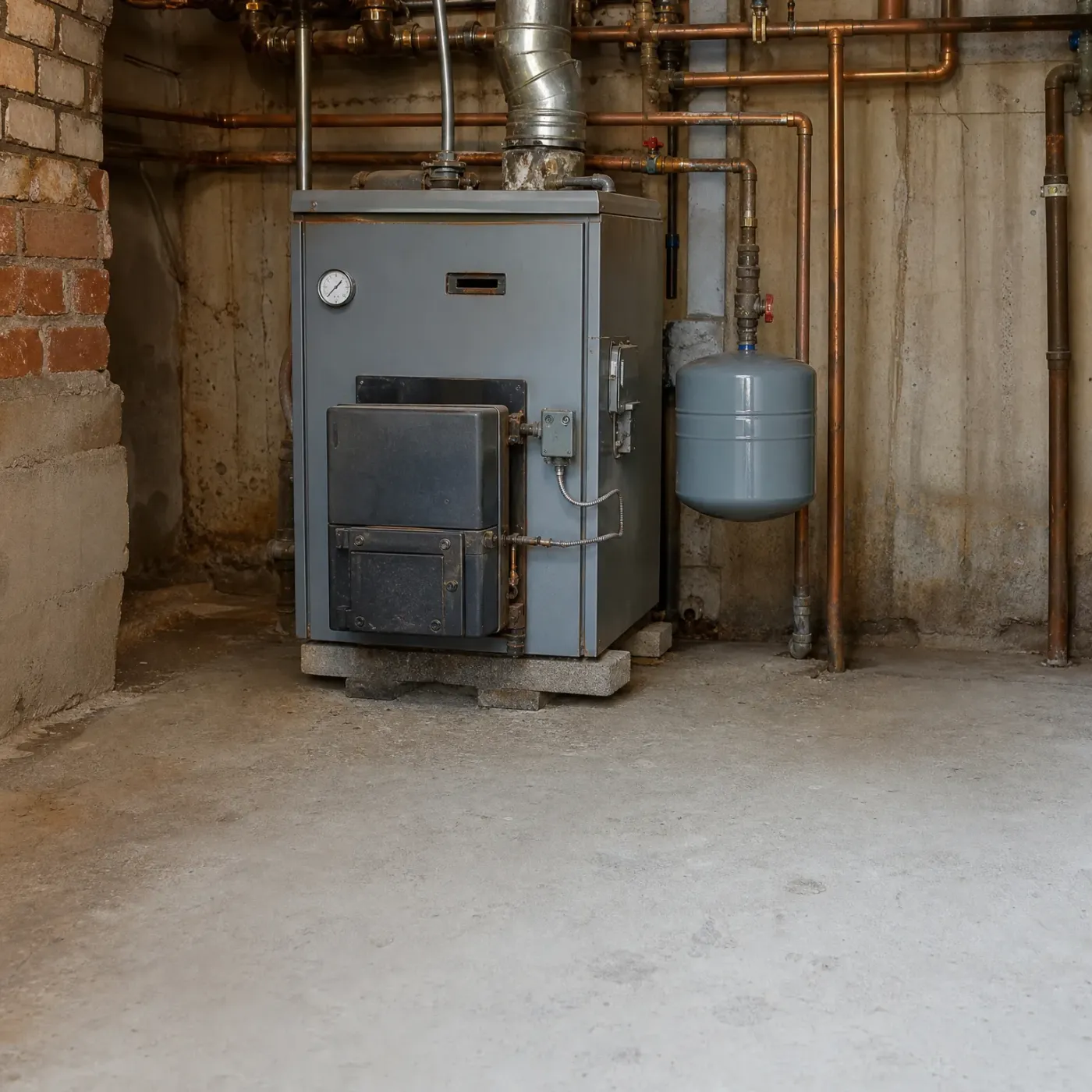
A blue cast-iron boiler with a burner unit, gauges and copper piping stands in a concrete-floored basement room beside a red brick pillar and a window.
A worn valve on a unit like this can start weeping even at normal pressure, and rust on the fitting means it's been dripping a while.
A two-story house with a porch stands alone on a snow-covered field during falling snow, with a weathered wooden split-rail fence partly buried in drifts in the foreground.

Statewide, winter nights average 23°F, according to NOAA climate data, and that's the stretch when your boiler is working its hardest and longest. More run time means more heat cycles, and more heat cycles mean the water in the system expands and contracts more often, which puts repeated pressure swings on that relief valve. A valve that only seeped a little in October can start dripping steadily once nights settle into the 20s. If you're seeing a puddle or fresh rust below the valve now, cold is likely part of why it's showing up tonight instead of next month. Once you send the request, you won't have to track down who's available. A local contractor who works on boilers all winter takes it from there.

NOAA nClimDiv 1991-2020 county normals weighted by homes

Hand off the search today

Only one pro gets your request, so you hear from one company.

Sending the form costs nothing.

What the valve is rated for

A standard boiler relief valve is set to open at 30 PSI, sometimes lower depending on the model stamped on the body. That number is a safety limit, not a target. Your system should run well under it, usually in the 12 to 15 PSI range once it's hot. When the gauge creeps up near that 30 PSI mark on a regular basis, the valve doing its job isn't the problem. Something upstream, usually the expansion tank or the fill valve, is pushing the system past where it should ever sit, and the relief valve is just the part that shows it first.

Why a little rust matters

Boiler water carries dissolved minerals, and every time the relief valve opens even for a few seconds, some of that water passes over the same seat and fitting. Dry, it leaves a thin ring of rust or white crust. Over enough winters, that buildup keeps the valve from seating fully closed, so it weeps at pressures that used to be no trouble. A valve with old rust staining below it has usually opened more than once before, even if nobody saw it happen. That history on the pipe tells you something the gauge reading alone won't.

A woman in a dark gray sweater reclines on a couch with her eyes closed and a knit blanket over her lap, an open book resting face-down in front of her, with a lit table lamp and shelving blurred in the background.
A bearded man in a dark navy sweater over a collared shirt smiles and looks off to the side while seated at a dinner table with a glass of red wine, a lit candle, and a plate of food in the foreground of a dimly lit room.

Waiting on a repair

A leaking relief valve doesn't fix itself, and the drip usually gets a little worse each week as mineral buildup keeps the seat from closing all the way. Left alone, you're topping off the system more often, watching rust spread down the pipe, and wondering each night whether the puddle under the boiler is bigger than it was yesterday. Some homeowners put it off until a slow weep turns into a steady run, or until the pressure problem behind it does real damage to the expansion tank or the boiler itself. The valve itself is a simple part, but what it's telling you about the system isn't something to sit on through a Kansas winter when the boiler is running most hours of the day.

Getting it looked at

Once you send the request, you're not the one hunting for a plumber who knows boilers, calling around, or waiting on a callback that never comes. The request goes to one licensed contractor local to you, someone who works on boilers all winter and has seen plenty of relief valves fail for the same reasons yours might be. You're not fielding calls from three or four companies trying to win the job. It's one contractor who already knows what usually causes this and can check your pressure, your expansion tank, and the valve itself to find out which one it is. That's the part that's off your plate now.

A gray boiler on a concrete block base in a basement, with copper piping, a metal flue, and a gray expansion tank mounted beside it against a concrete wall.
Before you get your boiler repair
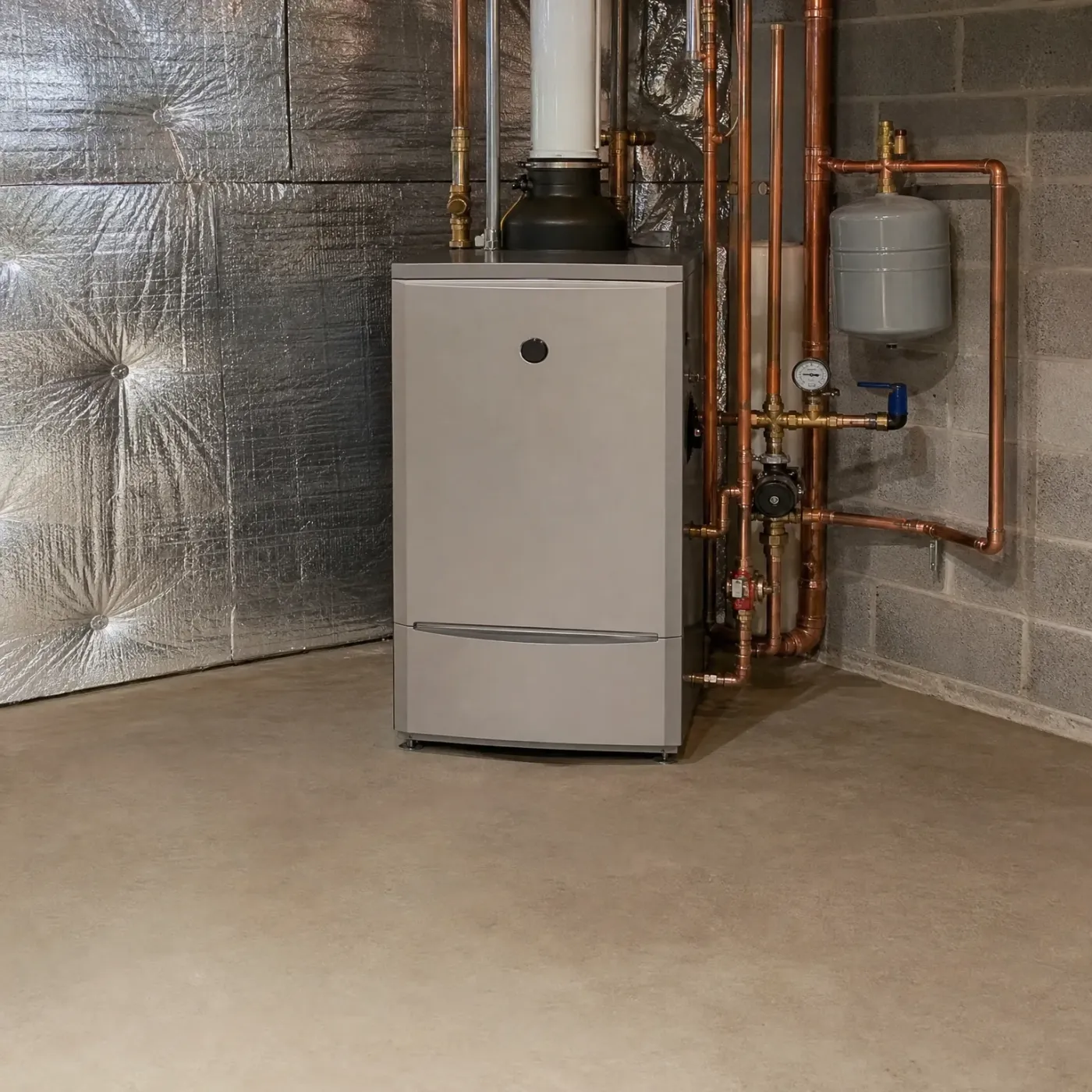
A gray residential boiler in a basement corner with copper piping, a circulator pump, pressure gauge, blue-handled valve and gray expansion tank against a concrete block wall, next to a foil-insulated wall.
After you get your boiler repair
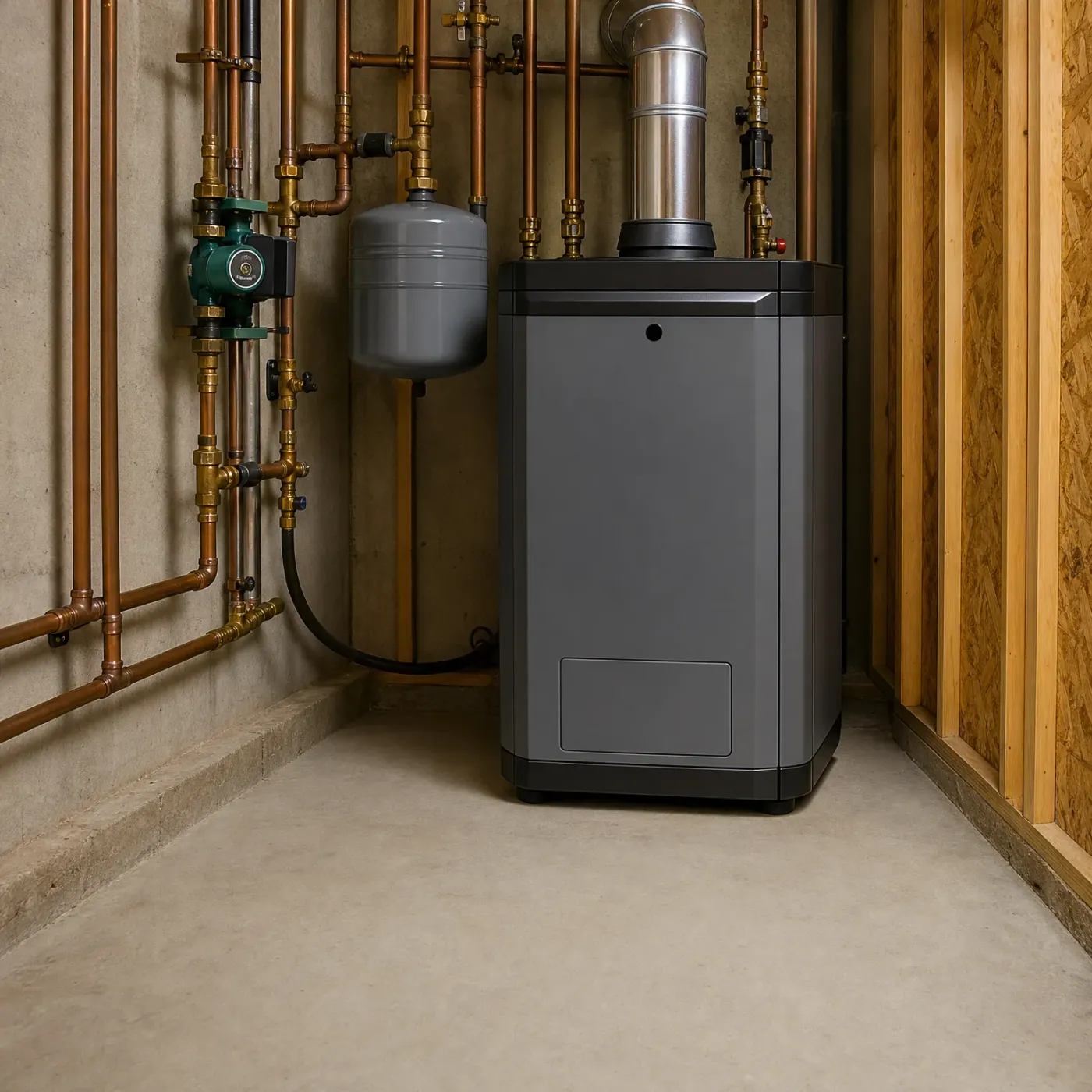
A gray floor-standing boiler with a metal flue pipe stands in a basement corner beside copper piping, brass valves, a green circulator pump, and a gray expansion tank on a concrete wall, with exposed wood framing and sheathing at right.

A system running clean

Copper lines stay dry at every joint, the circulation pump runs quiet, and the expansion tank holds its charge. A setup like this keeps the relief valve shut because nothing is pushing the pressure past where it should sit.

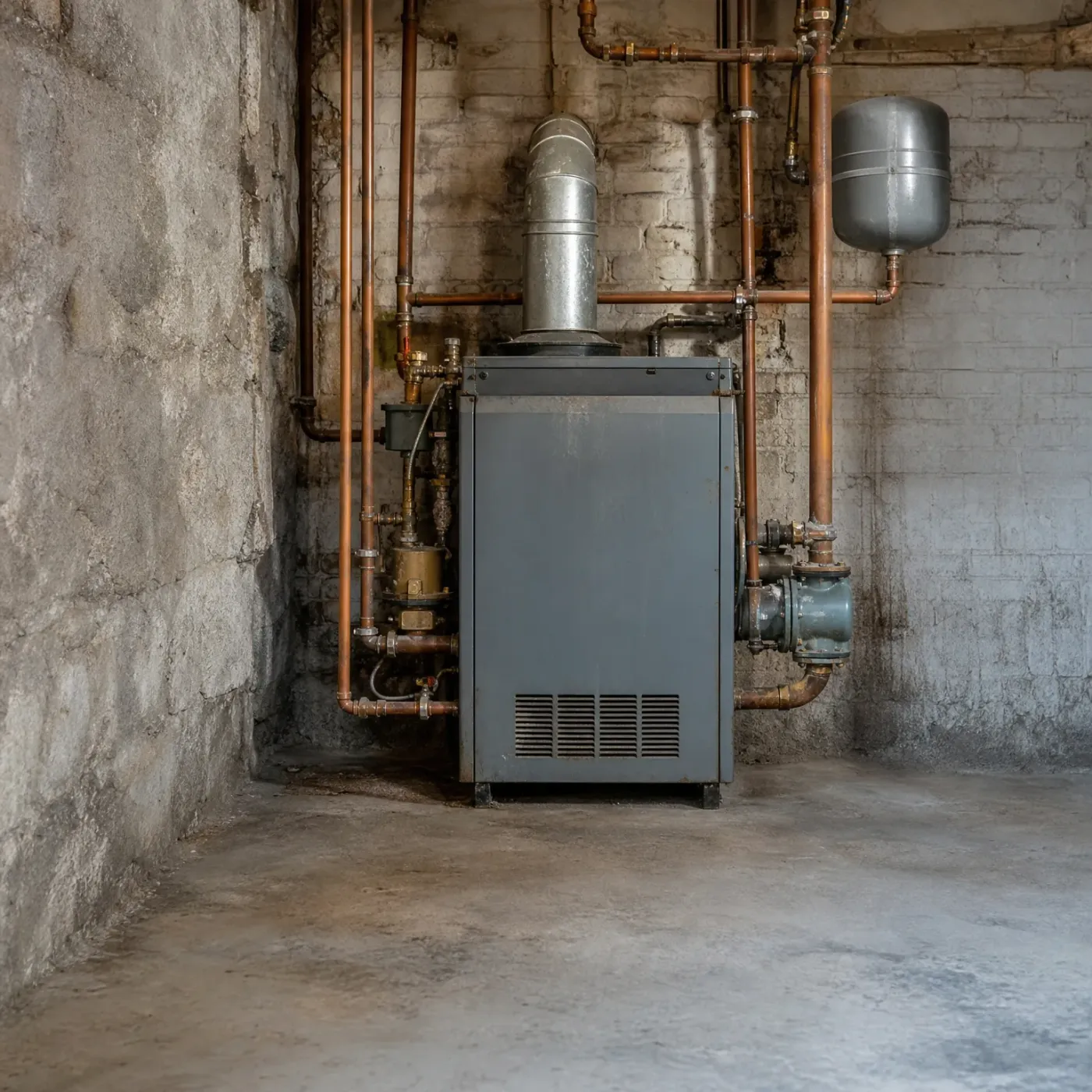
A gray boiler with a metal flue pipe and copper piping stands against a weathered painted brick basement wall, with an expansion tank mounted overhead and a bare concrete floor in front.

A system under strain

Cast iron and galvanized venting like this have been in the basement a long time, and the fittings show it. An older expansion tank here often can't absorb what the system pushes out, so the valve ends up doing the tank's job too.

Winter nights average 23°F statewide

Cold nights near 23°F mean your boiler cycles on hard and often, all night, to keep the house warm. That heat and cool stretches the system's pipes and seals over and over, which is exactly the kind of wear that leaves a relief valve weeping by morning.

NOAA nClimDiv 1991-2020 county normals weighted by homes

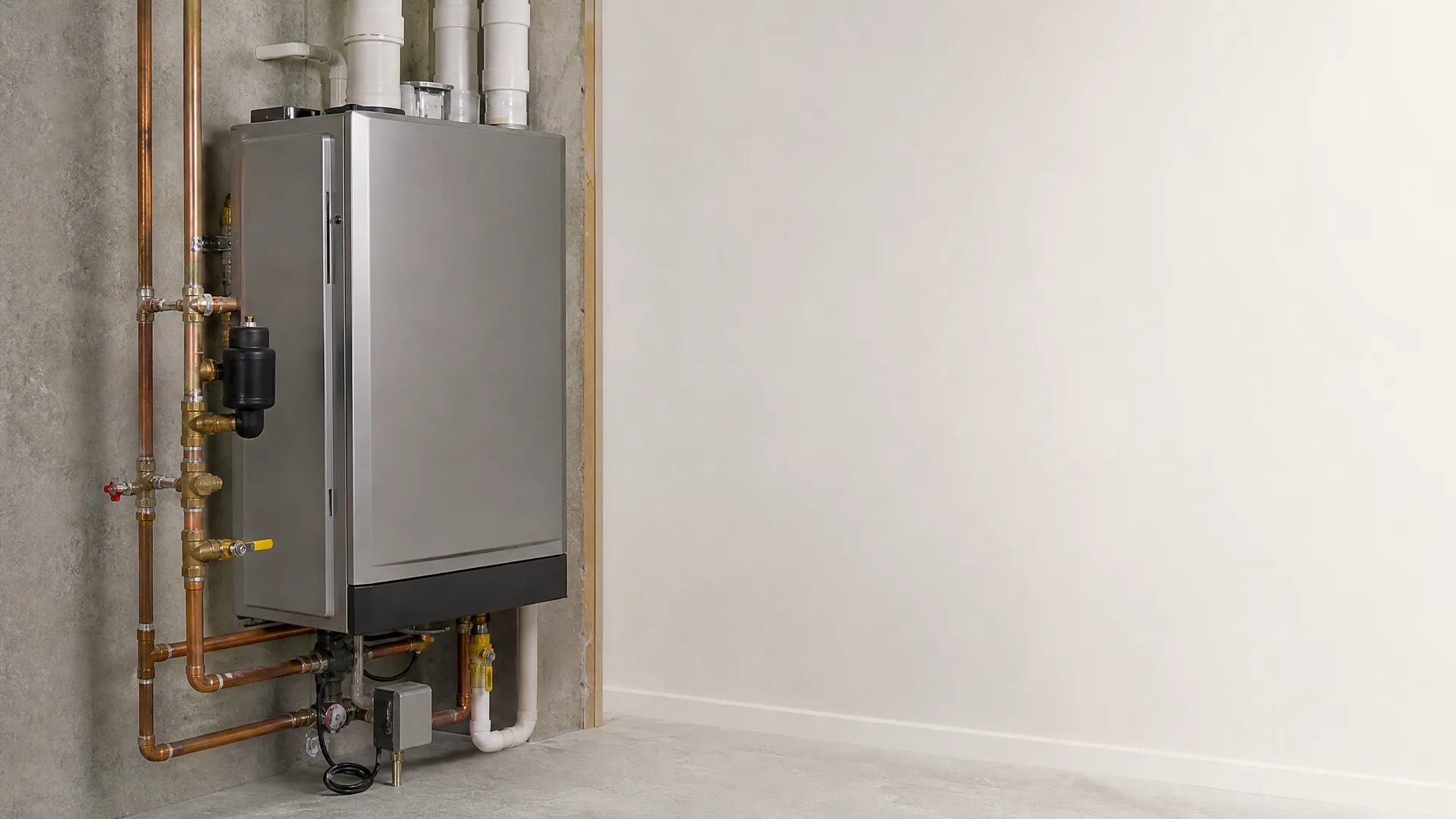
A wall-mounted grey boiler with copper pipework and white flue pipes installed against a concrete wall in an empty room with a plain pale wall to the right.

Finding someone who knows boilers

A plumber who mostly works on tankless units and tub installs can still handle a boiler call, but someone who services boilers every winter has already seen this exact drip a dozen times this season. They know whether to check the expansion tank first or the gauge first, and they carry the right valve on the truck instead of ordering one and leaving you to wait.

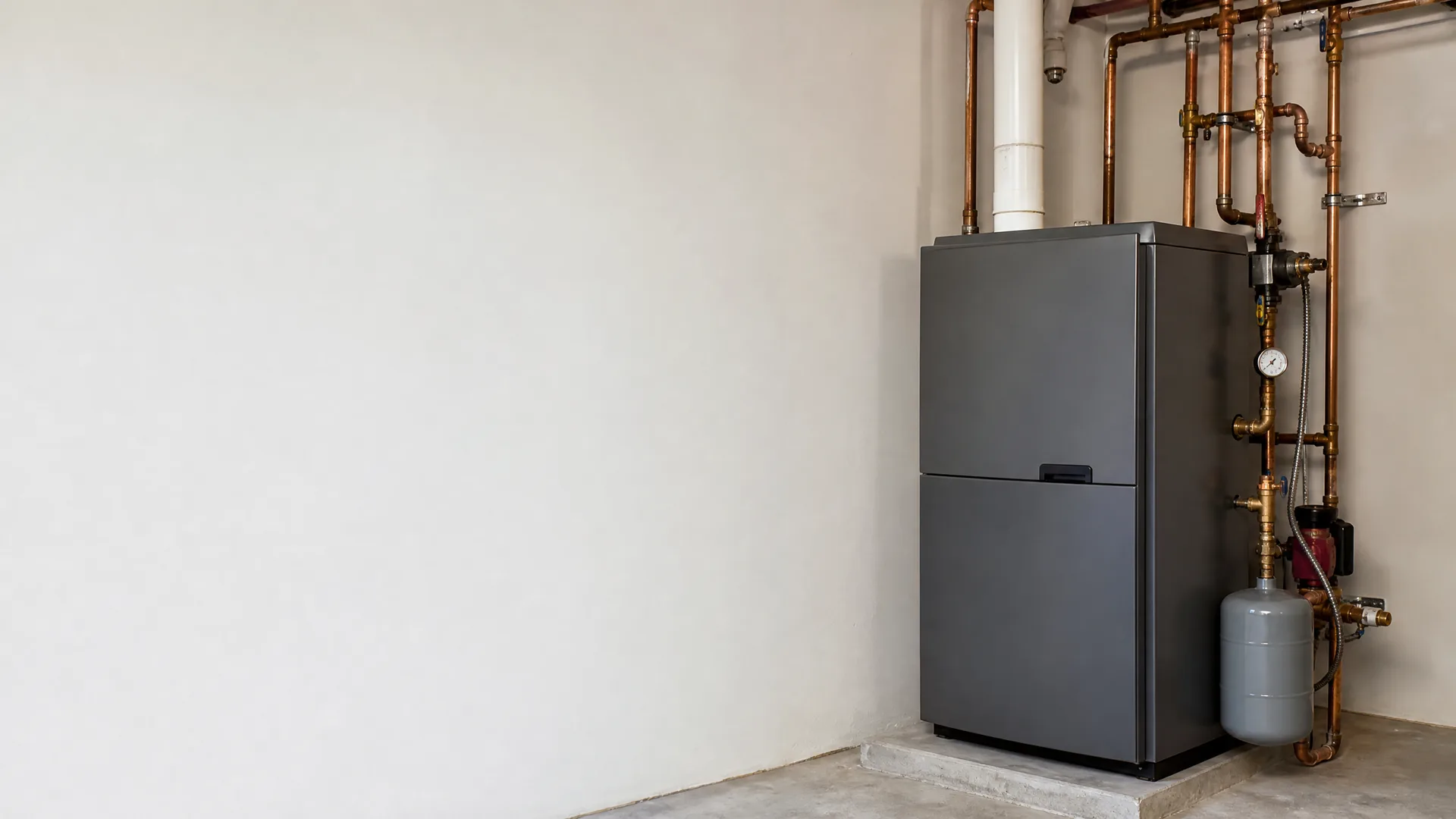
A dark grey boiler unit stands on a concrete pad against a plain light wall, connected to copper pipes, a pressure gauge, a pump and a grey expansion tank.

What happens after you send the form

You send the details once, and that's the last searching you do. The request goes to one licensed contractor local to your part of Kansas, not a list of five companies competing for your callback. No flood of calls while you're trying to get the kids out the door or get to work. Just the one person who's going to look at your boiler.

A relief valve drips for one of two reasons, pressure that's climbed too high or a seat that's worn enough to weep even at normal pressure, and the gauge on your boiler will tell you which one you're dealing with. Either way, it's not something that gets better on its own once the water's been pushing past that seat all winter. A boiler tech who works on these systems every cold season in Kansas has already seen this exact drip, more than once, and knows within a few minutes whether it's the expansion tank, the pressure, or the valve itself that's given out. You'll get matched with one licensed contractor local to you, not a handful of companies competing for the job, so there's one call to answer and one person who already knows what they're walking into. That's the part that's out of your hands now. The valve told you something was off. The next step is just letting someone who deals with this every winter take a look.

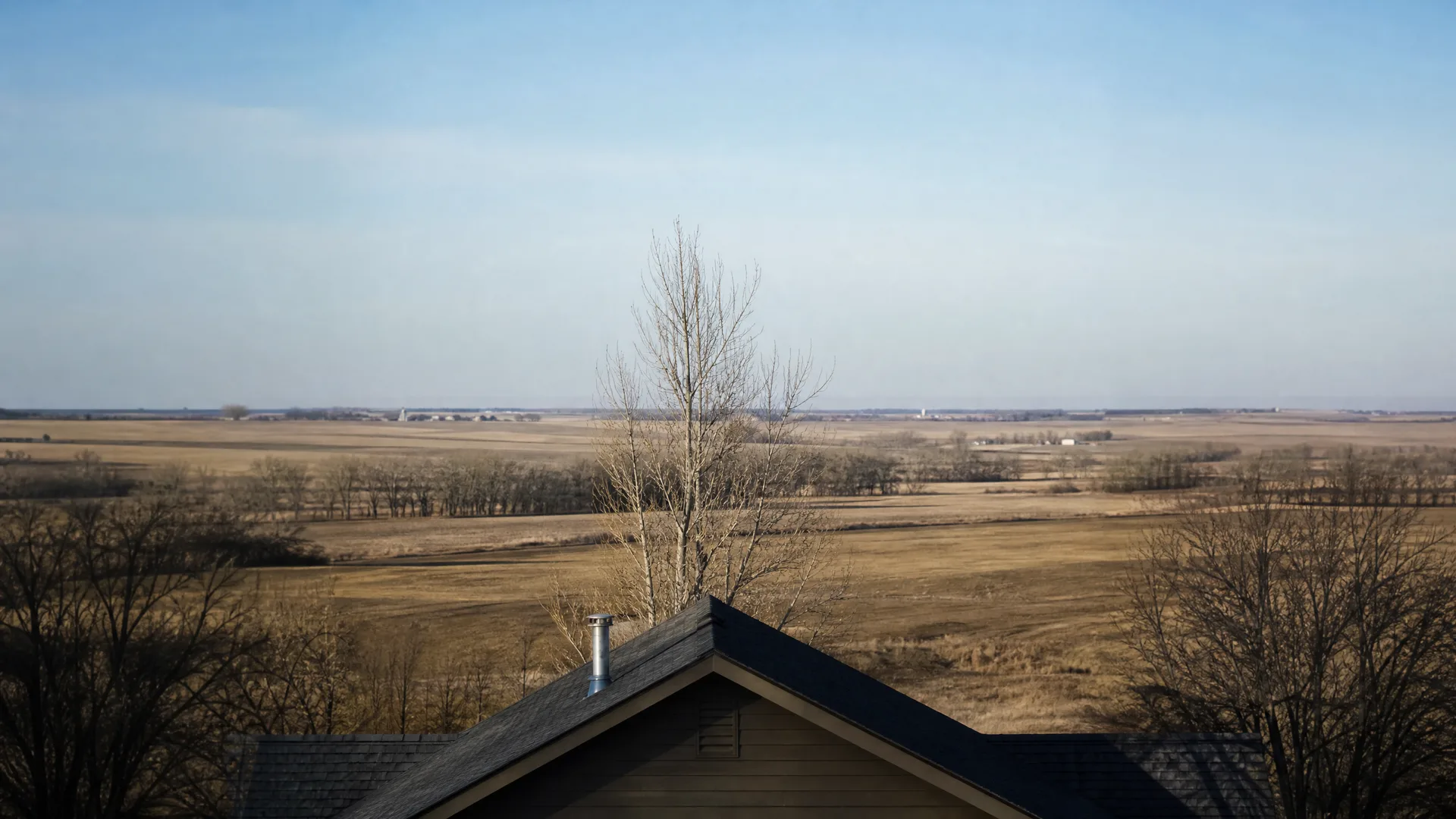
View over a dark shingled gable roof with a metal flue pipe toward flat brown fields, bare trees, and a hazy horizon under a pale blue sky.

Stop chasing a boiler pro

Find a licensed pro

You're not committing to anything by asking.

A drip that started small in January rarely stays small by February, and by then you're checking the pan every day instead of just when you pass by. Sending the request now gets a local boiler contractor looking at the gauge before the valve wears any further.