Tell us about the job
Takes about a minute. No obligation.
A contractor quoting a boiler installation in Neosho County has to size the unit for a real season, not a catalog assumption. Homes in Neosho County, KS run heat about seven months a year, from October through April. The burner cycles through that entire stretch, and so does the ignition system and the heat exchanger. A unit undersized for the actual load runs longer per cycle to keep up, and that added runtime accumulates on the parts least able to absorb it. Getting the load calculation right before the equipment is ordered is what separates an install that holds from one that returns a service call in its second winter.
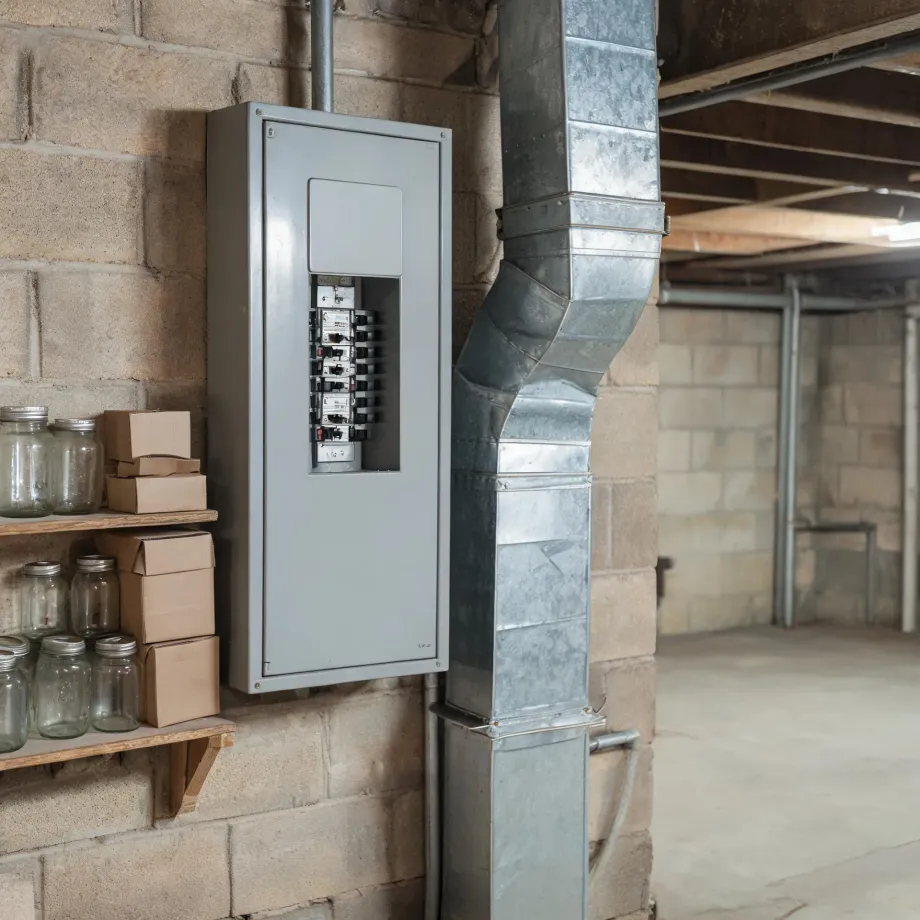
Ductwork laid out for an old gravity furnace or a long-removed coal system does not route or size the way a modern boiler distribution setup wants. Half the homes in Neosho County, Kansas were built in 1963 or earlier (2020-2024 ACS 5-year). A contractor quoting a boiler installation here measures the existing runs, checks whether the supply and return paths match what the new equipment needs, and finds out early whether the layout works or has to change. That answer shapes the job more than the unit selection does.
What Gets Installed With a New Boiler
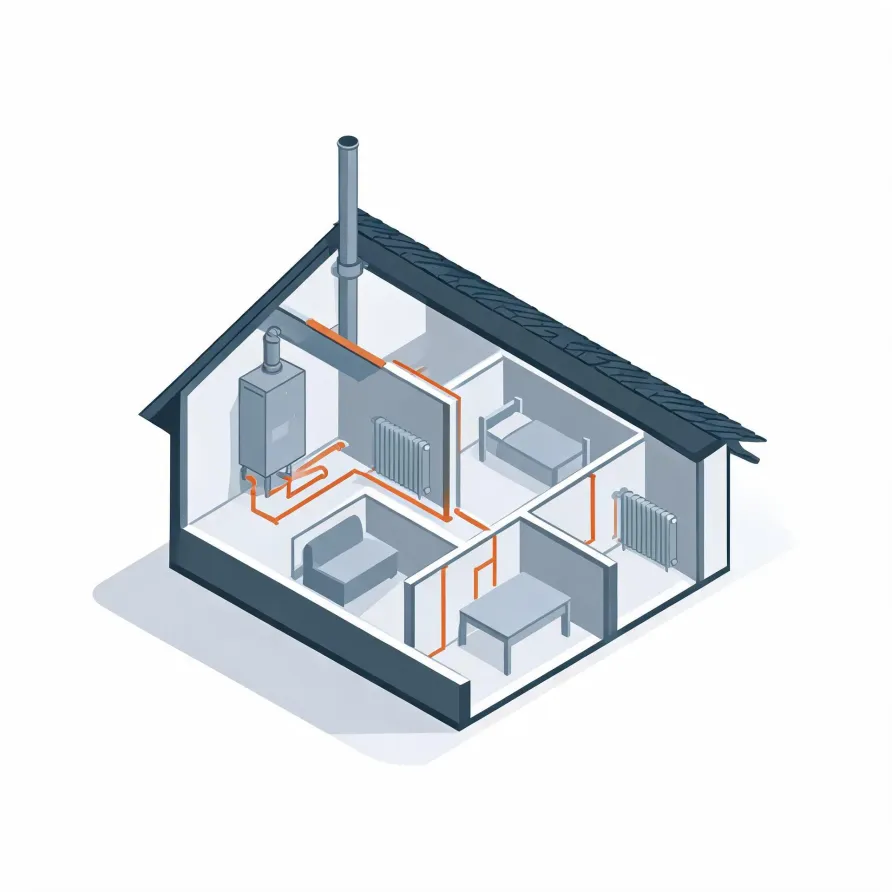
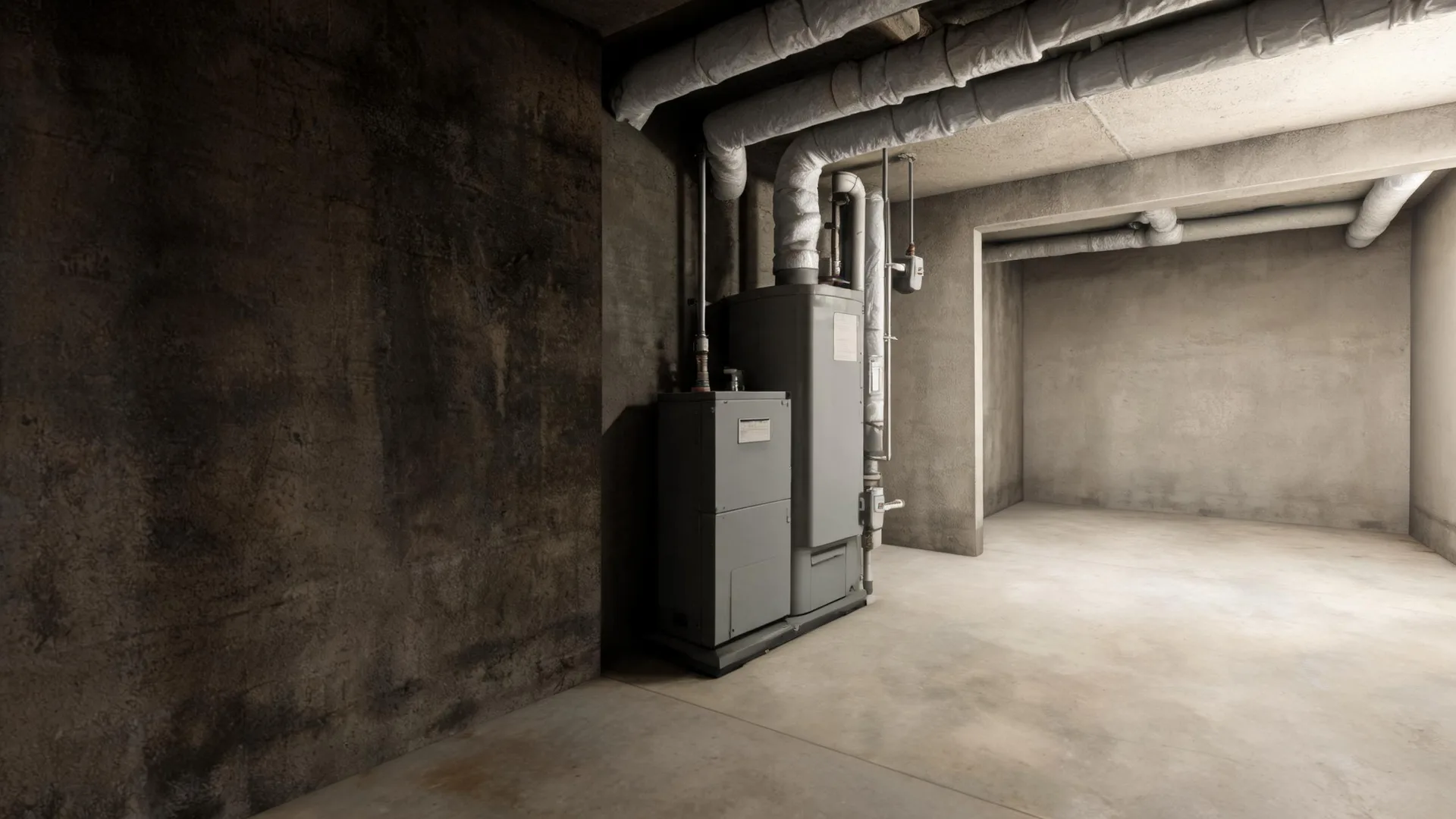
The boiler itself sits in a utility space, most often the basement or a mechanical room. It is the unit that heats water and pushes it out through the system. Near it, the expansion tank handles pressure changes in the water as it heats and cools, and the circulator pump moves that water through the pipes.
The pipes run through the house to the heat emitters, which are either radiators or radiant floor tubing depending on what the home is set up for. A thermostat on a main living area wall tells the system when to fire. The pressure and temperature controls mounted on or near the boiler let the contractor set and monitor safe operating limits.
The drawing shows a typical layout, and a licensed contractor determines which components and configurations apply to your specific home.
Find a contractor in Neosho CountyNeosho County, Kansas, by the numbers
89 severe weather events were recorded in Neosho County, Kansas between 2015 and 2024.
NOAA National Centers for Environmental Information, Storm Events Database, bulk CSV export, events 2015-01-01 through 2024-12-31.Half the homes in Neosho County, Kansas were built in 1963 or earlier (2020-2024 ACS 5-year).
U.S. Census Bureau, 2020-2024 American Community Survey 5-Year EstimatesNeosho County, Kansas holds 7,219 housing units (2020-2024 ACS 5-year).
U.S. Census Bureau, 2020-2024 American Community Survey 5-Year EstimatesOwners occupy 77.2% of the occupied homes in Neosho County, Kansas (2020-2024 ACS 5-year).
U.S. Census Bureau, 2020-2024 American Community Survey 5-Year EstimatesSevere Weather Events in Neosho County
Heating equipment in Kansas works against the climate, and the climate here is not mild. How hard a boiler gets pushed over its life depends on where it sits and what the weather asks of it, which makes local conditions a real factor in sizing, installation, and long-term performance.
89 severe weather events, 2015–2024. Source: NOAA National Centers for Environmental Information, Storm Events Database.