Tell us about the job
Takes about a minute. No obligation.
Sizing a boiler for Elk County is not a generic calculation. The burner, heat exchanger, and ignition system all cycle for the bulk of the calendar, and a system that is undersized or sloppily commissioned carries that deficit straight through to its components. Homes in Elk County, KS run heat about seven months a year, from October through April. A contractor quoting a new boiler here has to establish actual heat loss for the house before settling on output, because an undersized unit runs longer cycles to chase a setpoint it cannot reliably hit, and those cycles are what wear the burner and heat exchanger down. The idle period that might mask a poor install elsewhere barely exists here.
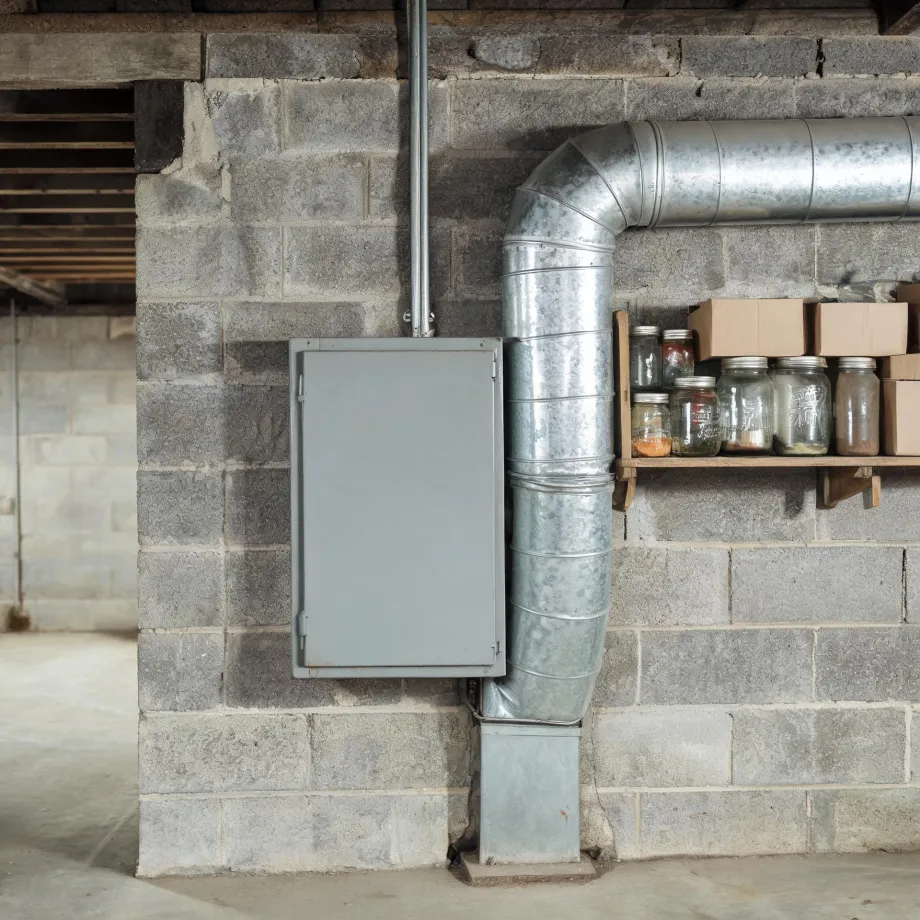
Existing pipe runs and heat distribution layouts in Elk County homes are what a boiler installation actually has to fit. Half the homes in Elk County, Kansas were built in 1956 or earlier (2020-2024 ACS 5-year). That means the ductwork and piping a contractor finds behind the walls was put in for a system that is no longer there, and the question on a new installation is whether that existing infrastructure matches what a modern boiler needs to deliver heat through the house. Where it does not, the distribution side of the job changes the scope more than the unit selection does.
What Gets Installed With a New Boiler
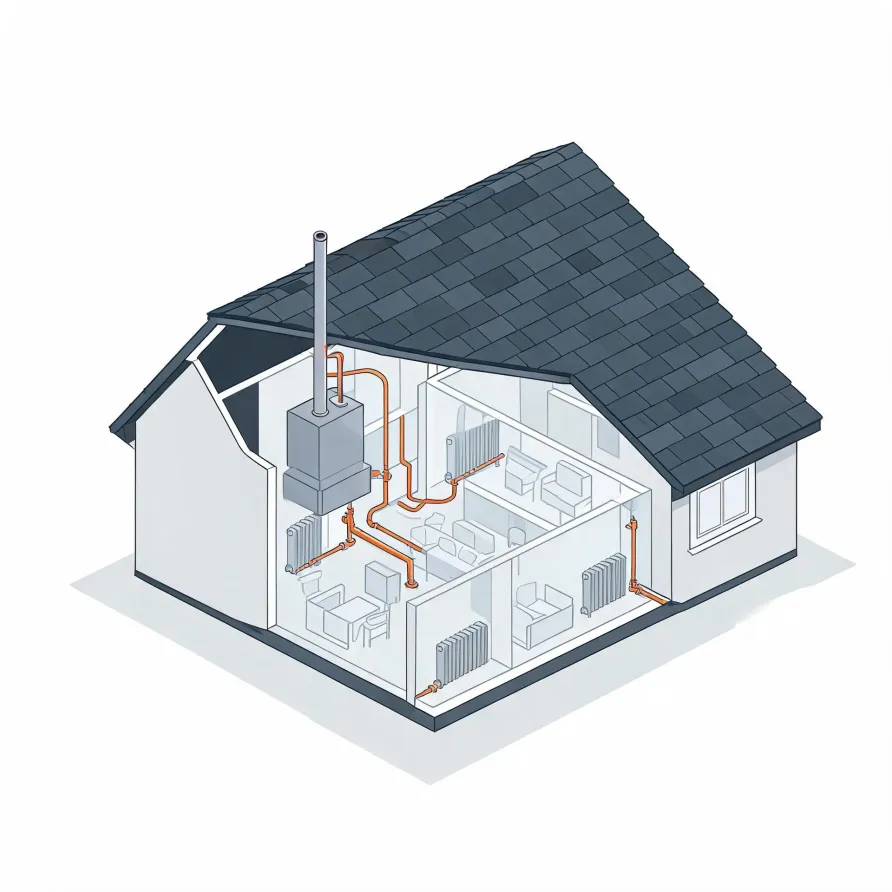
The boiler itself sits in a mechanical room, basement, or utility closet and is the heart of the system. A contractor mounts the unit, connects it to a fuel supply, and ties it into the home's existing plumbing so it can heat water and send it where it needs to go.
From the boiler, pipes run through the house to radiators, baseboard units, or radiant floor loops, each of which releases heat into a room. A circulator pump, usually mounted close to the boiler, pushes the water through those pipes, and an expansion tank sits nearby to manage pressure as the water heats and cools.
The drawing shows a typical boiler system layout, and a licensed contractor determines exactly what applies to this house.
Find a contractor in Elk CountyElk County, Kansas, by the numbers
52 severe weather events were recorded in Elk County, Kansas between 2015 and 2024.
NOAA National Centers for Environmental Information, Storm Events Database, bulk CSV export, events 2015-01-01 through 2024-12-31.Half the homes in Elk County, Kansas were built in 1956 or earlier (2020-2024 ACS 5-year).
U.S. Census Bureau, 2020-2024 American Community Survey 5-Year EstimatesElk County, Kansas holds 1,491 housing units (2020-2024 ACS 5-year).
U.S. Census Bureau, 2020-2024 American Community Survey 5-Year EstimatesOwners occupy 78.8% of the occupied homes in Elk County, Kansas (2020-2024 ACS 5-year).
U.S. Census Bureau, 2020-2024 American Community Survey 5-Year EstimatesSevere Weather History in Elk County
Weather conditions in this part of Kansas place real demands on heating equipment over time. A boiler that handles local winters well is sized and installed with those conditions in mind, which is why storm history belongs in this conversation.
52 severe weather events, 2015–2024. Source: NOAA National Centers for Environmental Information, Storm Events Database.