Tell us about the job
Takes about a minute. No obligation.
Sizing a boiler for Riley County starts with knowing exactly how long the burner will cycle each year. Homes in Riley County, KS run heat about seven months a year, from October through April. The heat exchanger, the ignition assembly, and the circulator all accumulate wear across those cycling months, then sit idle through spring and summer while faults go unnoticed until the first cold snap. A contractor calculating the load here has to account for that full seasonal demand before specifying equipment, because a unit that runs undersized for this county's heating load degrades the burner and heat exchanger faster than the manufacturer's service intervals expect.
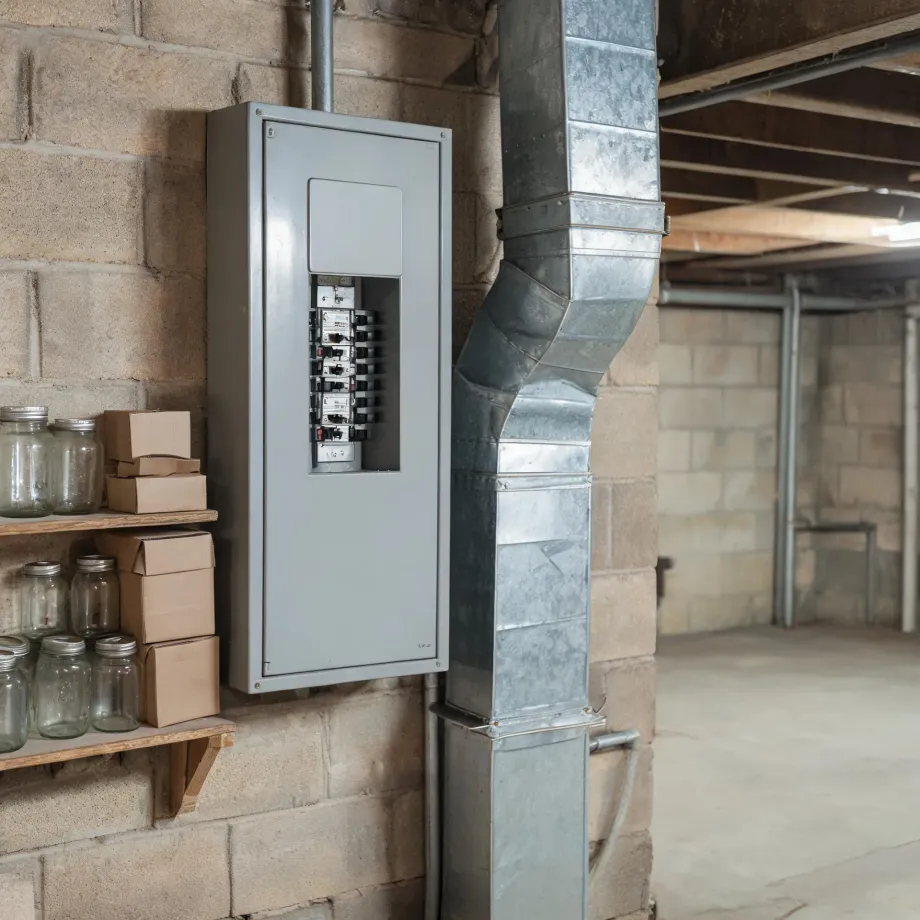
Ductwork laid for a previous generation of heating equipment does not automatically carry what a new boiler needs. A contractor quoting a boiler installation here has to assess the existing distribution system before any other number on the job makes sense. Half the homes in Riley County, Kansas were built in 1984 or earlier (2020-2024 ACS 5-year). That means a lot of the houses in this county are running ductwork and piping that was designed around something other than what a homeowner is putting in now, and the fit between old infrastructure and new equipment is where the real work gets decided.
What Gets Installed With a New Boiler
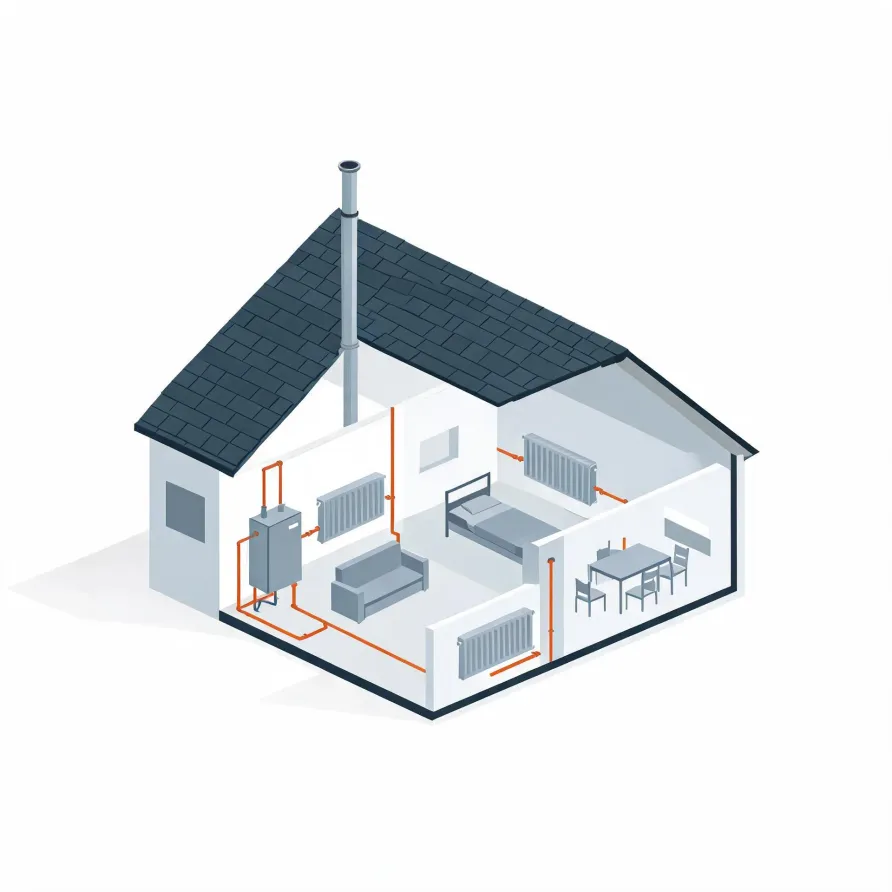
The boiler itself sits in a mechanical room, basement, or utility closet and is the heat source for the whole system. A contractor mounts the unit, connects it to the fuel supply, and ties it into the home's plumbing so hot water or steam can move to every room.
Radiators or radiant floor loops sit at each zone and are the surfaces that release heat into the living space. A contractor also fits the expansion tank, circulator pump, and pressure and temperature controls that keep the system running within safe limits. Each of these lands in a fixed location relative to the boiler and the zones it feeds.
The drawing shows a typical layout, and a licensed contractor determines exactly what applies to your house.
Find a contractor in Riley CountyRiley County, by the numbers
187 severe weather events were recorded in Riley County, Kansas between 2015 and 2024.
NOAA National Centers for Environmental Information, Storm Events Database, bulk CSV export, events 2015-01-01 through 2024-12-31.Half the homes in Riley County, Kansas were built in 1984 or earlier (2020-2024 ACS 5-year).
U.S. Census Bureau, 2020-2024 American Community Survey 5-Year EstimatesRiley County, Kansas holds 30,755 housing units (2020-2024 ACS 5-year).
U.S. Census Bureau, 2020-2024 American Community Survey 5-Year EstimatesOwners occupy 46.1% of the occupied homes in Riley County, Kansas (2020-2024 ACS 5-year).
U.S. Census Bureau, 2020-2024 American Community Survey 5-Year EstimatesSevere Weather Events in Riley County
Kansas weather puts real demands on heating equipment, and Riley County is no exception. A boiler sized and installed for local conditions holds up better than one spec'd without that context.
187 severe weather events, 2015–2024. Source: NOAA National Centers for Environmental Information, Storm Events Database.