Tell us about the job
Takes about a minute. No obligation.
A boiler in Riley County's repair history lives almost entirely in its heating components. Homes in Riley County, KS run heat about seven months a year, from October through April. The burner, heat exchanger, and ignition system cycle through that load season after season, and wear shows up there before it shows up anywhere else. When a contractor opens a unit for diagnosis, those are the parts that tell the story of how the system has been running, and a quote that skips them misses where the real condition is.
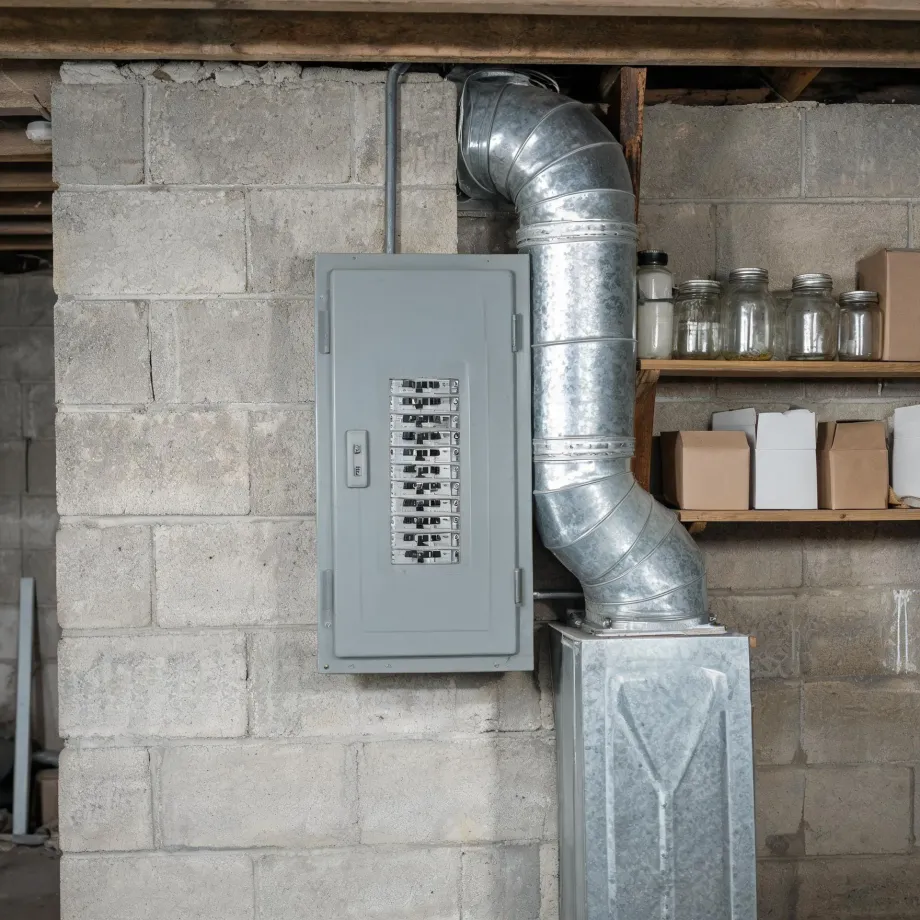
Boilers in houses of this vintage accumulate scale in the heat exchanger, corrosion at the zone valves, and sediment through the circulator that a contractor has to locate and assess once the system is open. Half the homes in Riley County, Kansas were built in 1984 or earlier (2020-2024 ACS 5-year). That generation of residential boiler work means the parts a contractor pulls out are often specific to equipment that ran for a long time before this repair, and availability varies by component. The repair scope depends on what the opened system actually contains, not on what the house looks like from the outside.
The Parts of a Boiler a Contractor Checks First
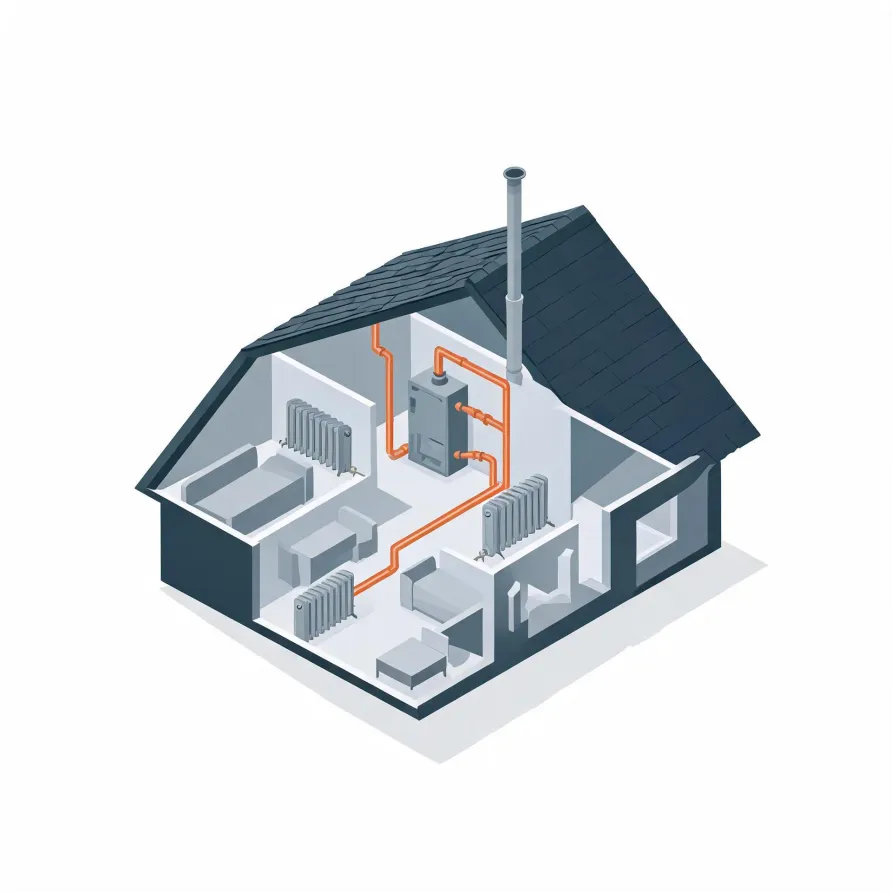
The boiler itself sits in the basement or mechanical room and is the core of the system. It heats water and pushes it out through the pipes. When heat stops reaching the rooms, or the unit cycles on and off without settling, the boiler's burner, heat exchanger, or pressure relief valve is where a contractor starts.
The circulator pump moves hot water from the boiler through the supply pipes and back again by way of the return line. The expansion tank, mounted close to the boiler, absorbs pressure changes as water heats and cools. Thermostats and zone valves sit at various points in the house and tell the system when and where to deliver heat.
The drawing shows a representative layout, and a licensed contractor determines which components apply to the specific system in your home.
Find a contractor in Riley CountyRiley County, by the record
187 severe weather events were recorded in Riley County, Kansas between 2015 and 2024.
NOAA National Centers for Environmental Information, Storm Events Database, bulk CSV export, events 2015-01-01 through 2024-12-31.Half the homes in Riley County, Kansas were built in 1984 or earlier (2020-2024 ACS 5-year).
U.S. Census Bureau, 2020-2024 American Community Survey 5-Year EstimatesRiley County, Kansas holds 30,755 housing units (2020-2024 ACS 5-year).
U.S. Census Bureau, 2020-2024 American Community Survey 5-Year EstimatesOwners occupy 46.1% of the occupied homes in Riley County, Kansas (2020-2024 ACS 5-year).
U.S. Census Bureau, 2020-2024 American Community Survey 5-Year EstimatesSevere Weather Events in Riley County
Boilers work hardest when outdoor conditions swing hard, and Kansas weather puts real stress on heating systems over time. How often that stress hits Riley County shapes the repair and maintenance load local equipment carries.
187 severe weather events, 2015–2024. Source: NOAA National Centers for Environmental Information, Storm Events Database.