Tell us about the job
Takes about a minute. No obligation.
A contractor quoting a boiler installation in Linn County has to size the unit for what the burner and heat exchanger actually carry, not for a theoretical average. Homes in Linn County, KS run heat about seven months a year, from October through April. The burner cycles through that entire stretch, and the ignition system fires at the start of every cold snap across it. A system that is even slightly undersized runs longer per cycle to meet demand, and the heat exchanger accumulates wear accordingly. Proper installation means the contractor accounts for that load from the beginning, because the equipment has little idle time to absorb the slack from a shortcut.
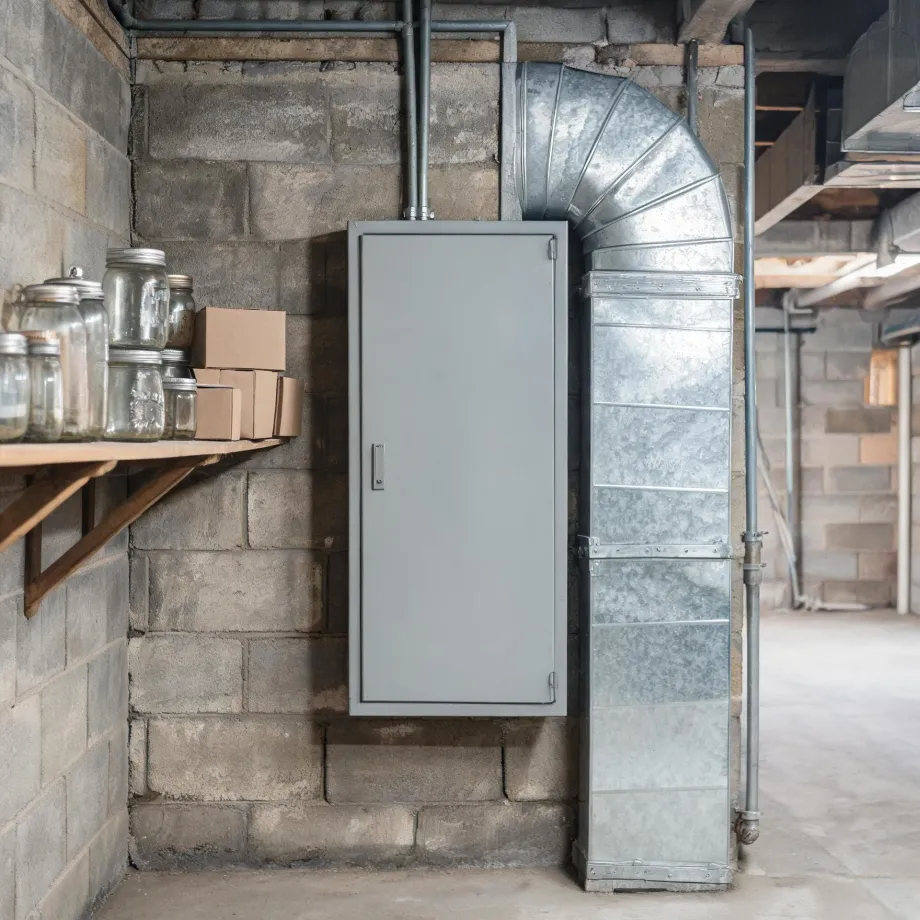
Ductwork sized and routed for whatever system a house was built around does not automatically suit what a contractor is putting in now. Half the homes in Linn County, Kansas were built in 1983 or earlier (2020-2024 ACS 5-year). A boiler installation here means a contractor is measuring what the existing distribution can actually carry before the new unit is ever ordered, because piping runs and radiator placements that worked for one system can create pressure and flow problems for another. Getting that assessment wrong pushes the cost of corrections into a second visit.
What Gets Installed With a New Boiler
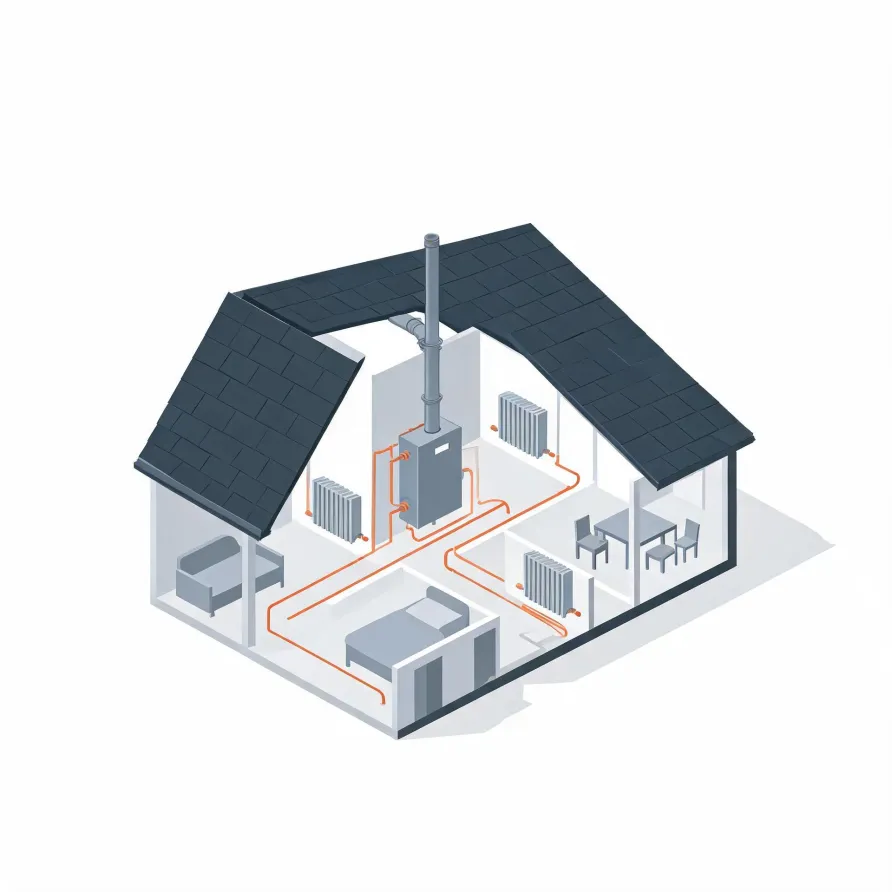
The boiler itself sits in a mechanical room, basement, or utility closet and is the unit that heats water and sends it through the system. Alongside it, a expansion tank absorbs pressure changes in the water as it heats and cools. A circulator pump, mounted directly on the boiler or on the supply piping nearby, pushes that heated water out to the rest of the house.
From the boiler, supply and return pipes run through the house to the heat emitters, which take the form of radiators, baseboard units, or radiant floor tubing depending on what the house has. A thermostat on a main living-area wall controls the whole system, calling for heat and telling the circulator when to run.
The drawing shows a typical layout, and a licensed contractor determines what applies to this specific house.
Find a contractor in Linn CountyLinn County, Kansas, by the numbers
68 severe weather events were recorded in Linn County, Kansas between 2015 and 2024.
NOAA National Centers for Environmental Information, Storm Events Database, bulk CSV export, events 2015-01-01 through 2024-12-31.Half the homes in Linn County, Kansas were built in 1983 or earlier (2020-2024 ACS 5-year).
U.S. Census Bureau, 2020-2024 American Community Survey 5-Year EstimatesLinn County, Kansas holds 5,222 housing units (2020-2024 ACS 5-year).
U.S. Census Bureau, 2020-2024 American Community Survey 5-Year EstimatesOwners occupy 81.1% of the occupied homes in Linn County, Kansas (2020-2024 ACS 5-year).
U.S. Census Bureau, 2020-2024 American Community Survey 5-Year EstimatesSevere Weather Events in Linn County
Weather puts direct stress on heating equipment: hard cycles, extended demand, and sudden load spikes shorten the working life of a boiler faster than normal use alone. What happens in Linn County shapes what a boiler here is asked to do, which makes local conditions worth knowing before any installation decision.
68 severe weather events, 2015–2024. Source: NOAA National Centers for Environmental Information, Storm Events Database.