Tell us about the job
Takes about a minute. No obligation.
Sizing a boiler correctly in Franklin County is not a generic calculation that any regional average can settle. Homes in Franklin County, KS run heat about seven months a year, from October through April. The burner and heat exchanger cycle through that entire stretch without meaningful downtime, so a unit pushed past its rated output spends most of the year doing it. Stress on the heat exchanger accumulates in proportion to how hard the burner fires to compensate, and a contractor who skips a proper load calculation before quoting gives that problem a place to start.
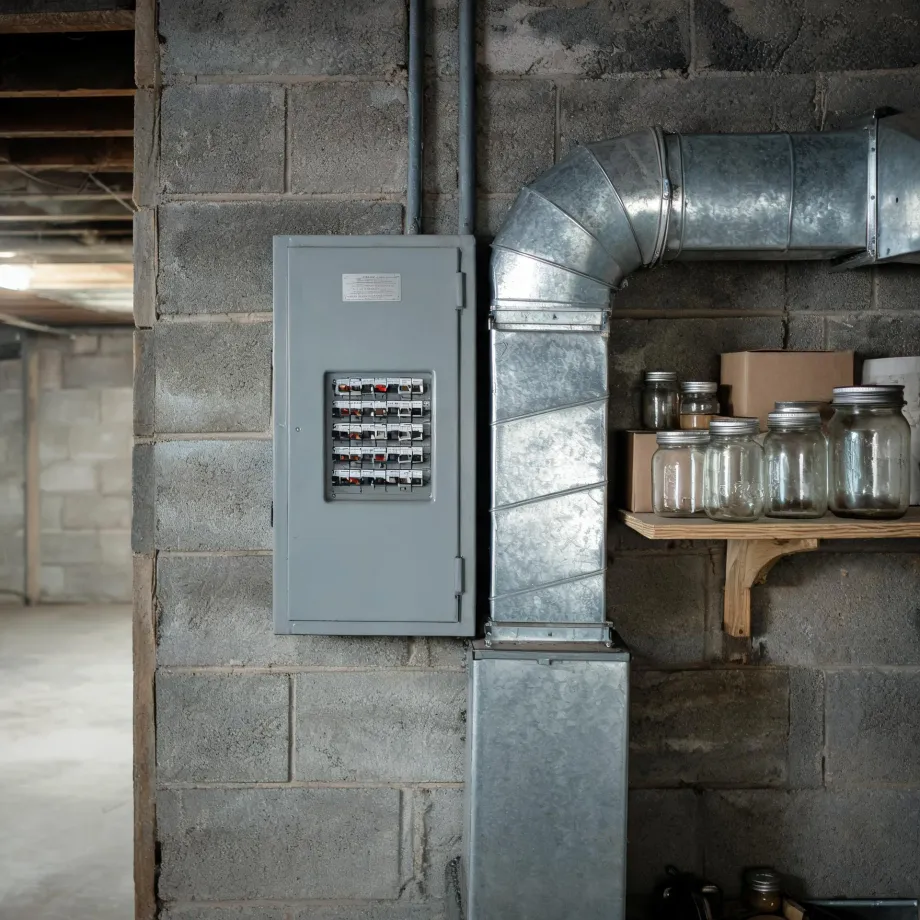
Ductwork sized and routed for an older heating system does not automatically carry what a new boiler asks of it. Half the homes in Franklin County, Kansas were built in 1975 or earlier (2020-2024 ACS 5-year). That means a contractor pricing a boiler installation here is not quoting the unit alone. The existing distribution layout, the pipe sizing, the radiator or baseboard connections already in the walls: each one gets checked against what the new system will actually push through it. Where the existing infrastructure fits, the job is straightforward. Where it does not, the scope changes before the equipment is ever ordered.
What Gets Installed With a New Boiler
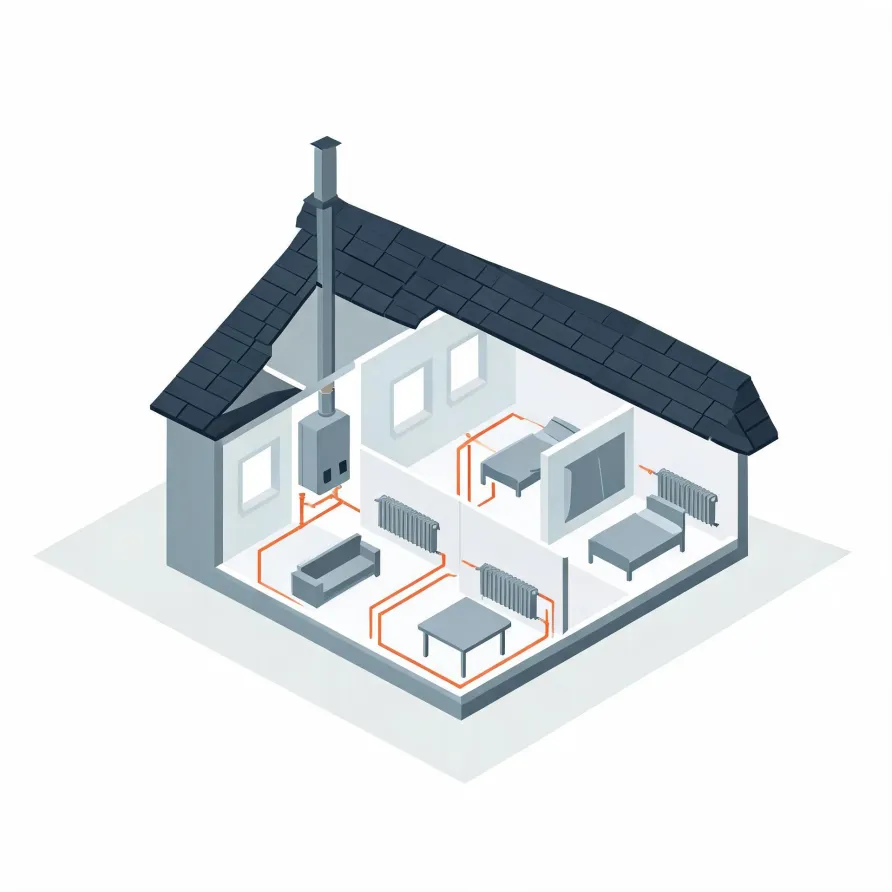
The boiler itself sits in a utility space, basement, or mechanical room and is the unit that heats the water the system runs on. Near it, the expansion tank absorbs pressure changes as water heats and cools, and the circulator pump moves that water out through the pipes.
From the boiler, supply pipes run through the house to the heat emitters, which are the radiators, baseboard units, or radiant floor loops a homeowner sees or feels in each room. A thermostat, mounted on a wall in the living space, tells the system when to fire.
The drawing shows a representative layout, and a licensed contractor determines exactly what applies to this house.
Find a contractor in Franklin CountyFranklin County, Kansas, by the numbers
123 severe weather events were recorded in Franklin County, Kansas between 2015 and 2024.
NOAA National Centers for Environmental Information, Storm Events Database, bulk CSV export, events 2015-01-01 through 2024-12-31.Half the homes in Franklin County, Kansas were built in 1975 or earlier (2020-2024 ACS 5-year).
U.S. Census Bureau, 2020-2024 American Community Survey 5-Year EstimatesFranklin County, Kansas holds 11,310 housing units (2020-2024 ACS 5-year).
U.S. Census Bureau, 2020-2024 American Community Survey 5-Year EstimatesOwners occupy 72.2% of the occupied homes in Franklin County, Kansas (2020-2024 ACS 5-year).
U.S. Census Bureau, 2020-2024 American Community Survey 5-Year EstimatesSevere Weather History in Franklin County
Boilers in Franklin County work against whatever the climate puts on them, and local weather patterns set the real load a heating system carries year over year. That load is a local fact, which is why it belongs on a page about boiler installation here.
123 severe weather events, 2015–2024. Source: NOAA National Centers for Environmental Information, Storm Events Database.