Tell us about the job
Takes about a minute. No obligation.
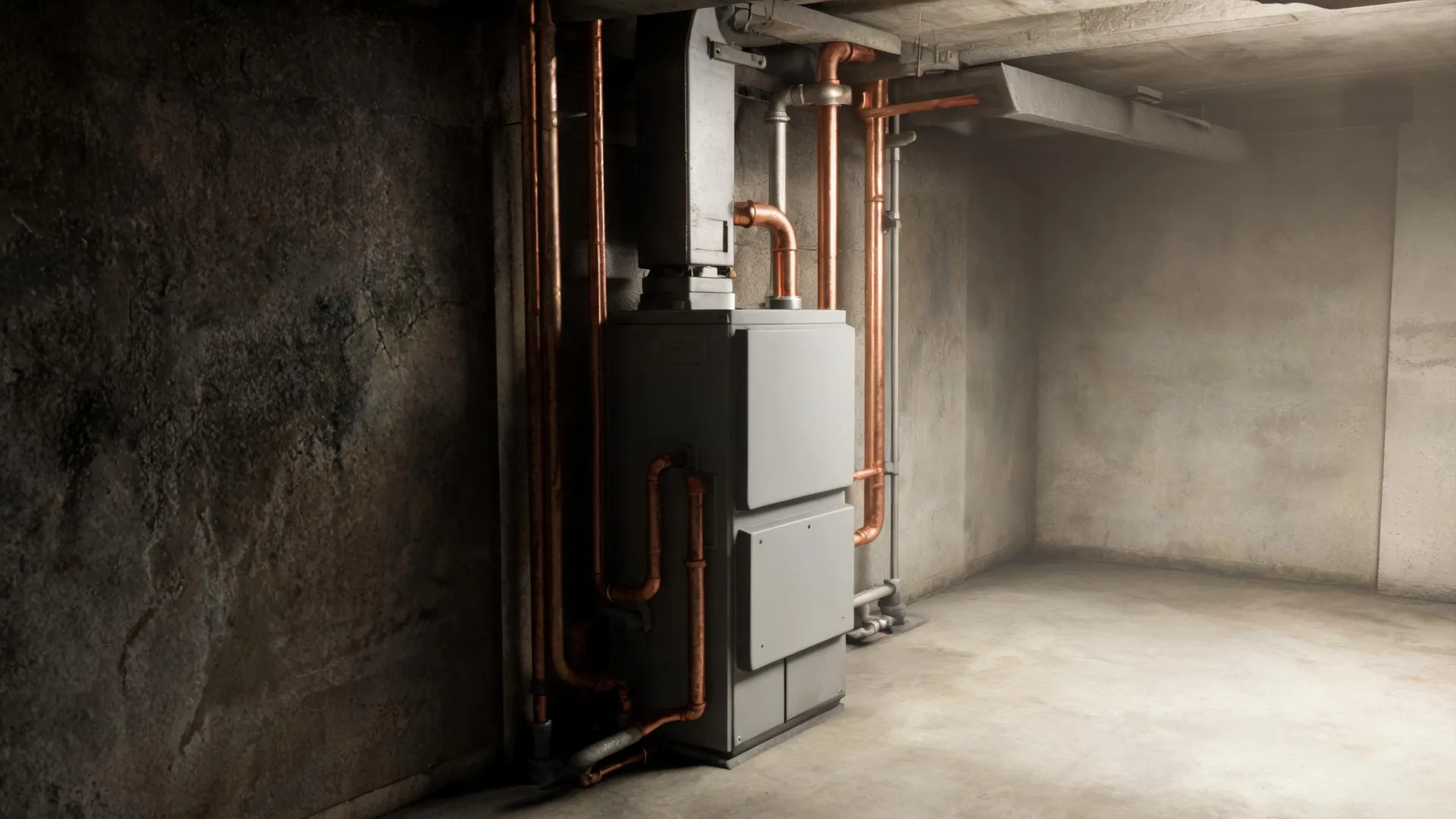
A contractor quoting boiler repair in Montgomery County starts with the burner assembly and heat exchanger, because those are the parts that take the most punishment from a long heating cycle. Homes in Montgomery County, KS run heat about seven months a year, from October through April. A boiler that fires that many months accumulates wear on the ignition system and burner orifices in a way that a system with a shorter season simply does not. Cracks in a heat exchanger or a degraded ignition sequence are the likeliest findings, and a contractor who skips straight to controls or circulator pumps is diagnosing out of order for this area.
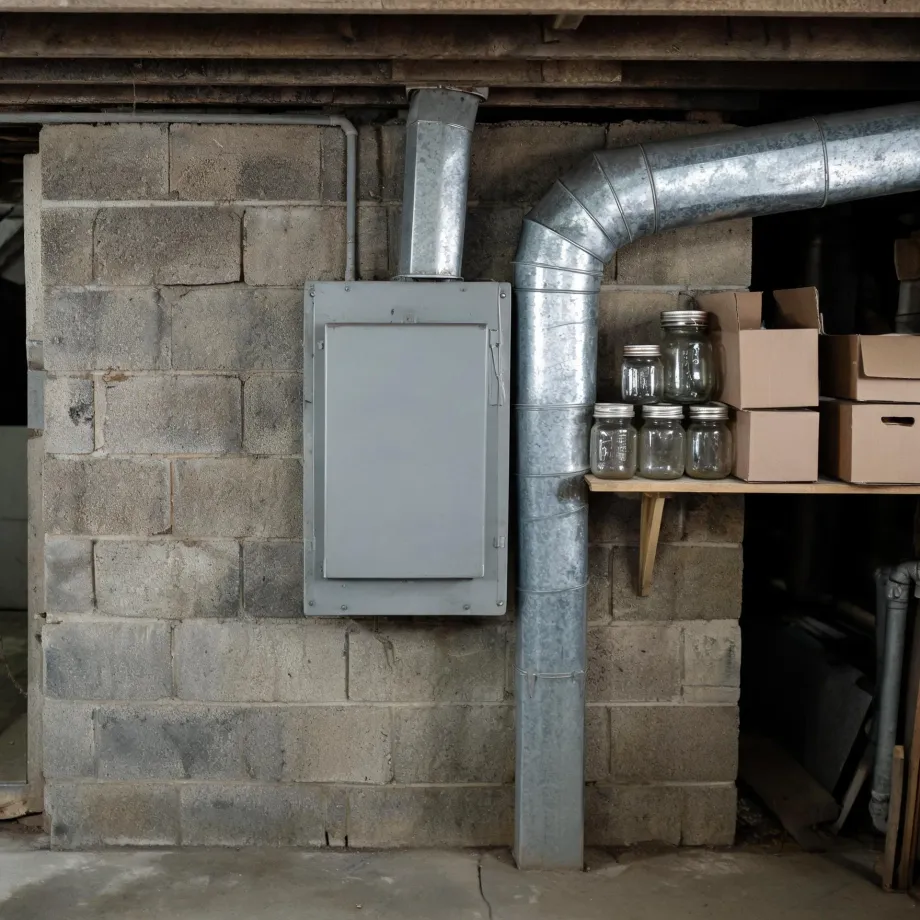
Piping that has carried hot water through the same walls for generations accumulates scale, corroded fittings, and zone valves that have long since lost their range of travel. Half the homes in Montgomery County, Kansas were built in 1958 or earlier (2020-2024 ACS 5-year). A contractor opening a boiler here will price the unit quickly. What takes longer is tracing what the distribution side has actually become: where flow is restricted, which zones are starved, and whether the circulator is compensating for a problem elsewhere in the loop. That is what the repair scope turns on.
The Parts of a Boiler a Contractor Checks First
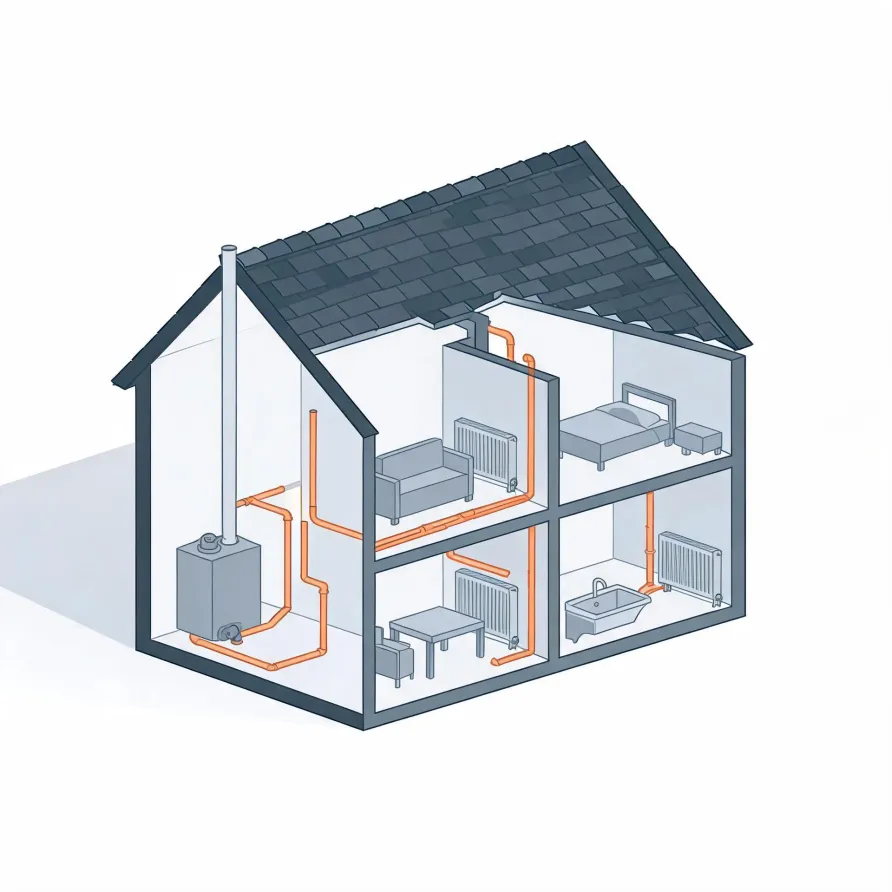
The boiler itself sits in a mechanical room, basement, or utility closet and is the unit that heats water and circulates it through the system. When it fails, the fault usually traces back to the heat exchanger, the burner, or the ignition assembly inside that cabinet. A contractor opens it first.
Radiators or baseboard convectors sit in the living spaces and release heat into the rooms. The circulator pump, pressure relief valve, and expansion tank connect everything and keep the system running at a safe pressure. Any of those can be the source of a breakdown.
The drawing shows a typical layout, and a licensed contractor determines what applies to this particular house.
Find a contractor in Montgomery CountyMontgomery County, Kansas, by the numbers
174 severe weather events were recorded in Montgomery County, Kansas between 2015 and 2024.
NOAA National Centers for Environmental Information, Storm Events Database, bulk CSV export, events 2015-01-01 through 2024-12-31.Half the homes in Montgomery County, Kansas were built in 1958 or earlier (2020-2024 ACS 5-year).
U.S. Census Bureau, 2020-2024 American Community Survey 5-Year EstimatesMontgomery County, Kansas holds 15,538 housing units (2020-2024 ACS 5-year).
U.S. Census Bureau, 2020-2024 American Community Survey 5-Year EstimatesOwners occupy 72.9% of the occupied homes in Montgomery County, Kansas (2020-2024 ACS 5-year).
U.S. Census Bureau, 2020-2024 American Community Survey 5-Year EstimatesSevere Weather Events in Montgomery County
Boilers work hardest when outdoor conditions push heat demand to its limits, and in Montgomery County that workload is shaped by local weather patterns. Stress on heating equipment adds up over time, which is why the repair picture here is a local one.
174 severe weather events, 2015–2024. Source: NOAA National Centers for Environmental Information, Storm Events Database.