Tell us about the job
Takes about a minute. No obligation.
A boiler in Wilson County puts its burner, heat exchanger, and ignition system through a long stretch of cycling before it ever gets a rest. Homes in Wilson County, KS run heat about seven months a year, from October through April. A contractor called out for a repair here checks the heat exchanger for fatigue cracks and the burner assembly for fouling first, because those are the components that absorbed the load. Seals and expansion joints follow. A problem that looks like a controls fault often traces back to heat exchanger stress, and a technician who skips that inspection quotes the wrong repair.
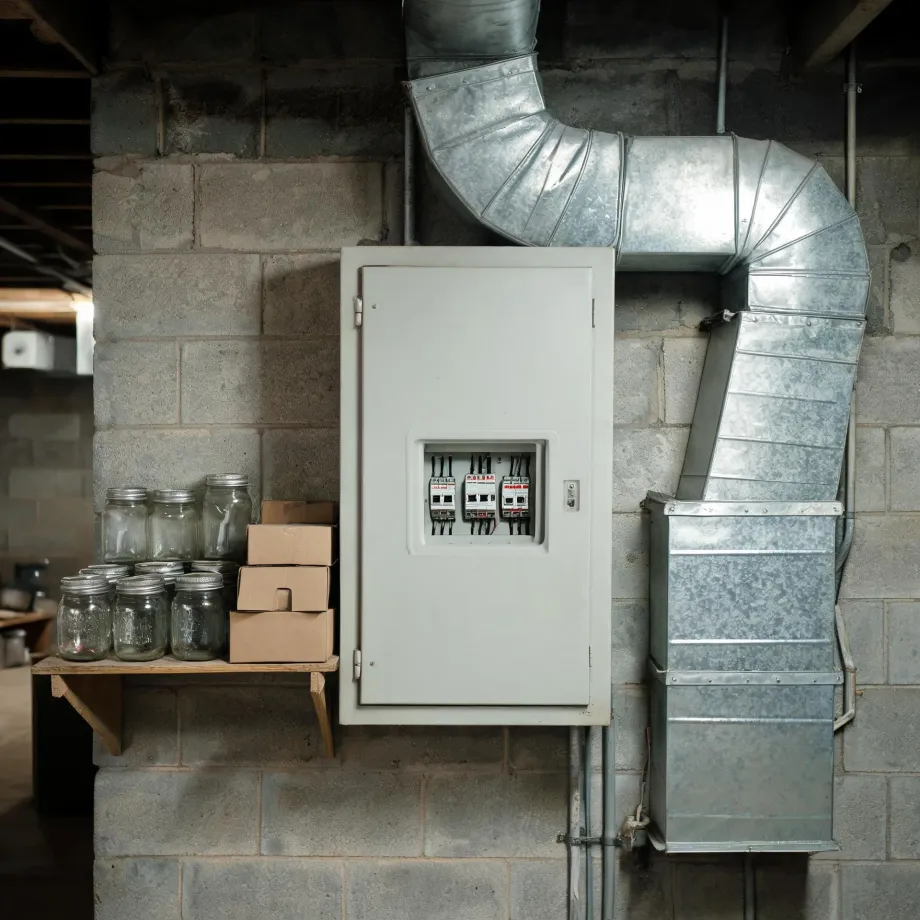
Boiler repair in older housing stock turns on what the distribution system has become over time. Half the homes in Wilson County, Kansas were built in 1965 or earlier (2020-2024 ACS 5-year). A contractor opening a boiler here finds the unit itself, and then has to account for the piping or ducting it feeds, which in houses this old has often been spliced, partially rerun, or left in original form while the heat source upstream changed. A part that tests fine at the boiler can still produce uneven heat if the loop it serves has been altered. That is the diagnostic the age of the stock creates.
The Parts of a Boiler a Contractor Checks First
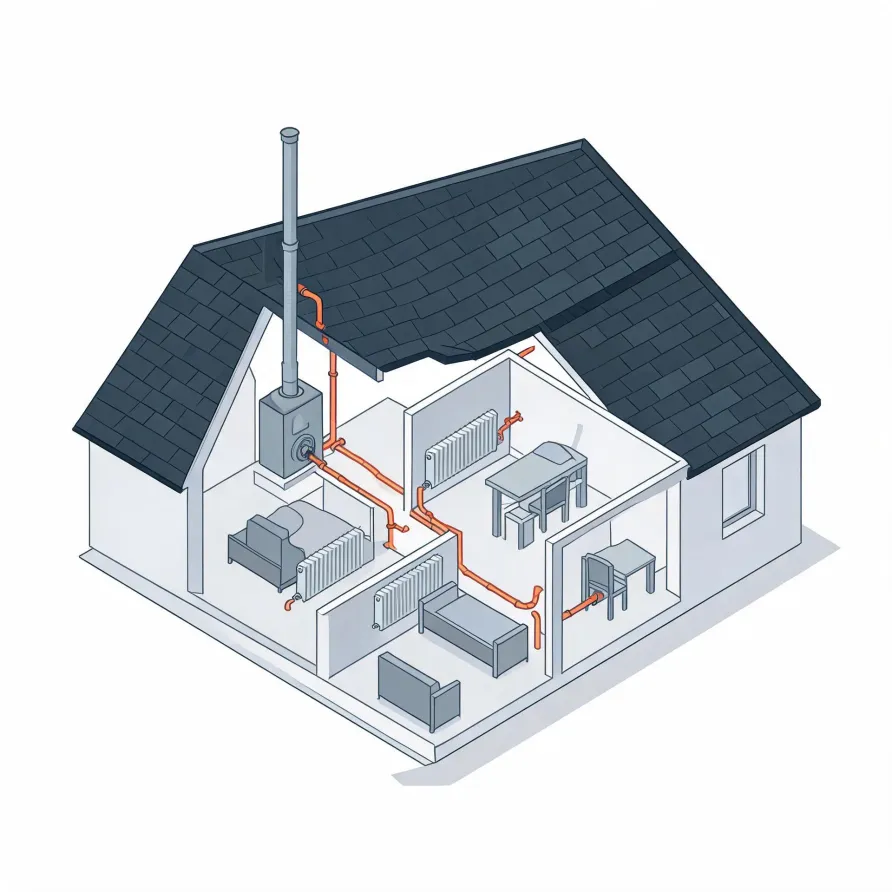
The boiler itself sits in a mechanical room, basement, or utility closet and is the unit that heats water. When something goes wrong with heat output or pressure, a contractor starts here, checking the burner, heat exchanger, and pressure relief valve, since faults in any of those stop the system from doing its job.
From the boiler, supply pipes carry hot water to radiators or baseboard units in the living spaces, and return pipes bring cooled water back. The circulator pump, which drives that loop, and the expansion tank, which keeps pressure stable, are both common targets when a contractor is tracing an uneven heat or pressure complaint.
The drawing shows a typical boiler layout, and a licensed contractor will assess which components apply to the specific system in your home.
Find a contractor in Wilson CountyWilson County, Kansas, by the numbers
76 severe weather events were recorded in Wilson County, Kansas between 2015 and 2024.
NOAA National Centers for Environmental Information, Storm Events Database, bulk CSV export, events 2015-01-01 through 2024-12-31.Half the homes in Wilson County, Kansas were built in 1965 or earlier (2020-2024 ACS 5-year).
U.S. Census Bureau, 2020-2024 American Community Survey 5-Year EstimatesWilson County, Kansas holds 4,493 housing units (2020-2024 ACS 5-year).
U.S. Census Bureau, 2020-2024 American Community Survey 5-Year EstimatesOwners occupy 77.7% of the occupied homes in Wilson County, Kansas (2020-2024 ACS 5-year).
U.S. Census Bureau, 2020-2024 American Community Survey 5-Year EstimatesSevere Weather Events in Wilson County
Boilers in Wilson County work against whatever the local climate demands of them, and the local climate is not mild. Each storm cycle that pushes through puts strain on heating systems, and that strain is what drives repair calls.
76 severe weather events, 2015–2024. Source: NOAA National Centers for Environmental Information, Storm Events Database.