Tell us about the job
Takes about a minute. No obligation.
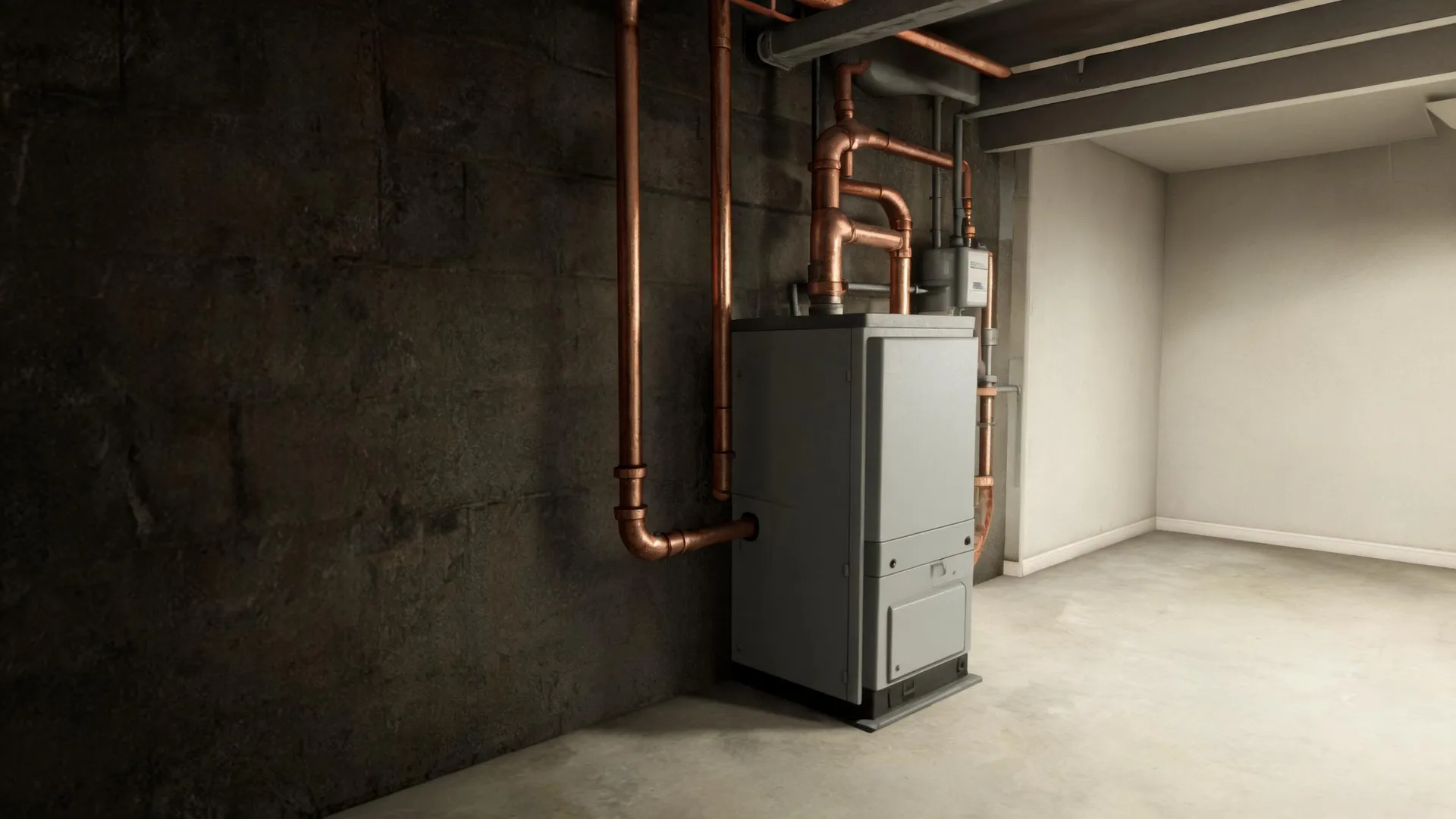
A boiler in Geary County runs its burner and ignition system hard every heating season, and the wear on those parts reflects it. Homes in Geary County, KS run heat about seven months a year, from October through April. Repeated firing cycles crack heat exchanger seals, foul ignition electrodes, and stress the circulator pump in ways that build quietly until something fails. A contractor called out for a repair here checks those cycling components first, because that is where the load lands year after year.
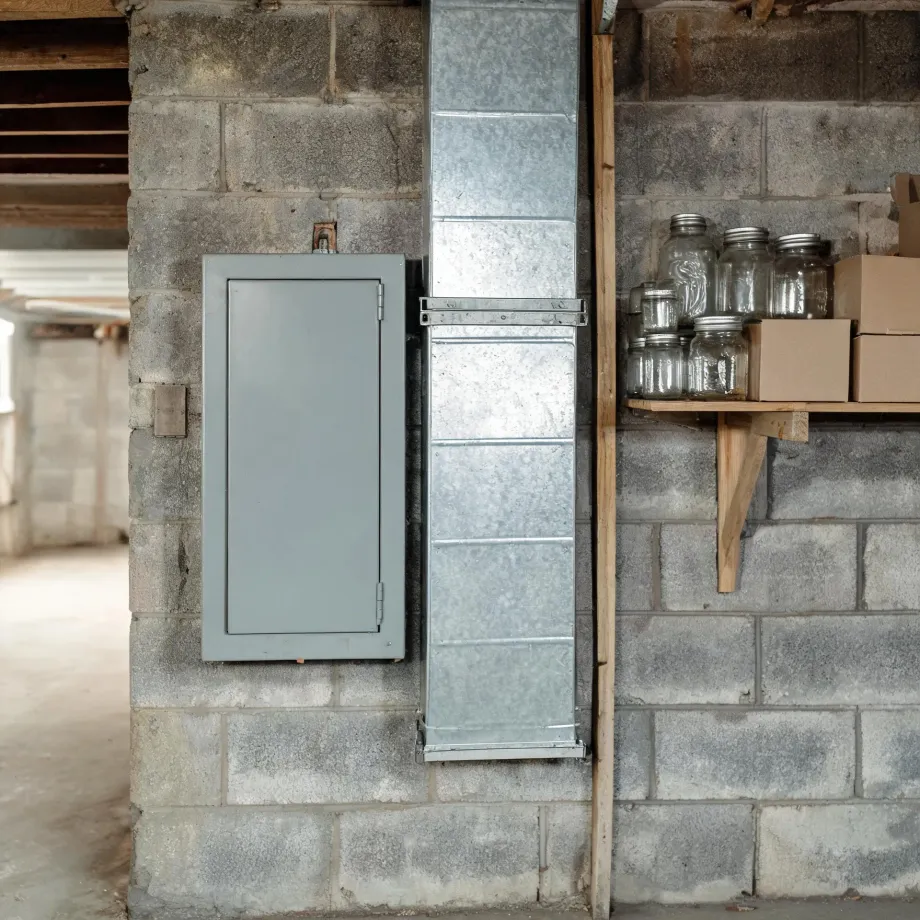
Boilers in older housing sit inside distribution systems that were never designed around what runs in them today. Pipes sized for cast-iron radiators, zone valves added after the fact, expansion tanks that have gone unchecked for years: what a contractor finds once the boiler is open is only part of the diagnosis. Half the homes in Geary County, Kansas were built in 1987 or earlier (2020-2024 ACS 5-year). That share of the county's housing carries hydronic infrastructure whose condition shapes the repair as much as the boiler itself does, and a contractor working on these systems opens the distribution side to check pressure, flow, and valve function before the boiler gets a clean bill.
The Parts of a Boiler a Contractor Checks First
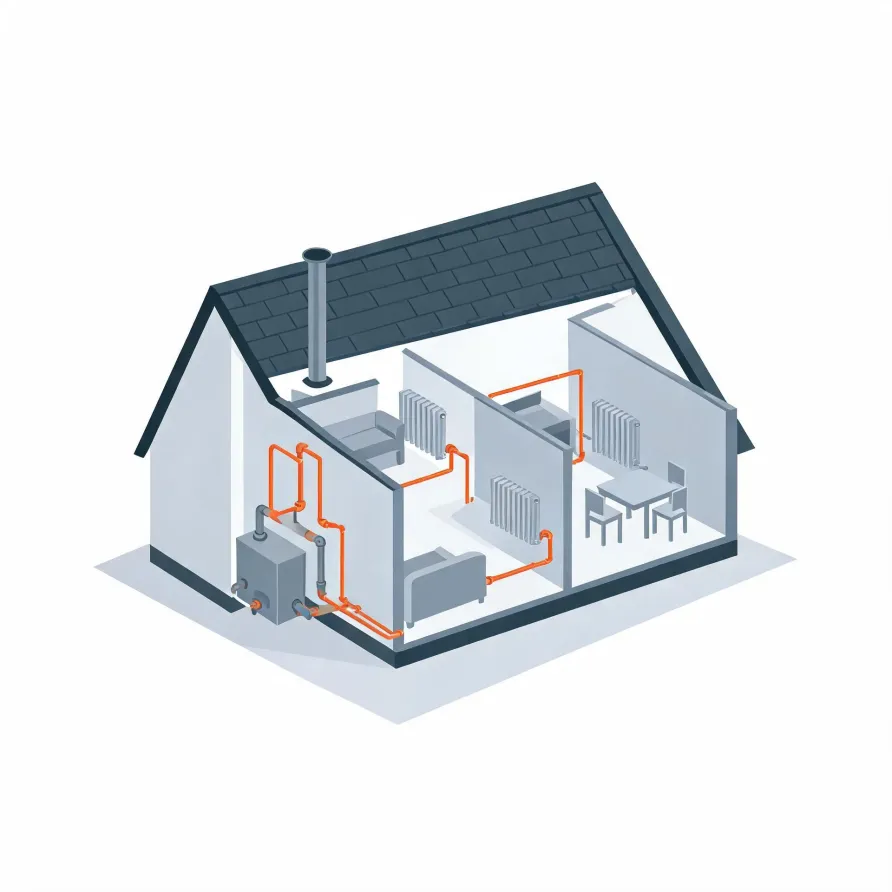
The boiler itself sits in the basement or a mechanical room and is the piece a contractor goes to first. It houses the burner, the heat exchanger, and the controls that govern the whole system. When heat stops or pressure behaves strangely, the fault usually starts here.
Radiators or baseboard units sit throughout the living spaces and are what the boiler's heated water actually reaches. Circulator pumps move that water through the pipes connecting everything. The expansion tank, typically near the boiler, absorbs pressure changes as water heats and cools, and a failed one shows up quickly in the pressure readings.
The drawing shows a general layout of these components, and a licensed contractor determines which parts apply and what condition they are in for your specific home.
Find a contractor in Geary CountyGeary County, Kansas, by the numbers
173 severe weather events were recorded in Geary County, Kansas between 2015 and 2024.
NOAA National Centers for Environmental Information, Storm Events Database, bulk CSV export, events 2015-01-01 through 2024-12-31.Half the homes in Geary County, Kansas were built in 1987 or earlier (2020-2024 ACS 5-year).
U.S. Census Bureau, 2020-2024 American Community Survey 5-Year EstimatesGeary County, Kansas holds 15,939 housing units (2020-2024 ACS 5-year).
U.S. Census Bureau, 2020-2024 American Community Survey 5-Year EstimatesOwners occupy 43.5% of the occupied homes in Geary County, Kansas (2020-2024 ACS 5-year).
U.S. Census Bureau, 2020-2024 American Community Survey 5-Year EstimatesSevere Weather Events in Geary County
Hard weather puts real strain on boiler systems, and the strain compounds over time. Knowing what this area actually sees, year by year, is part of understanding why local repair work looks the way it does.
173 severe weather events, 2015–2024. Source: NOAA National Centers for Environmental Information, Storm Events Database.