Tell us about the job
Takes about a minute. No obligation.
A boiler in Jewell County works hard. Homes in Jewell County, KS run heat about eight months a year, from October through May. The burner fires and the ignition system cycles through that entire span, and those are the parts a contractor checks first when a repair call comes in. Heat exchangers crack from repeated thermal expansion and contraction; igniters wear from the sheer count of start cycles. A system that has been undersized or running with a slow leak in its expansion tank shows that strain plainly by the time a contractor opens it up.
Piping runs, zone valves, and expansion tanks in a house this old were sized and routed for a system that may bear little resemblance to what is there now. Half the homes in Jewell County, Kansas were built in 1945 or earlier (2020-2024 ACS 5-year). That gap between the original build and the current equipment is what a contractor works through once a boiler repair is open: whether the fault is in the unit itself or in what surrounds it, and whether fixing one exposes a problem in the other. A repair that starts at the boiler can land on corroded supply lines or a pressure relief arrangement that has been patched across different equipment generations.
The Parts of a Boiler a Contractor Checks First
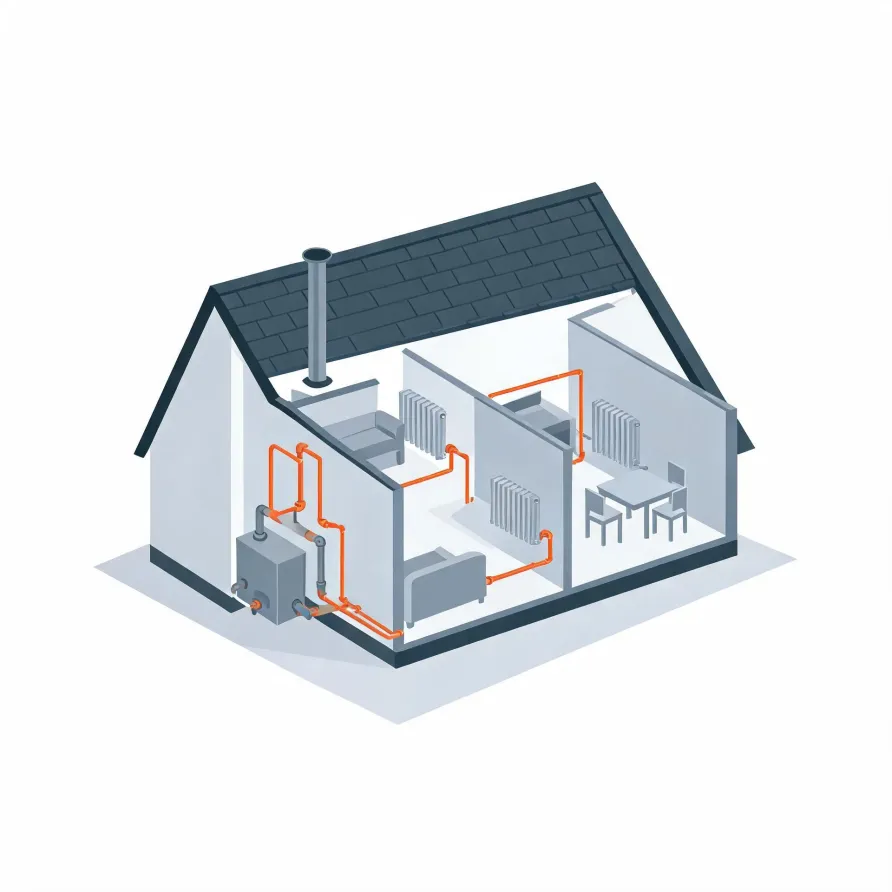
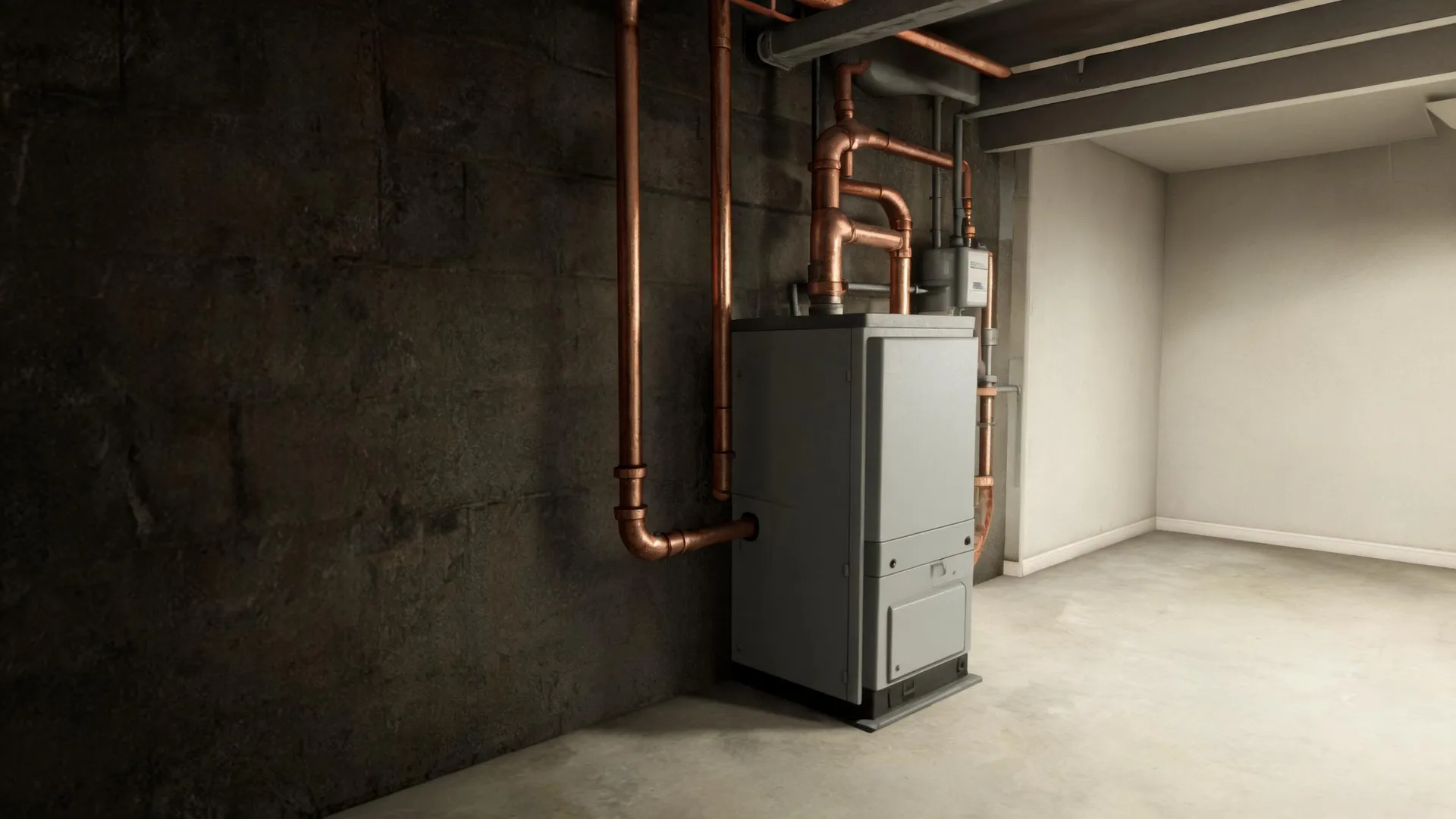
The boiler itself sits in the basement or a utility room and is the heart of the system, burning fuel or using electricity to heat water. When it fails, the fault usually lives in the burner assembly, the heat exchanger, or the controls that tell the unit when to fire. A contractor opens the boiler casing first and works outward from there.
Circulator pumps move hot water through the pipes to the radiators or baseboard units placed throughout the living spaces. The expansion tank, pressure relief valve, and zone valves each sit along those pipes and regulate flow and pressure. Any of these can be the reason heat stops reaching a room or the system loses pressure.
The drawing shows a typical boiler layout, and a licensed contractor determines which parts apply to your specific setup.
Find a contractor in Jewell CountyJewell County, by the numbers
134 severe weather events were recorded in Jewell County, Kansas between 2015 and 2024.
NOAA National Centers for Environmental Information, Storm Events Database, bulk CSV export, events 2015-01-01 through 2024-12-31.Half the homes in Jewell County, Kansas were built in 1945 or earlier (2020-2024 ACS 5-year).
U.S. Census Bureau, 2020-2024 American Community Survey 5-Year EstimatesJewell County, Kansas holds 1,761 housing units (2020-2024 ACS 5-year).
U.S. Census Bureau, 2020-2024 American Community Survey 5-Year EstimatesOwners occupy 74.1% of the occupied homes in Jewell County, Kansas (2020-2024 ACS 5-year).
U.S. Census Bureau, 2020-2024 American Community Survey 5-Year EstimatesSevere Weather Events in Jewell County
Boilers work hardest when outdoor conditions push a building's heat load to its limits, and those conditions are shaped by local weather patterns. How often Jewell County sees severe weather is a real factor in how hard the equipment runs and how quickly wear accumulates.
134 severe weather events, 2015–2024. Source: NOAA National Centers for Environmental Information, Storm Events Database.