Tell us about the job
Takes about a minute. No obligation.
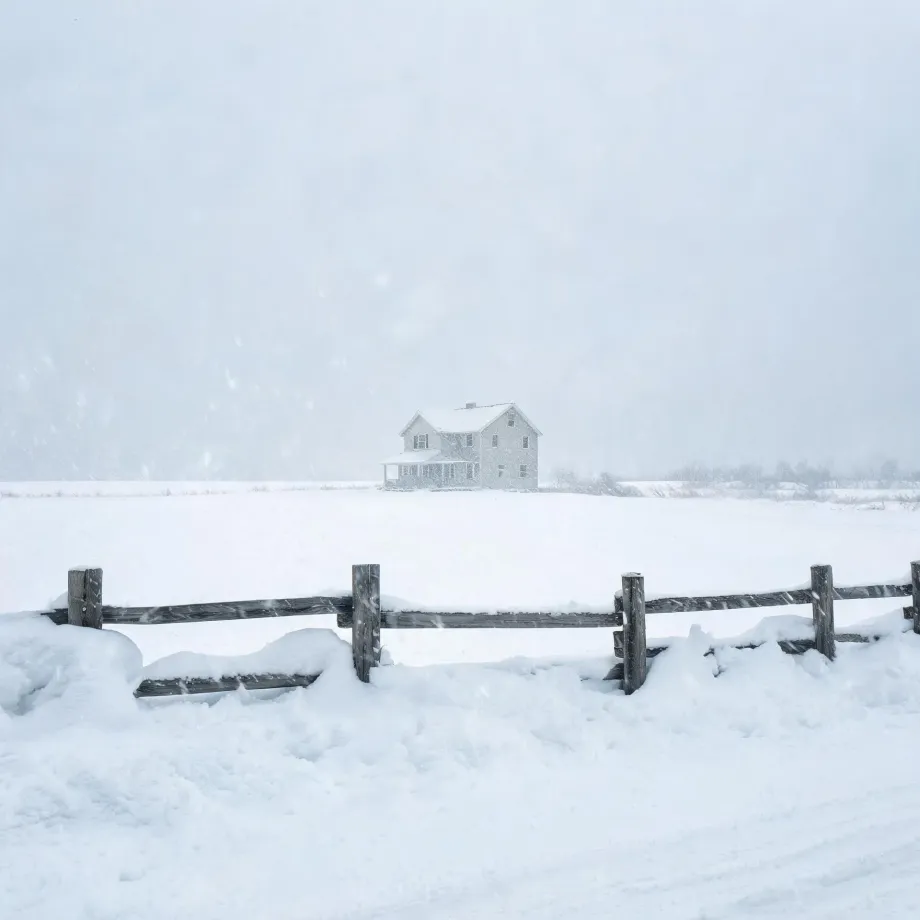
Homes in Nemaha County, KS run heat about seven months a year, from October through April. A boiler working through that kind of heating load cycles its burner and ignition system repeatedly across every cold stretch from fall through spring. By the time a homeowner calls for a repair, the igniter, the flame sensor, and the heat exchanger have already absorbed seasons of thermal stress. Contractors diagnosing a boiler in Nemaha County check those components before anything else, because wear concentrates there. A system that held through last winter may not hold through the next one if those parts are not evaluated.
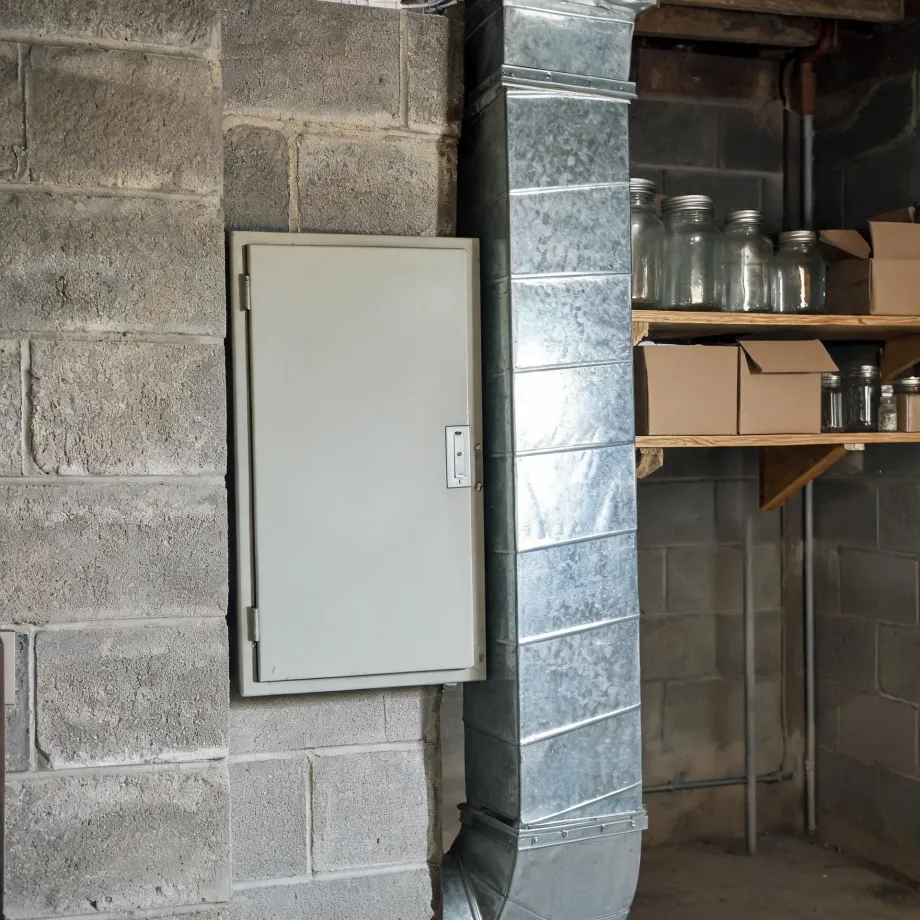
Boilers in houses this old carry a record of every hard winter and every deferred service call in their heat exchangers, their expansion tanks, and their distribution lines. Half the homes in Nemaha County, Kansas were built in 1974 or earlier (2020-2024 ACS 5-year). That means a contractor opening a system here is looking at cast iron sections that may have cracked, waterways that scale has narrowed, and relief valves that have not seated cleanly in years. Parts for systems of this vintage are still available, but identifying exactly which components a given boiler takes requires the unit to be open and the model confirmed before anything is ordered or priced.
The Parts of a Boiler a Contractor Checks First
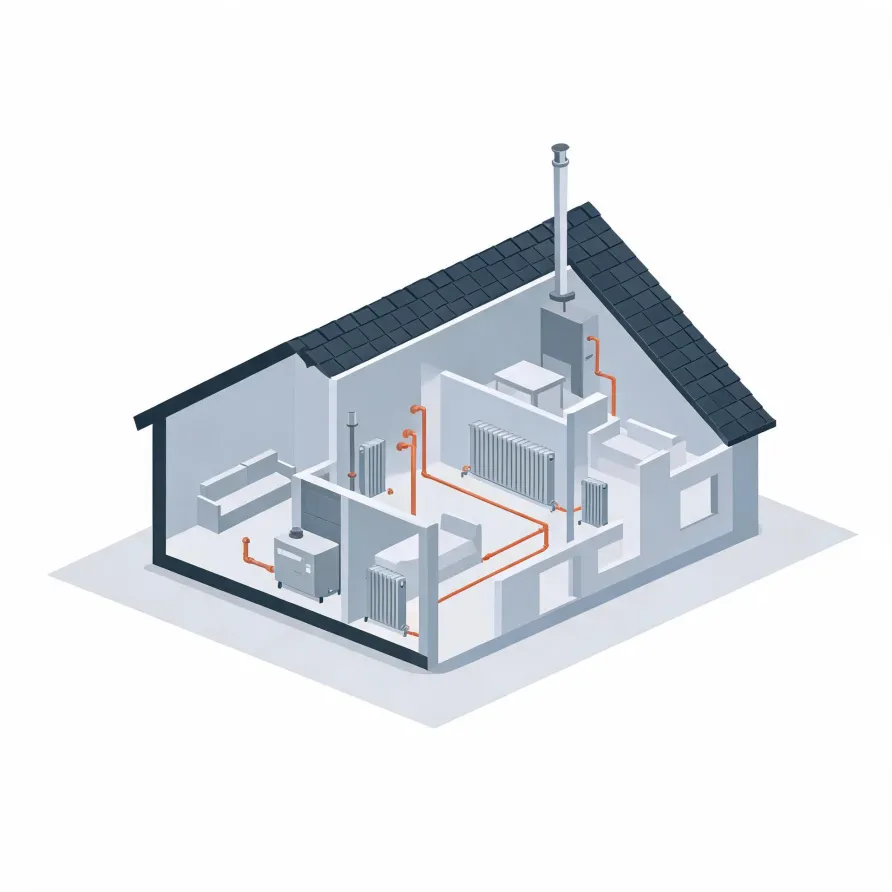
The boiler itself sits in the basement or a utility room and is the core of the system. It heats water and pushes it out through the building. When a boiler fails, a contractor starts here, checking the heat exchanger, the burner, and the pressure vessel for the fault.
From the boiler, pipes run through the house to radiators or radiant floor loops, and a circulator pump keeps the water moving. The expansion tank, usually mounted nearby, absorbs pressure changes as the water heats and cools. The thermostat on the wall ties the whole loop together by telling the boiler when to fire.
The drawing shows a typical layout, and a licensed contractor determines which components apply to your specific system.
Find a contractor in Nemaha CountyNemaha County, by the numbers
99 severe weather events were recorded in Nemaha County, Kansas between 2015 and 2024.
NOAA National Centers for Environmental Information, Storm Events Database, bulk CSV export, events 2015-01-01 through 2024-12-31.Half the homes in Nemaha County, Kansas were built in 1974 or earlier (2020-2024 ACS 5-year).
U.S. Census Bureau, 2020-2024 American Community Survey 5-Year EstimatesNemaha County, Kansas holds 4,512 housing units (2020-2024 ACS 5-year).
U.S. Census Bureau, 2020-2024 American Community Survey 5-Year EstimatesOwners occupy 78.0% of the occupied homes in Nemaha County, Kansas (2020-2024 ACS 5-year).
U.S. Census Bureau, 2020-2024 American Community Survey 5-Year EstimatesSevere Weather Events in Nemaha County
Hard weather puts real hours on a boiler. How often that happens in your county shapes how much repair work the equipment accumulates over time, and that makes local weather history a practical part of the picture for any boiler service here.
99 severe weather events, 2015–2024. Source: NOAA National Centers for Environmental Information, Storm Events Database.